
The 6 top Sellercloud alternatives for multi-platform sellers | 2026
.png)
After testing 12 Sellercloud alternatives, I found that the best option for sellers and resellers is Nifty, while Cin7 suits larger e-commerce brands and dropshippers.
Compare my breakdowns of the 6 best Sellercloud alternatives and learn how well they integrate with other tools and manage inventory. Discover how to select the best tool for your selling needs.
6 best Sellercloud alternatives: At a glance
How to evaluate these Sellercloud alternatives
Each of my Sellercloud alternatives serves a different purpose and business type. To find a tool that fits your needs, use the following criteria to evaluate each:
- Business model fit: Start by considering how you sell. For instance, a reseller on Poshmark needs different tools than a wholesaler running two warehouses. Pick a tool that matches your business before you compare anything else.
- Channel coverage: Check which marketplaces and sales channels the tool supports. If it doesn’t connect to your current marketplaces or the ones you’re aiming to sell on in the future, cross it off your list.
- Inventory sync reliability: Learn how fast inventory updates across channels for each tool. Inventory that syncs too slowly or software that causes glitches can result in overstocking and bad cash flow.
- Pricing structure: Figure out how the tool charges. Does it limit you to a specific number of monthly orders, or does it have hidden add-ons? A cheap plan now can get expensive as you grow. Test the cost at 2x and 5x your current order volume.
Why look for Sellercloud alternatives?
Sellercloud helps online businesses manage inventory and orders across multiple sales channels like Amazon and eBay. It lets you manage listings, track warehouse activity, handle shipping, and crosslist to other marketplaces in one place.
But as you grow or your needs change, you might run into these issues:
- Learning curve: Some users note that you’ll need technical staff to master Sellercloud because it has a steep learning curve and a complex interface.
- Not flexible and niche workflows: For sellers with very specific needs, like offering handmade goods or complex bundles, Sellercloud may need extra setup or custom work to make it fit.
- Poor technical support: Some customers report slow replies or trouble getting quick help during urgent issues.
- Mixed bag of integrations: Sellercloud connects with many sales channels and shipping carriers. Some integrations work out of the box, but others need more setup and offer fewer built-in automation features.
1. Nifty: Best for sellers and resellers listing on consumer marketplaces
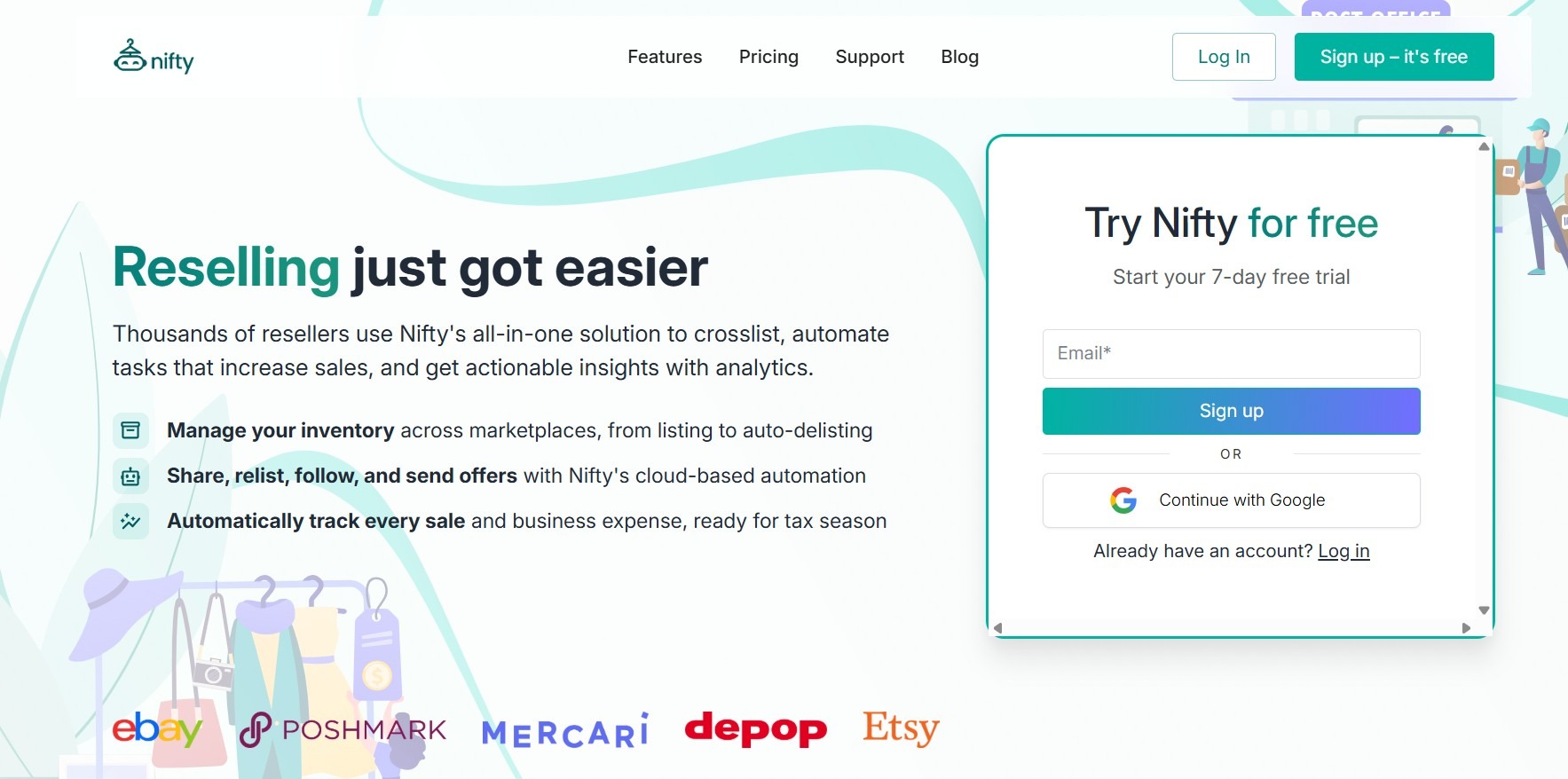
Nifty is a strong Sellercloud alternative for sellers and resellers who need cloud-based automation, crosslisting, analytics, and AI-powered listing generation. It’s built for sellers and resellers listing across marketplaces like eBay, Poshmark, Mercari, Depop, Etsy, and Whatnot.
“I love Nifty. I started using it a few months ago and kicking myself for not using it sooner.” (Reddit reviewer, January 23rd, 2026)
Key features
- AI listing generation: Upload a photo and Nifty’s AI creates titles, descriptions, and hashtags, cutting the time spent per item.
- Cloud-based bots: Sharing, relisting, and offer campaigns run 24/7 on Nifty's servers without requiring your computer to stay on
- Auto-delist on sale: When an item sells on one platform, Nifty removes it from all others to prevent double-selling.
Pros
✅ Cloud automation depth: Poshmark automation in particular is mature and reliable, building off AutoPosher, Nifty’s predecessor.
✅ All-in-one scope: You get crosslisting, automation, and analytics live in one tool, so you don’t need to buy separate tools.
✅ Mobile-friendly: Runs on desktop, tablet, and mobile without browser extensions or requiring your computer to always be on.
Cons
❌ Large feature base takes time to learn: Although it’s not technical, you’ll need to set aside some time to learn Nifty’s analytics suite and automation capabilities.
❌ Narrow marketplace coverage: Supports only 6 marketplaces, so if you require Amazon, Walmart, or other wholesale channels, you should consider other options.
Best for
- Sellers who need crosslisting, automation, and analytics in one tool
- Solo resellers with large secondhand inventory backlogs
- Crosslisters expanding to 2–4 more marketplaces
Pricing
Nifty’s pricing starts at $25/month for Poshmark or eBay automation.
2. Cin7: Best for multichannel retail operations
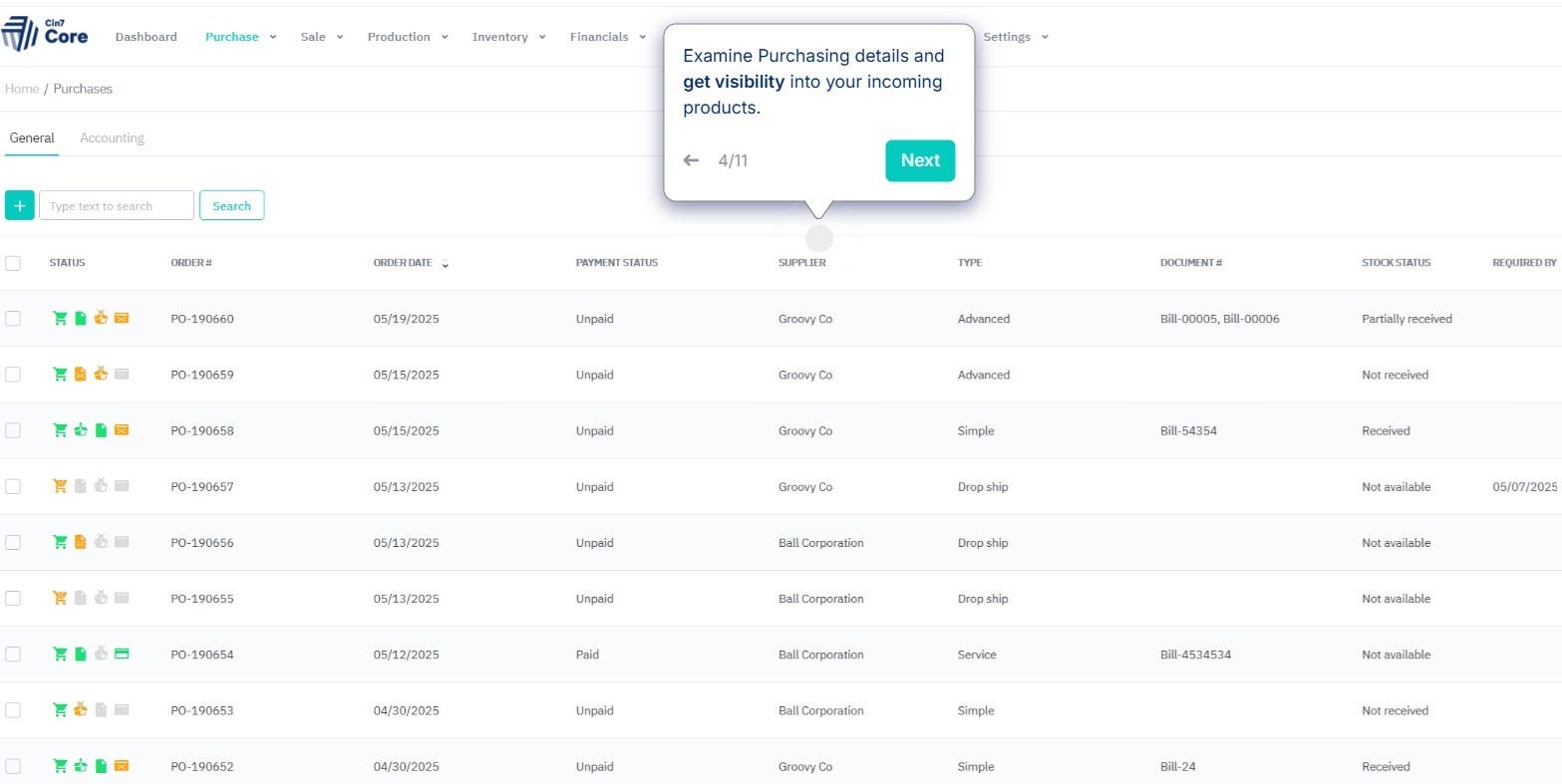
Cin7 is a strong alternative to Sellercloud for e-commerce businesses. It helps companies manage inventory across retail, wholesale, and online sales all in one place.
“The onboarding staff is very good, [and] Dawn Martenstyne [was a] very nice person to work with.” (Trustpilot reviewer, February 26th, 2026)
Key features
- Multichannel inventory syncing: You can track stock levels in one central catalog and update availability across connected e-commerce stores, marketplaces, POS, and warehouse locations.
- B2B ordering: Cin7 has a B2B online store or portal where approved wholesale customers can log in, view products and pricing, and place orders directly.
- Warehouse operations: It supports barcode-based picking, packing, and put-away, along with multi-location and multi-warehouse stock tracking to manage inventory quantities and movements.
- Dropship order automation: When a dropship-enabled product is sold through any channel (e.g., e-commerce, B2B, marketplace, or wholesale), Cin7 automatically generates a purchase order for your supplier. The supplier ships directly to your customer, and Cin7 handles COGS tracking when the purchase invoice is authorized.
Pros
✅EDI & 3PL connectivity: Cin7 manages EDI connections through a combination of built-in features and partner solutions (e.g., SPS Commerce, Pipe17, and Crstl) to automate purchase orders, invoices, and fulfillment workflows across your supply chain.
✅Integration breadth: Cin7 connects with hundreds of apps, including e-commerce platforms, marketplaces, shipping tools, and accounting software.
✅Lower cost than large ERPs: Pricing starts at a few hundred dollars monthly, which fits the budgets of small and mid-sized businesses.
Cons
❌ Forecasting depth: Cin7 includes basic forecasting and restocking tools. However, some users still need separate tools for more advanced planning.
❌ Glitchy with support issues: Some users report bugs, data issues, and poor service responses.
Best for
- e-Commerce brands that sell wholesale and direct-to-consumer and want one system.
- Retailers that manage stock across multiple warehouses or store locations.
- Shopify or WooCommerce sellers who want to add wholesale and B2B features.
- Retailers and e-commerce brands that run dropship supplier programs alongside their own stocked inventory and want both managed in one system.
Pricing
Cin7 pricing starts at $349/month.
3. Deposco (Bright Suite): Best for order fulfillment orchestration
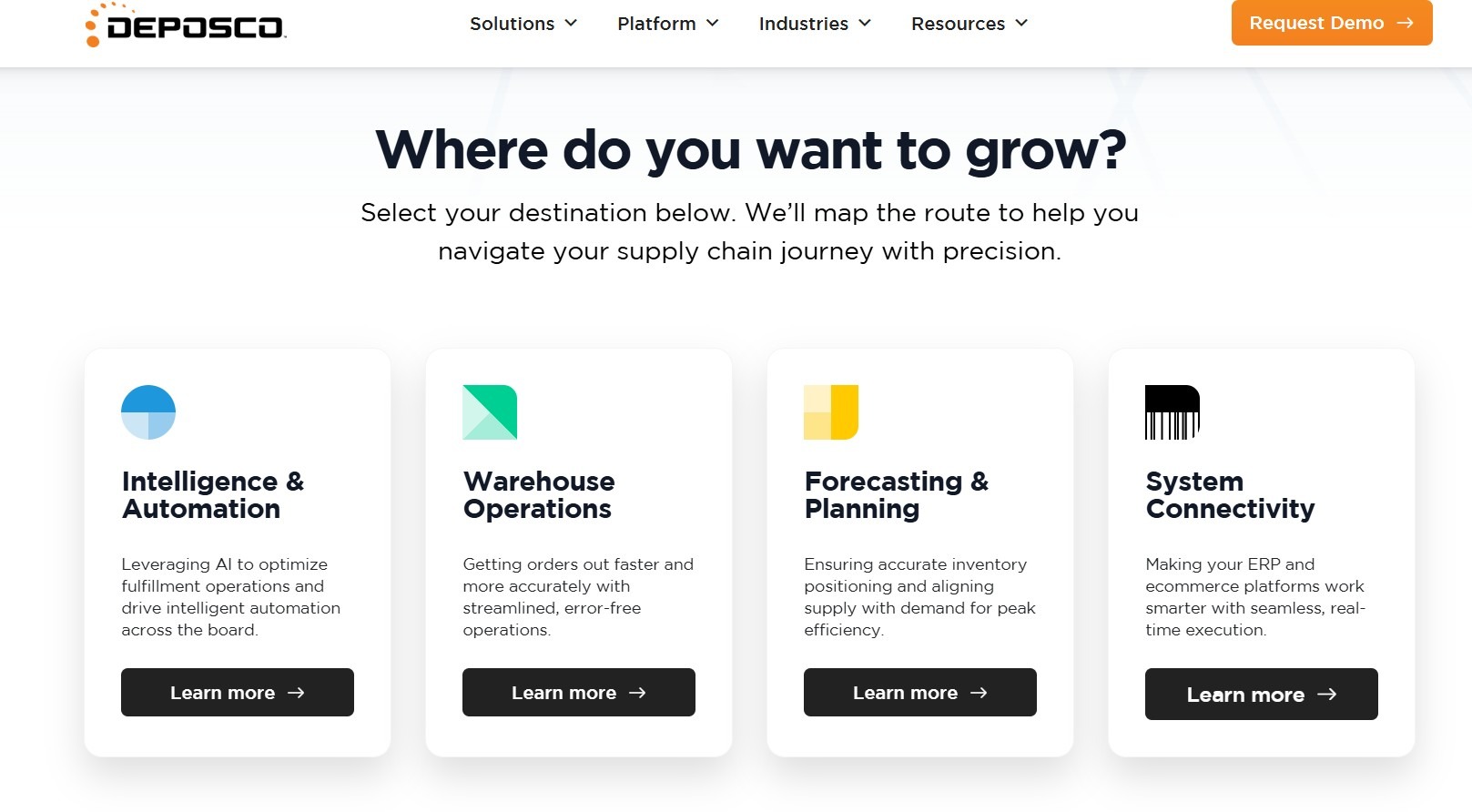
Deposco (formerly Bright Suite) is a Sellercloud alternative for mid-market and enterprise operations. It offers distributed order management for warehouses, logistics, and retail stores.
“The Shopify integration has been solid, no duplicate orders or weird sync issues, and the order routing based on inventory location has saved us a ton on shipping costs.” (Reddit user, December 23rd, 2025)
Key features
- Distributed order management: Automatically routes orders to the optimal fulfillment source, such as a warehouse, store, or supplier, based on real-time inventory and location data.
- Bright Warehouse WMS: Manages directed picking, putaway, packing, cycle counting, and label creation within a single warehouse execution layer.
- Parcel rate shopping: Integrates rate shopping across an extended carrier network to automate carrier selection and reduce shipping costs and time in transit.
Pros
✅ Fulfillment depth: Delivers OMS and WMS in one platform, which can reduce integration complexity and many sync issues seen with separate systems.
✅ Configuration depth: Offers strong customization and order fulfillment tools for growing businesses. You should compare its pricing and total cost with ERP systems like NetSuite or SAP.
✅ Omnichannel distributed order management (DOM): Routes orders across stores, warehouses, 3PLs, and dropship partners in real time to support ship‑from‑store and dropship strategies.
Cons
❌ ERP integration considerations: Deposco often works alongside ERPs like NetSuite. Buyers should check how order routing, inventory syncing, and picking processes match their NetSuite setup and integration.
❌ Enterprise-focused: The tool suits high‑growth and mid‑market organizations, so small businesses might find the platform too complex and overbudget for their needs.
Best for
- Large e-commerce brands outgrowing a single-warehouse setup
- Retailers fulfilling orders from both stores and DCs
- Operations replacing a fragmented WMS + OMS + ShipStation stack
- Mid-market third-party logistics managing fulfillment for multiple clients
Pricing
Contact Deposco for a demo and custom pricing.
4. Willow Commerce: Best for dropship and owned-inventory hybrid ops
Willow Commerce is for multichannel sellers running dropship and warehouse-owned inventory from the same operation simultaneously. It can sync your product catalog across many popular marketplaces, including Amazon, Walmart, TikTok Shop, Wayfair, and Etsy.
“Setting up connections with Walmart, eBay, and Newegg was quick and uncomplicated, and the automatic product syncing, along with precise category mapping, worked seamlessly.” (Mohd S., G2, December 23rd, 2025)
Key features
- Hybrid order routing: Automatically assigns each order to the correct fulfillment source based on availability and rules you set.
- Centralized catalog: Maintains one product record and pushes channel-specific attributes to each marketplace.
- Dropship automation: Ingests supplier catalogs, routes purchase orders, and tracks supplier shipping without manual handoffs between systems.
Pros
✅ Dual fulfillment model: Handles dropship and owned inventory in one system so you don’t need workarounds or separate tools to do both cleanly.
✅ Marketplace breadth: Offers several channel connections, including TikTok Shop and Wayfair give sellers room to expand.
✅ Implementation support: Verified reviewers consistently note the onboarding team stayed engaged through full go-live, not just initial setup.
Cons
❌ No mobile app: No mobile application exists, so warehouse staff and on-the-go operators can’t access key workflows from a phone or tablet.
❌ Catalog onboarding complexity: Large or non-standardized catalogs require significant setup time.
Best for
- Sellers with several dropship suppliers and owned warehouse stock
- Retailers growing beyond 10 active marketplaces simultaneously
- e-Commerce companies consolidating listing, shipping, and forecasting into one platform
- Catalog-heavy brands managing channel-specific attributes at scale
Pricing
Willow Commerce pricing starts at $499/month.
5. Linnworks: Best for multichannel inventory synchronization
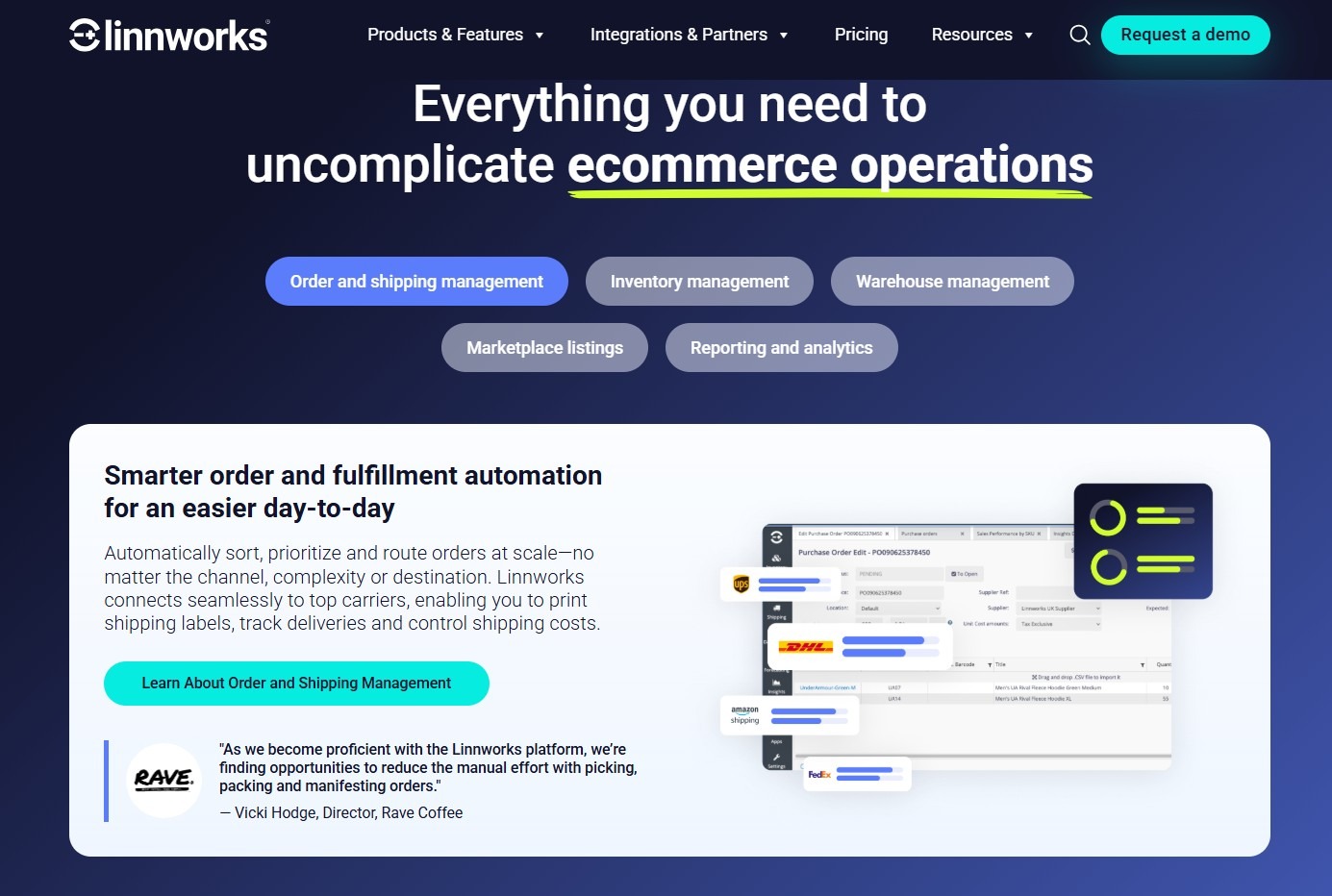
Linnworks covers inventory management, order management, warehouse operations, multichannel listing, shipping, and reporting from a single platform. It suits scaling mid-sized businesses and enterprises.
“I like that Linnworks comes with features that make inventory, listing, and order management easy, and it also makes generating reports easy.” (Gerald S., G2, November 2025)
Key features
- Real-time inventory sync: Updates stock levels across all connected channels the moment inventory moves.
- Rules-based order routing: Automatically sorts, prioritizes, and routes incoming orders.
- Analytics and forecasting: Pulls all channel data into consolidated reporting, so sellers can make replenishment and pricing decisions quickly.
Pros
✅ Order volume-based pricing: Costs scale with orders processed, not revenue, so you don't get penalized for growing basket sizes.
✅ Integration depth: Dozens of pre-built connections cover marketplaces, carriers, 3PLs, and accounting tools with minimal custom development needed.
✅ Established platform: 20+ years in the market with thousands of active customers means integrations in its network are well developed.
Cons
❌ Customization ceiling: Users running 3PL operations or non-standard workflows might find Linnworks is too rigid to accommodate client-specific requirements without workarounds.
❌ Outdated interface: Navigating across the tools requires multiple clicks and feels clunky.
Best for
- High-volume sellers prioritizing inventory sync accuracy above all else
- Retailers selling on channels like Amazon, eBay, and Shopify simultaneously
- Teams replacing Sellercloud due to inventory discrepancy issues
- Brands scaling order volume without wanting revenue-based pricing
Pricing
Contact the Linnworks team for custom pricing.
6. Rithum: Best for retail marketplace integrations
Rithum suits large brands and retailers that need to manage listings, dropship programs, and order routing across dozens of marketplaces from one platform.
“I have had a mostly positive experience with all of our Rithum products. The customizability of the data in and out of the system between sales channels.” (Derek R., Capterra, February 3rd, 2025)
Key features
- Large marketplace and retailer connectivity: The tool connects with more than 400 marketplaces and retailers worldwide. This lets brands list and manage products beyond major platforms like Amazon, eBay, and Walmart.
- Listing management and error handling: Product data and listings stay organized in one place. The system also tracks errors and alerts teams so they can fix issues before they affect sales.
- Dropship program management: Retailers can run large dropshipping programs with built-in tools. These tools support supplier setup, product uploads, order routing, and performance tracking.
Pros
✅ Scales with your catalog: The platform supports very large SKU counts across several channels, suiting growing mid-sized businesses.
✅ Customizable fulfillment logic: You can route by location, delivery requirements, or item details.
✅ Integrated retail media and operations data: Rithum helps connect your inventory, orders, and product data with your advertising performance across major retail and marketplace channels.
Cons
❌ Enterprise-level pricing and contracts: Rithum uses a sales-team-led, custom-quote-based pricing model with contracts built for mid-size and large companies.
❌ Complexity: The tool requires more setup and has complex integrations, which may be too much for smaller sellers.
Best for
- Enterprise brands selling into major retailer-run marketplaces
- Large retailers building or expanding dropship supplier networks
- Brands and retailers managing dozens of marketplace and retail channels at the same time
- Growing e-commerce businesses that want listing management, retailer marketplace connectivity, and retail media features
Pricing
Contact Rithum’s sales team to get a custom quote.
Which Sellercloud alternative should you choose?
The best alternative for you depends on how you run your business, how many orders you handle, and where you sell.
Choose Nifty if you …
Are a solo seller or reseller listing on platforms like Poshmark, Etsy, eBay, Mercari, Whatnot, or Depop, and want automation and crosslisting features.
Choose Cin7 if you …
Sell products through wholesale, direct-to-consumer, or dropship channels (or a mix of all three), and want inventory, orders, supplier purchase order automation, and accounting managed in one system.
Choose Deposco if you …
Use more than one warehouse and need help managing orders and shipping across locations.
Choose Willow Commerce if you …
Run both dropshipping and your own inventory at the same time, and need a single system to manage both.
Choose Linnworks if you …
Have a problem with keeping inventory accurate across channels like Amazon, eBay, and Shopify.
Choose Rithum if you …
Run a growing mid-size or large business and need to manage listings, dropshipping, and retail media across many marketplaces and retailers.
Stick with Sellercloud if you …
Are a high-volume e-commerce or retail business, sell on Amazon and Walmart, and your team is satisfied with Sellercloud and doesn’t want to switch. Only switch if clear problems are hurting your business.
My verdict: Stop forcing one tool to do every job
Sellercloud only works well for certain business sizes and setups. If you run both dropshipping and your own inventory across marketplaces, Willow Commerce can handle that mix without extra tools. Solo sellers and resellers listing items on multiple platforms will probably find Nifty the most suitable.
The best Sellercloud alternative is the one that matches how your business handles orders today.
Use Nifty to manage your listings across marketplaces
If you're looking for a Sellercloud alternative that’s simple, budget-friendly, or simply built for a different kind of seller, try Nifty. It's made for sellers and resellers who want automation, crosslisting, and analytics in one place without the enterprise overhead.
Here's why Nifty works as a Sellercloud alternative:
- AI listing: Snap a pic and let Nifty's AI build a complete listing with SEO-optimized titles, descriptions, and trending hashtags already filled out. Cloud-based, mobile-friendly, and ready to go.
- Crosslist now: Post your items across Poshmark, eBay, Mercari, Whatnot, Depop, and Etsy in a couple of clicks. No copy-paste, no multi-tab juggling. (More marketplaces coming soon!)
- Automatic delisting? Handled: When you make a sale, Nifty's sales detection auto-delists that item from every marketplace. No double-selling disasters, no awkward "sorry, it's already gone" messages.
- Bulk tools = no busywork: Share and relist daily in just a few clicks. Schedule drafts to go live while you sleep.
- Analytics and profits are real: Track sales, fees, top performers, and slow movers in one clean dashboard so you can see exactly what's working and cut what isn't.
Nifty pays for itself after a few weeks of use. Start with a 7-day free trial and see how much time you get back when your listings, automation, and analytics all live in one place.
FAQs
1. Is Sellercloud good for small businesses?
Sellercloud can work for growing small businesses, but it usually fits better for mid-size or larger sellers with more complex operations. Its pricing often starts in the low thousands per month, which can be hard to afford if you are just starting out. Many small sellers choose simpler and lower-cost tools based on how and where they sell.
2. What is Rithum (formerly ChannelAdvisor)?
Rithum is a commerce platform formed after CommerceHub acquired ChannelAdvisor in 2022 and rebranded as Rithum in 2023. You can use it to manage product listings, sync inventory and orders, run dropshipping programs, and handle ads in one place. Rithum works best for larger brands and retailers, not small independent sellers.
3. What is the best Sellercloud alternative for Amazon sellers?
There is no single best alternative for every Amazon seller. The right choice depends on your order volume, number of sales channels, and budget. Linnworks is a good option if you want to manage Amazon and other channels in one system. Cin7 works well for businesses that sell both wholesale and direct to customers.


.png)
.png)
.png)