
10 Facebook Marketplace alternatives: Expert tested & reviewed (2026)
.png)
After testing 20 resale platforms with real inventory, I found the 10 best Facebook Marketplace alternatives. Compare each platform’s tools, fees, and buyer pool to find the right one for you.
10 Facebook Marketplace alternatives: At a glance
| Marketplace | Best for | Ideal sellers | Fees |
|---|---|---|---|
| 1. Craigslist | Local pickup transactions | Sellers of bulky local items | Mostly free, $3 to $75 for services, rentals, and vehicles |
| 2. eBay | Auctions and fixed price listings | High volume multi-category sellers | About 10–15% + 2.9% + $0.30, listing fee may apply |
| 3. OfferUp | Mobile-focused local selling | In-person cash pickup sellers | Free local pickup; shipped orders are 12.9% |
| 4. Poshmark | Fashion and accessory resale | Clothing and accessory resellers | $2.95 (on items under $15), 20% (items over $15) |
| 5. Etsy | Handmade and vintage items | Makers, artists, and vintage sellers | $0.20 per listing, 6.5% + 3% + $0.25 |
| 6. Whatnot | Live auction selling | Collectible livestream-focused sellers | 8% + processing of $0.30 + 2.9% |
| 7. Bonanza | Collectibles and niche goods | Small-scale specialty sellers | 11% final value fee + $0.25 processing |
| 8. WooCommerce | e-Commerce brand stores | Developers with e-commerce websites | Hosting + various processing |
| 9. Depop | Gen Z and younger Millennial fashion buyers | Trend-driven visual sellers | U.S. sellers only pay 3.3% + $0.45 transaction fee |
| 10. Mercari | Fashion, accessories, household goods | General merchandise sellers, folks decluttering homes | Flat 10% selling fee |
1. Craigslist: Best for local pickups
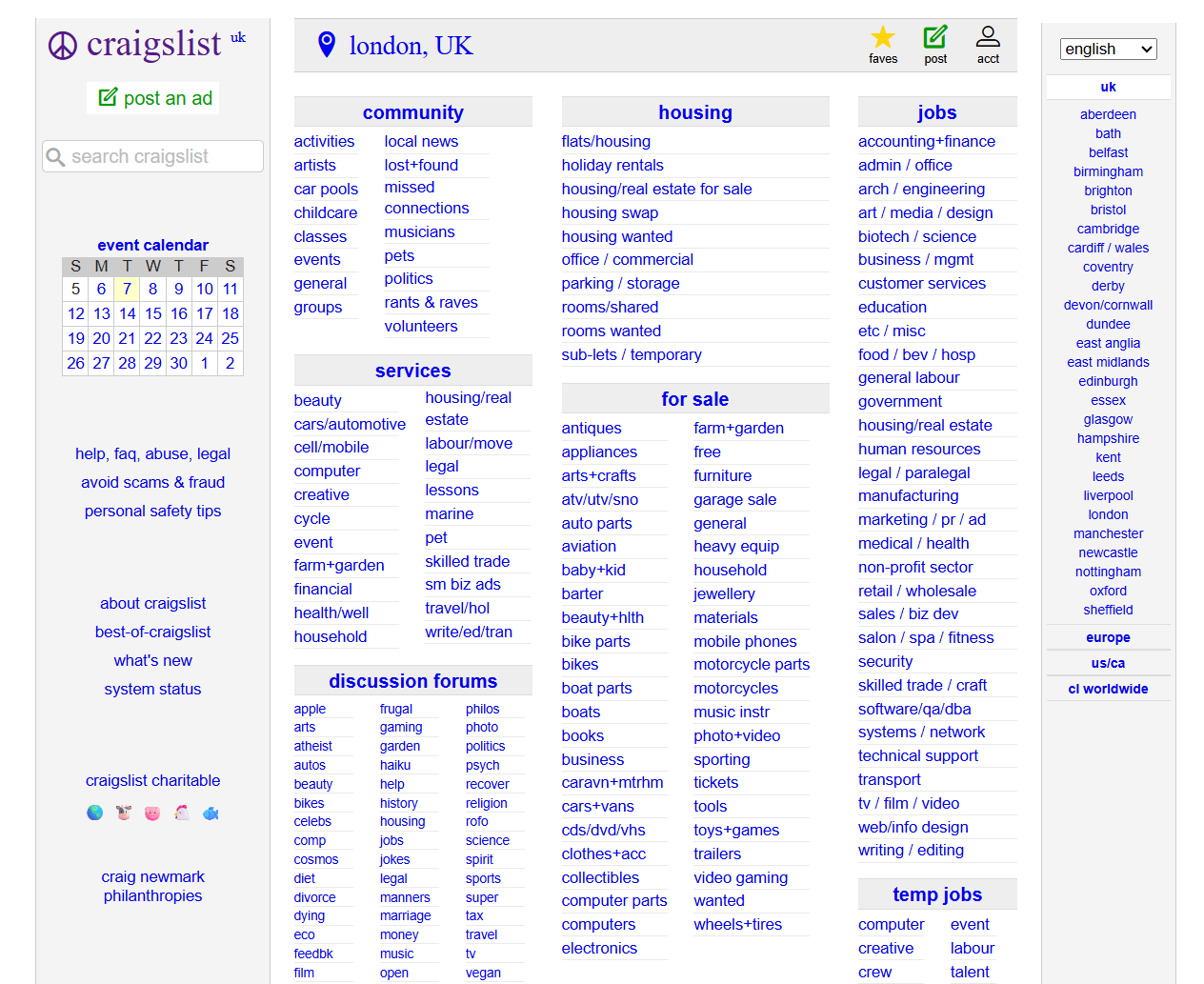
Craigslist is a local classifieds platform where you can sell and advertise goods, housing, jobs, and services. The platform organizes listings by city and region, keeping transactions strictly local. It's ideal if you're selling large items like furniture and vehicles, or you're providing a service.
Advantages over Facebook Marketplace
- Popularity: The platform records around 102 million monthly page views.
- No account requirement for buyers: Unlike Facebook Marketplace, Craigslist lets anyone browse and respond to listings through anonymous email relay, expanding your potential buyer pool.
- Simple text-based format favors substance: Craigslist's no-frills design puts detailed descriptions front and center rather than relying on photo quality or social proof, which works better for certain categories like housing and services.
Pros
- Zero listing fees for “for sale by owner” items: Craigslist offers free listings for most personal ‘for sale by owner’ categories, and you can post multiple items without per‑listing fees, but some categories (like jobs, rentals in select cities, and dealer listings) do charge posting fees.
- Decades of local buyer traffic: Craigslist has operated since 1995 and continues to attract substantial traffic in many cities, especially for bulky local items like couches, refrigerators, and used cars.
Cons
- Scammers target Craigslist sellers: Fake payment confirmations, overpayment check schemes, and phishing attempts happen regularly.
Fees
Although it’s free for most for-sale categories, Craigslist does charge listing fees in certain areas, including:
- Vehicles (especially cars/trucks): About $5 per listing for private sellers and similar fees for dealers in many U.S. markets.
- Job postings: Roughly $7–$75+ per post, varying by city and job type.
- Some housing, rental categories, various by‑dealer or services: Commonly about $3–$10+ per listing, depending on location and category.
The bottom line
Craigslist works best for local sales, community reach, and selling large or hard‑to‑ship items, often with no fees for typical personal “for sale by owner” listings. But, vehicles, jobs, some rentals, and dealer or service ads usually carry (low) posting fees.
2. eBay: Best for auctions and buy it now
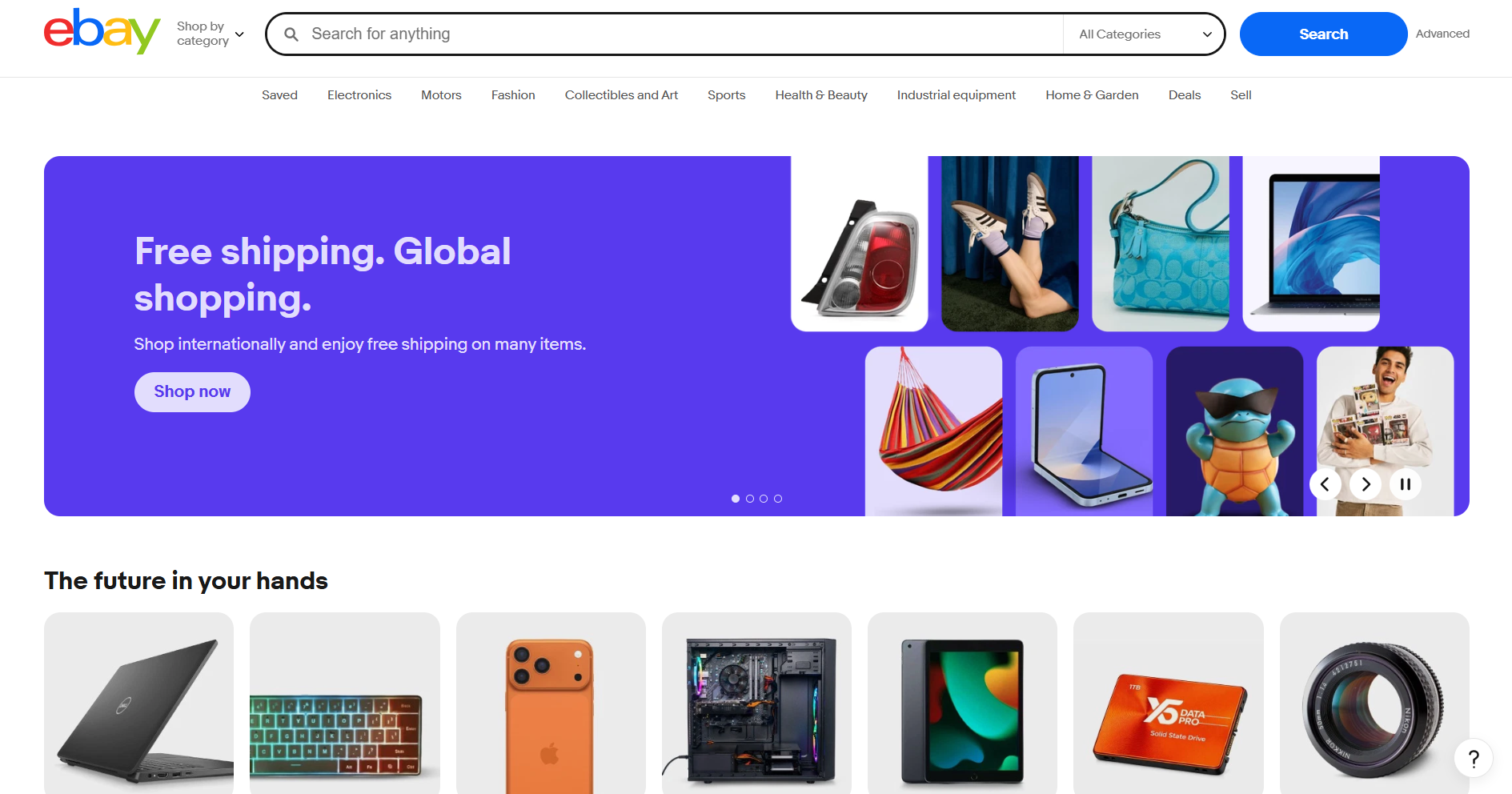
eBay gives resellers access to a global marketplace and powerful selling features. It suits high-volume sellers handling mixed inventory, brands targeting buyers outside their home market, and e-commerce companies that want the option to run auctions alongside fixed-price listings.
Advantages over Facebook Marketplace
- AI-powered listing tools save time: eBay offers AI tools that can generate titles, descriptions, suggested categories, and some item specifics from your photos and basic input.
- Global reach: eBay’s global reach and cross-border shipping tools can significantly expand your potential buyer pool beyond your home country, while Facebook Marketplace suits local and in-country sales, even though some shipping options exist.
- Large active buyer base: eBay’s 135 million active buyers worldwide dwarfs Facebook Marketplace’s locally centered audience, putting listings in front of far more shoppers.
Pros
- Auction format: Unlike Facebook Marketplace, which supports fixed-price listing and negotiation, eBay’s auction format can drive bidding for rare or high-demand items, sometimes resulting in sale prices above the starting bid.
- Professional tools: eBay’s Seller Hub offers features such as bulk listing edits, inventory-style management, Promoted Listings, and integrated research.
Cons
- Complex fees: eBay uses a more complicated fee structure than Facebook Marketplace’s fee‑free local pickups, typically charging around 10–15%+ of the total sale as a final value fee plus a small per‑order fee (about $0.30–$0.40) and potential insertion fees after your free listing allotment.
Fees
eBay charges final value fees ranging 10–15%, depending on your category and seller level. Read our article that breaks down all eBay fees.
The bottom line
eBay offers sellers greater control, broader reach, and more advanced selling options than Facebook Marketplace. It’s a strong choice for anyone serious about scaling sales and reaching buyers beyond their local area.
3. OfferUp: Best mobile alternative
OfferUp targets sellers who want a mobile-first way to sell locally. The platform focuses on nearby buyers, quick messaging, and in-person exchanges, making it effective for clearing items quickly without shipping.
Advantages over Facebook Marketplace
- TruYou verification system: The optional TruYou program verifies a user’s identity using a mobile number, photos of a government ID, and a selfie, then shows a TruYou badge on user profiles.
- Local, in‑person focus: The platform helps find nearby buyers, with in‑app messaging that supports in‑person exchanges.
- Local sales are free: OfferUp doesn’t charge fees or take a commission on in‑person cash transactions. However, OfferUp charges a monthly fee for listing limits by category. Exceeding those may require paying for extra listings or a subscription.
Pros
- Free local listings: Local in‑person sales are fee‑free.
- Potential for same-day sales: Many sellers connect with buyers the same day and close deals quickly with in-person payment.
Cons
- No-shows happen: Missed meetups happen often, so sellers usually keep more than one buyer conversation active.
Fees
Local sales are free, but OfferUp charges a 12.9% fee on the sale price for shipping, with a $1.99 minimum per transaction.
The bottom line
OfferUp is a strong Facebook Marketplace alternative for sellers who want quick local sales, simple listings via a mobile app, and in-person pickups without shipping.
4. Poshmark: Best for fashion resale

Poshmark is a Facebook Marketplace alternative for clothing and accessory sellers. The platform focuses on new and pre-owned apparel, shoes, accessories, and beauty items.
Advantages over Facebook Marketplace
- Social shopping experience: Buyers can follow closets, share listings, and shop Posh Parties and live shows, which are app-based live-streamed events designed to move inventory faster.
- Seller protection: Poshmark includes a 3-day buyer-acceptance window after delivery. Once that period ends, Poshmark releases funds to the seller.
- Prepaid shipping labels: If you opt for Poshmark shipping, every sale includes a prepaid USPS Ground Advantage label for packages up to 5 pounds.
Pros
- Social engagement tools: Likes, shares, and community events help items gain traction without paid promotion.
- Built-in fashion audience: Shoppers come to Poshmark specifically to buy clothing and accessories, which increases exposure for fashion-focused listings.
Cons
- Limited to fashion and accessories: Poshmark primarily focuses on fashion and closely related categories. If you sell many non‑fashion items (e.g., tools, large electronics), you’ll likely need a different marketplace for those.
Fees
Poshmark charges a flat $2.95 fee for sales under $15, and takes 20% of the sale price for orders $15 or more.
The bottom line
Poshmark is a strong Facebook Marketplace alternative for fashion resellers seeking a focused audience, simple shipping, and social selling tools.
5. Etsy: Best for handmade items
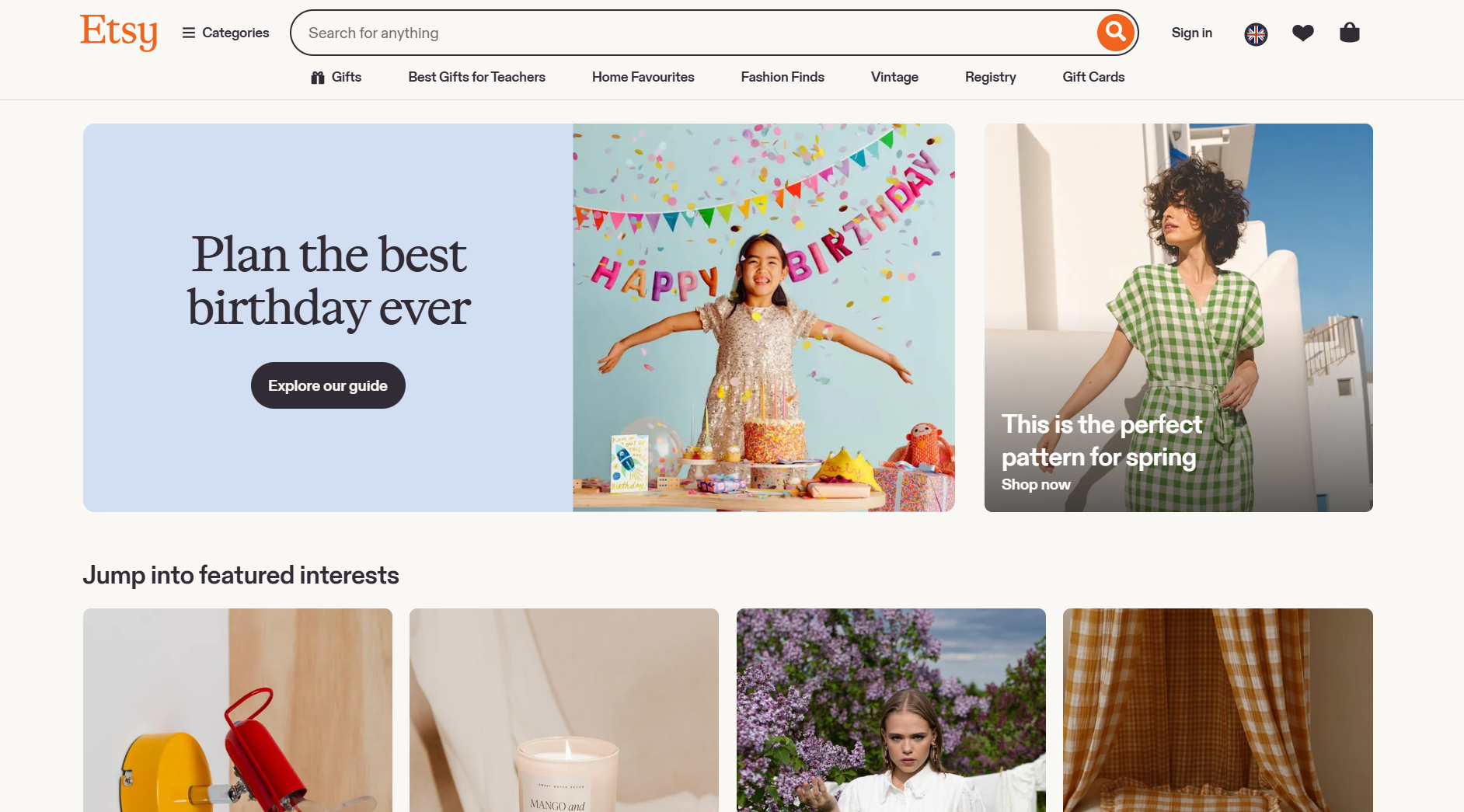
Etsy suits sellers offering handmade, vintage, or craft materials. The platform attracts buyers who value originality and craftsmanship, making it a strong fit for creators, small brands, and side hustlers selling unique items.
Advantages over Facebook Marketplace
- Shop branding tools: Sellers create a storefront with banners, shop descriptions, and cohesive visuals to build buyer trust and create repeat sales.
- Handmade and vintage focus: Etsy attracts shoppers who actively seek one-of-a-kind, non-mass-produced products.
- Customization options: Built-in personalization fields support custom sizes, colors, engravings, and made-to-order requests directly within listings.
Pros
- Buyer intent: Etsy shoppers arrive ready to spend on handmade and vintage items rather than bargain hunting for everyday goods.
- Known as a platform for handmade goods: Buyers expect higher prices for artisan goods, which means you can earn higher margins.
Cons
- Several fees: Listing, transaction, and payment processing fees can add up, often exceeding 15%.
Fees
Etsy charges a $0.20 listing fee every four months or when an item sells. It also takes a 6.5% transaction fee on the total sale amount, including shipping, plus 3% + $0.25 for payment processing for U.S. sellers.
Shops with trailing 12-month sales over $10,000 must use Offsite Ads, with a 12% fee on attributed orders. Sellers below that threshold are enrolled into Offsite Ads by default but may opt out; if they remain enrolled, a 15% fee applies to attributed sales.
The bottom line
Etsy is a strong Facebook Marketplace alternative for sellers focused on handmade, vintage, or custom products who want access to buyers actively searching for unique goods.
6. Whatnot: Best for live selling
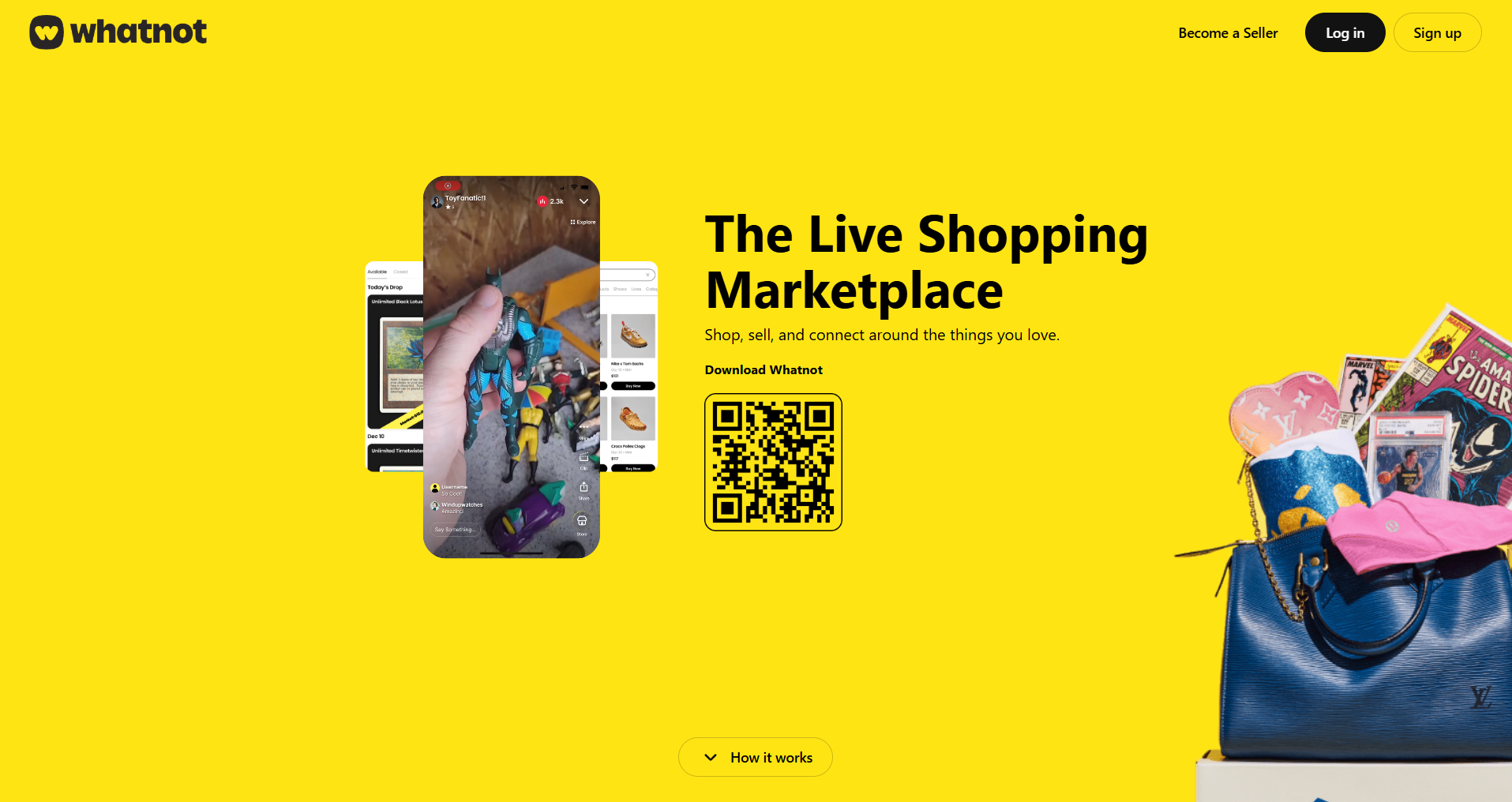
Whatnot features live auctions and livestream shopping for collectibles, trading cards, sneakers, and limited-run products.
Advantages over Facebook Marketplace
- Integrated payments and shipping: The platform handles checkout and issues shipping labels, allowing sellers to focus on selling during livestreams.
- Live auction format: Whatnot lets sellers run live streams where buyers bid in real time, creating urgency and faster sales than static listings.
- Built-in audience discovery: Active shoppers can find live shows on the app, helping sellers reach buyers beyond their local area.
Pros
- High engagement and strong communities: Real-time chat and live bidding keep viewers engaged and can drive final prices up for in-demand items, especially when buyers know market values and are ready to spend.
- Strong niche communities: Categories like cards, comics, toys, and sneakers attract buyers who are willing to shop for what they want.
Cons
- Learning curve & pacing: Running an effective live show requires on-camera comfort, pacing, and consistent scheduling.
Fees
Whatnot charges an 8% marketplace fee for most items, and 4% on coins and money. It adds a standard payment processing fee of around 2.9% and $0.30 per transaction. Shipping costs vary based on label type and package size.
The bottom line
Whatnot is a Facebook Marketplace alternative for sellers seeking live auctions, high buyer engagement, and fast-moving sales driven by real-time demand.
7. Bonanza: Best for collectibles
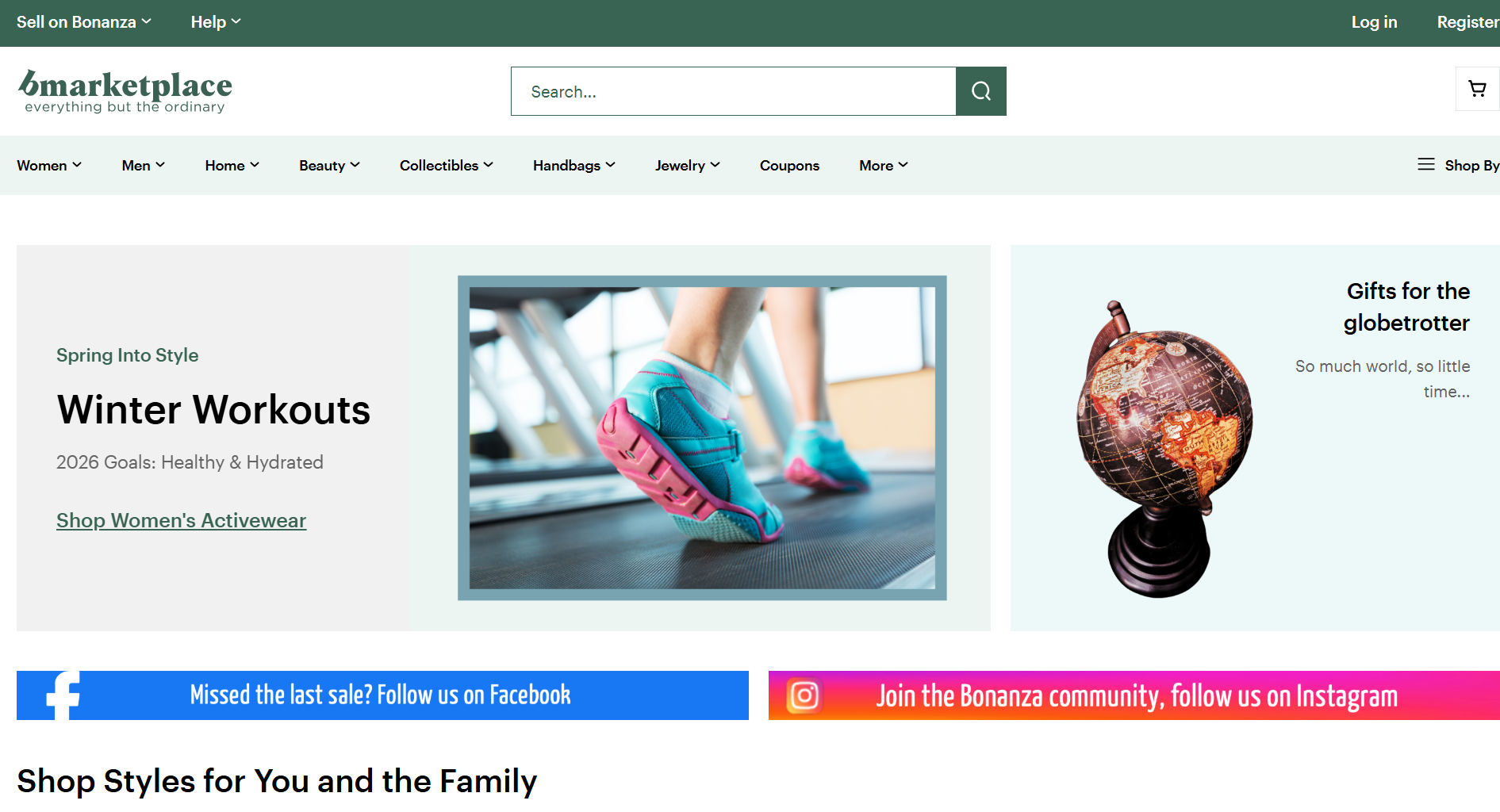
Bonanza caters to sellers offering collectibles, vintage items, and niche products. It’s appealing for specialized inventory that can get buried on larger marketplaces.
Advantages over Facebook Marketplace
- Advertising credits: Sellers who reach the monthly listing-fee cap receive a $5 Bonanza Ads credit they can use to promote listings, primarily through Bonanza’s Google Shopping integration.
- Bulk import tools: Bonanza lets you import listings from eBay, Amazon, or Shopify, helping you move inventory quickly.
- Google Shopping integration: Listings automatically feed into Google Shopping, driving external traffic without running separate ads.
Pros
- Seller-friendly policies: Bonanza markets itself as a more seller-friendly marketplace with straightforward fees and policies.
- Fewer competitors: Because Bonanza has fewer sellers than major marketplaces, some listings may face less direct competition, making it easier to stand out in particular niches.
Cons
- Limited buyer traffic: The smaller audience can result in slower sales for some items.
Fees
- Bonanza’s fees include a one-time $14.99 setup charge for new sellers
- A $0.25 transaction fee per sale
- A sales fee of 11% on the final value
- An additional 1.5% only on the amount of a sale over $4,000
- Sellers with more than 50 active listings pay $0.03 per item per month, capped at $20
- Sellers receive $5 in Bonanza Ads credit if the cap is reached
The bottom line
Bonanza is a strong Facebook Marketplace alternative for collectors and niche sellers seeking less competition and greater visibility for specialized items.
8. WooCommerce: Best for e-commerce retailers
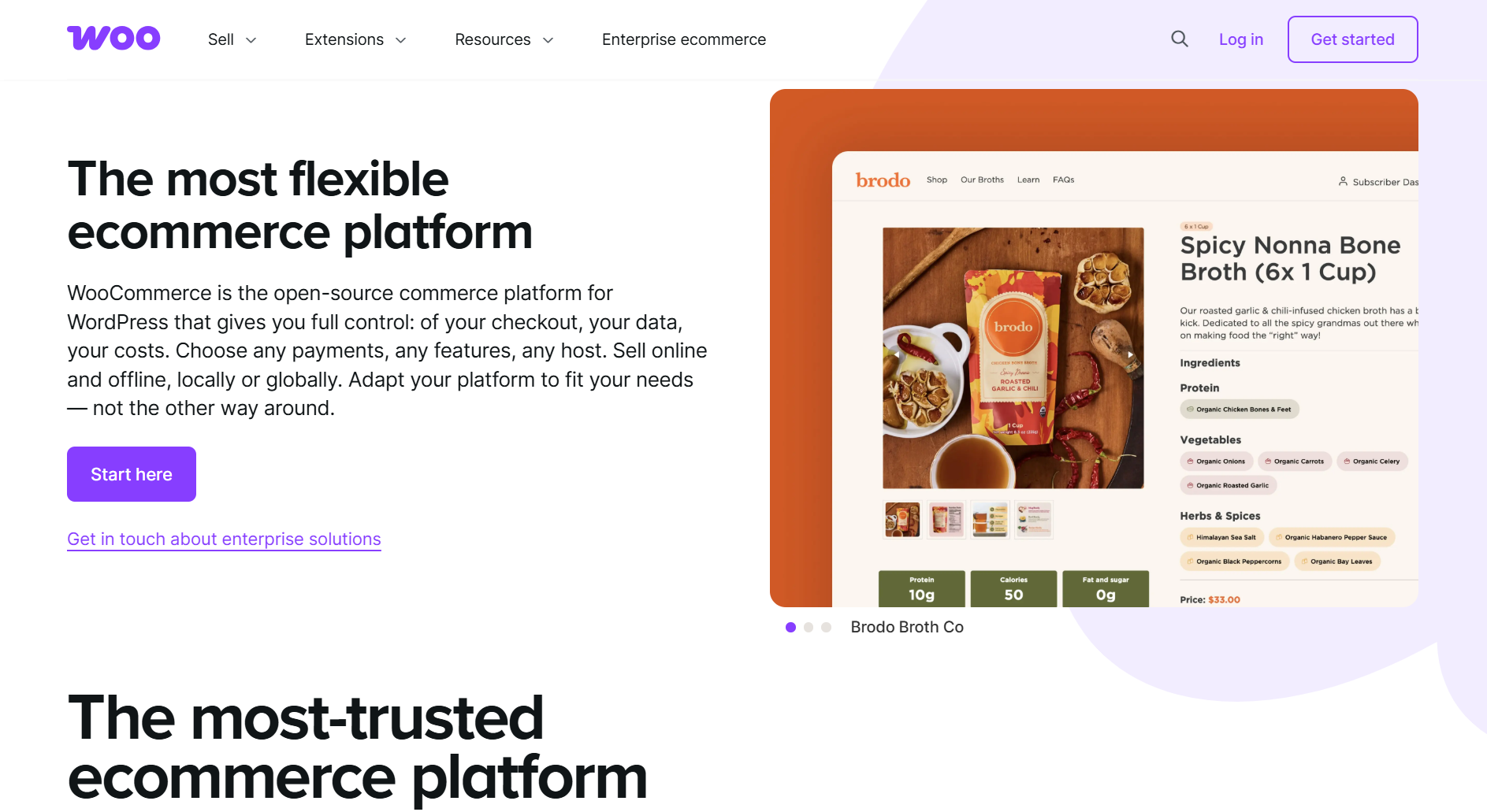
WooCommerce is an open-source plugin that lets you turn your WordPress website into an online store. It’s suited for e-commerce sellers with developer experience.
Advantages over Facebook Marketplace
- Integrates with WordPress for content marketing: Built directly on WordPress, WooCommerce connects with blogging and SEO tools to attract organic traffic.
- Complete customization control: WooCommerce is open source, so sellers with programming skills can adjust themes, layouts, and functionality.
- Plugin ecosystem: Thousands of extensions support subscriptions, bookings, memberships, marketing tools, and analytics.
Pros
- Flexibility: You can customize store design, checkout flow, and product types.
- Free core plugin: WooCommerce has no core subscription fee, but you’ll pay for hosting, payment processing, and any premium themes or extensions.
Cons
- Coding experience is required: Managing hosting, updates, security, and plugins requires technical expertise or external support.
Fees
- WooCommerce itself is free.
- Sellers pay for hosting: third-party providers like Bluehost or Hostinger start as low as $3–$7/month, while managed WordPress.com hosting starts at around $25/month.
- Sellers pay payment processing fees of around 2.9% and $0.30 per transaction.
- Optional plugins, developer help, and SSL certificates can add anywhere from $1 to $500 per year.
The bottom line
WooCommerce is a powerful Facebook Marketplace alternative for e-commerce retailers who want complete control, scalability, and ownership of their online store.
9. Depop: Best for Gen Z + Young Millennial buyers
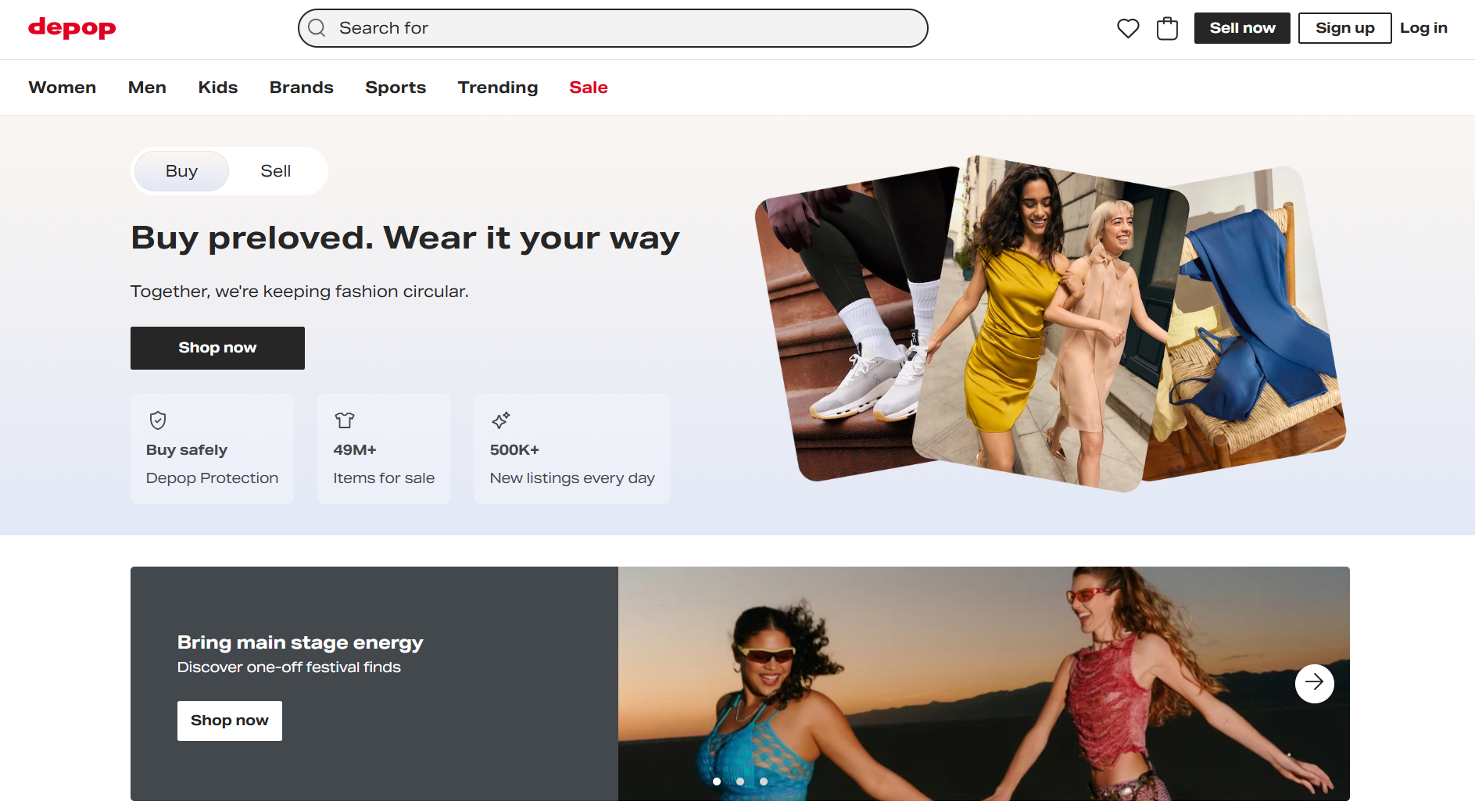
Depop is for sellers targeting Gen Z and younger Millennial shoppers, blending resale with social media features such as liking and following.
Advantages over Facebook Marketplace
- Shop customization: Create a branded profile with a bio, curated collections, and a consistent visual style.
- Depop Top Seller Program: High-performing sellers can qualify for added perks like priority support, deeper insights, promotional boosts, and early access to new tools.
- Instagram-style interface: Depop uses a photo-first feed with likes, follows, and comments, which helps listings spread through discovery rather than search alone.
Pros
- Visual storytelling: Strong photography and styling help you build followers and repeat buyers.
- Trendy Gen Z + younger Millennial audience: The buyer base skews younger and values style, resale culture, and sustainability.
Cons
- Strong fashion focus: Depop prioritizes fashion- and style-led categories, so it’s not ideal if most of your inventory is non‑fashion or bulky general merchandise.
Fees
Sellers inside the U.S. and U.K. don’t pay platform or selling fees. They only pay a transaction fee of around 3.3% + $0.45 (U.S.) or 2.9% + £0.30 (U.K.) per transaction. If you’re outside the U.S. and U.K., Depop charges a 10% selling fee on the total transaction amount plus processing fees.
The bottom line
Depop works well as a Facebook Marketplace alternative for fashion sellers who want to reach Gen Z and young Millennial buyers through visual, community-oriented selling.
10. Mercari: Best for everyday items
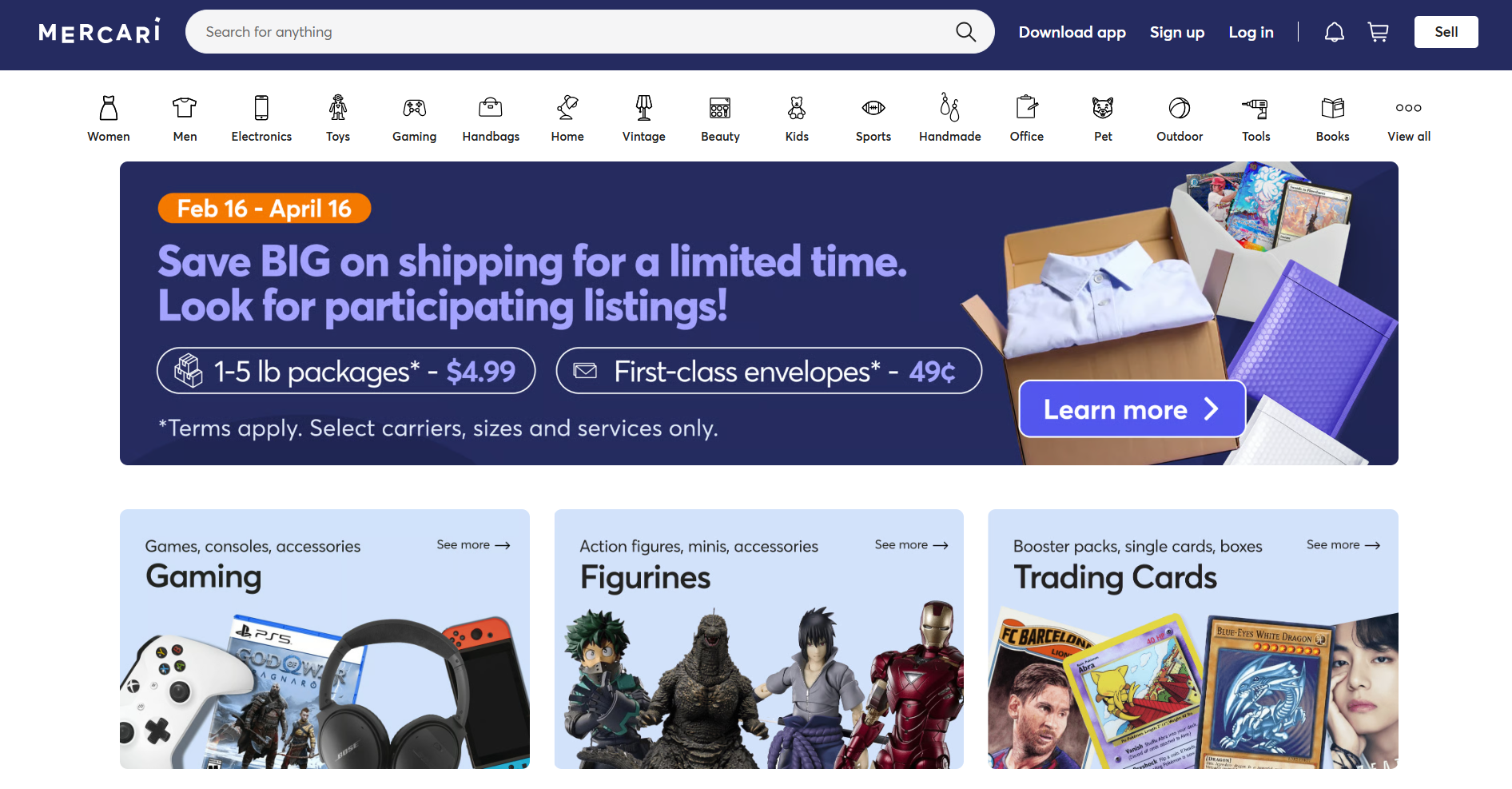
Mercari is for selling everyday household items like clothing, small electronics, toys, kitchenware, and home decor.
Advantages over Facebook Marketplace
- Built-in shipping protection: Payments stay on hold until delivery confirmation, which reduces disputes and protects both sides.
- Convenient shipping: Mercari offers discounted USPS, FedEx, and UPS labels directly in the app, with automatic tracking updates from shipment to delivery.
- Quick listing tools: Smart Pricing suggests list prices based on recent sales data, helping you move Mercari items faster without manual research.
Pros
- Quick mobile listings: The app's camera integration makes it easy to list household items in just a few minutes.
- Simple flat selling fee: Sellers pay a single percentage per sale without listing fees or monthly subscriptions.
Cons
- Smaller buyer pool: Mercari has fewer active buyers than larger marketplaces, which can affect sell-through speed for some items.
Fees
Mercari charges a 10% selling fee on each completed sale, including shipping if the buyer pays for it. Payment processing is included. Buyers pay a 3.6% buyer protection fee. Additional fees may apply, including:
- 72-hour return window (where sellers typically lose the 10% fee)
- $2 penalty for failed direct deposits
- $3 Instant Pay fee
- $8 correction fee for underpaid shipping labels
The bottom line
Mercari is for selling household goods through shipped orders with straightforward pricing and minimal setup.
How I tested these Facebook Marketplace alternatives
I started with 20 Facebook Marketplace alternatives and listed items across several categories, including phone cases, hoodies, and anime sock bundles. Here’s what I looked for when selecting my top 10:
- Ease of listing: Speed matters when you're managing inventory across platforms. I timed how long it took to create a complete listing on each marketplace, from uploading photos and descriptions to publishing.
- Fee structures and transparency: Hidden costs and high fees can quickly erode your profits. I calculated the total cost of selling a $50 item and a $200 item on each platform, factoring in listing fees, final value fees, payment processing, and shipping label costs.
- Buyer reach and engagement: The more eyeballs on your products, the higher the likelihood of a faster sale. I tracked how quickly test listings gained views, likes, and messages within the first 24 hours.
I also considered these factors:
- Seller protection and dispute resolution: Being scammed or facing a bogus return claim can erode your margins. I reviewed each platform's buyer and seller protection policies, payment hold periods, and dispute resolution processes.
- Shipping and logistics support: Fumbling through shipping can cost you time and money. I tested how each platform handles shipping labels, tracking integration, and packaging requirements.
My final verdict: Which Facebook Marketplace alternative should you choose?
Each of my top 10 Facebook Marketplace alternatives serves as an excellent option. But they all suit different types of sellers with unique needs and inventory. Here's how to pick the one for you:
Choose Craigslist if you …
Want to sell large, bulky items like furniture or vehicles locally without paying listing fees and prefer cash transactions and face-to-face meetups.
Choose eBay if you …
Plan to scale your reselling business with high-volume inventory and need access to a massive global buyer base of 135 million active users.
Choose OfferUp if you …
Prefer selling locally through a mobile app with quick in-person exchanges and want to avoid shipping hassles and fees.
Choose Poshmark if you …
Specialize in selling clothing, shoes, and accessories, appreciate built-in prepaid shipping labels and 3-day seller protection.
Choose Etsy if you …
Create handmade goods, sell vintage items that are at least 20 years old, or offer customizable products.
Choose Whatnot if you …
Enjoy live selling and feel comfortable on camera, and focus on collectibles like trading cards, sneakers, or comics.
Choose Bonanza if you …
Sell niche collectibles or rare vintage items and want automatic Google Shopping integration.
Choose WooCommerce if you …
Have WordPress and coding experience, want complete control over your store's design and functionality.
Choose Depop if you …
Target Gen Z and younger Millennial fashion shoppers with trendy or vintage clothing that offers strong visual appeal.
Choose Mercari if you …
Primarily sell everyday items like clothes, toys, kitchenware, and small electronics, and want straightforward 10% selling fees.
Sell more listings with Nifty
If you want Facebook Marketplace alternatives with greater reach, consider listing on multiple platforms. You can manage all your item info in one place with Nifty, a crosslisting and automation tool that helps you reduce manual listing steps and gives you insights into your selling analytics.
Here’s why Nifty’s so helpful:
- AI listing generation: Take a photo and let Nifty generate a polished listing with strong titles, clear descriptions, and relevant hashtags. It works in the cloud, runs smoothly on mobile, and keeps listing prep fast.
- Crosslist now: Publish items to Poshmark, eBay, Mercari, Depop, Etsy, and more in just a few clicks. No copying text and no bouncing between tabs with a clunky Chrome extension. More marketplaces are on the way.
- Automatic delisting? Handled: When an item sells on one platform, Nifty removes it everywhere else automatically. That means fewer canceled orders and no awkward follow-up messages to buyers.
- Bulk tools = no busywork: Relist, share, discount, or update multiple items at once. You can even schedule drafts to go live later, so your store stays active without daily micromanagement.
- Analytics and profits are real: See sales, fees, best sellers, and slow movers in one clear dashboard. This makes it easier to spot patterns and decide where to focus your time.
Nifty pays for itself in just a few weeks. So … what are you waiting for? Start with a 7-day free trial and see how Nifty can help you sell more items quickly.
FAQs
1. What are the best Facebook Marketplace alternatives for selling locally?
The best Facebook Marketplace alternatives for selling locally in 2026 are Craigslist and OfferUp. Craigslist offers free listings for most “for sale by owner” items. OfferUp provides a mobile‑based experience with TruYou ID verification and in‑app messaging. Local in‑person cash deals are typically fee‑free.
2. Which Facebook Marketplace alternative is best for avoiding scams?
Poshmark is the best alternative for shipped sales, and OfferUp for local transactions. Poshmark helps prevent fraud by holding payments until delivery and giving buyers a short window to report issues before releasing funds. OfferUp’s TruYou program (phone, government ID, and selfie verification) and profile ratings add a layer of trust.
3. Are there Facebook Marketplace alternatives with better seller protection and shipping tools?
Yes, there are Facebook Marketplace alternatives with better seller protection and shipping tools. Poshmark issues prepaid USPS Ground Advantage labels with each sale and releases funds after the buyer accepts, or about 3 days post‑delivery, providing clear seller protection. Mercari offers discounted USPS/UPS/FedEx labels with built‑in tracking and holds payouts until delivery and rating are confirmed.


.png)
.png)
.png)