
The 10 best reselling websites: Where to sell for a profit | 2026

After testing 20 reselling websites, I selected the 10 best that serve different types of resellers. Compare platforms like Poshmark and Depop for selling fashion items with marketplaces like eBay and Whatnot for auctions, so you can select the right ones for reselling your products.
How I tested these reselling websites
I started with 20 different reselling websites, listing products on each and tracking performance metrics such as impressions and fulfillment times. Here’s what I looked for when selecting my top 10:
- Listing speed and mobile usability: Platforms that let you post items in under five minutes from your phone save hours weekly. I measured the time each platform took from photo upload to published listing, testing both mobile apps and desktop interfaces.
- Fee transparency and payout timing: Hidden costs can eat into profit margins. I tracked total fees per transaction, including payment processing and listing charges, and measured how quickly funds reached my bank account after each sale.
- Buyer behavior and pricing power: Some platforms attract bargain hunters who never pay the asking price, while others support premium pricing. I listed a few identical items across similar sites to compare final sale prices and negotiation frequency.
I also looked for the following:
- Platform-specific tools and automation: Manual work limits a reseller's scaling potential when managing more than 50 active listings. I tested bulk-editing features, relisting tools, and automated pricing systems to measure how much each platform reduced daily workload.
- Support quality: Every seller eventually faces a problem buyer or payment issue. I opened support tickets on each platform for common issues, such as late shipments and return disputes, and recorded response times and quality.
The 10 best reselling websites in 2026: At a glance
Any one of my top 10 reselling websites is a good choice. However, the platform you pick depends on what you want to sell and the fees you can absorb:
| Reselling website | Best for | Pros | Cons | Fees |
|---|---|---|---|---|
| 1. eBay | High-volume sellers needing worldwide buyer reach | Global buyers, powerful seller growth tools | Buyer-friendly policies, multiple selling fees | 10–15% + listing fees |
| 2. Etsy | Handmade creators and vintage product sellers | Handmade audience, strong built-in search | Heavy competition, fees stack quickly | 10–13% total with processing fees, but 20%+ with ad fees |
| 3. Mercari | Casual sellers wanting fast mobile listings | Fast listings, easy beginner-friendly selling | Buyers negotiate aggressively on prices | Flat 10% on total sale |
| 4. Poshmark | Fashion sellers building social-driven storefronts | Fashion audience, strong seller protections | High selling fees, constant engagement required | 20% over $15, $2.95 under $15 |
| 5. Depop | Vintage fashion sellers targeting younger buyers | Low fees, international fashion audience | Slower payouts after delivery confirmation | Processing fee 3.3% + $0.45 (U.S. sellers) |
| 6. Facebook Marketplace | Selling bulky items, in-person | No local fees, massive buyer audience | Weak shipping tools for online sales | Zero local; 10% shipped items |
| 7. Grailed | Designer fashion and luxury streetwear resellers | Buyers willing to pay premiums, trusted authentication | Tough competition from established sellers | 9% on sales over $120, 6% under $120+ payment processing fees |
| 8. Whatnot | Live auction sellers of collectibles | Competitive auctions, loyal repeat audiences | Streaming consistently requires significant time | 4–8% + payment processing |
| 9. StockX | Sneaker and luxury goods investors | Market pricing, trusted authentication system | Authentication delays seller payouts | Tiered; 7–9% depending on level + 3% payment processing |
| 10. Curtsy | Affordable women's fashion resale sellers | Fast fashion sales, simple listing process | Women's clothing category only | $1 + 5% selling fee + 2.9% payment processing fee (imported listings without free shipping carry over original platform's fees) |
1. eBay: The best reselling website of 2026
What it is: eBay is a global marketplace connecting sellers to around 136 million buyers in over 190 countries. It supports auction-style sales, fixed-price listings, and business storefronts for any legal product category.
Best for: Resellers of any size, businesses selling internationally, or anyone dealing in collectibles, electronics, or niche goods where auctions drive better pricing.
I’ve been selling on eBay since 2007, listing vintage camera gear, hoodies, and vinyl records. A few years ago, I ran a 7-day auction for an early R.L. Burnside record. Bidders from Japan, the Netherlands, and Germany pushed the final price 125% above my asking price. Needless to say, I was happy with the result.
Key features
- Worldwide buyer access: Sellers and buyers frequently highlight the platform’s international marketplace, which often drives higher sale prices through global demand.
- Advanced seller tools: Features such as Seller Hub and Terapeak offer sales data, demand insights, and inventory management tools.
- Broad product eligibility: You can list nearly any legal item subject to eBay’s prohibited and restricted item policies, ranging from apparel to vehicles.
eBay pros
- Flexible selling formats: Sellers can mix auctions and fixed-price listings, add reserve prices, accept best offers, and offer bulk discounts to adjust pricing strategies based on item type and demand.
- Tools that support growth: Many sellers recommend eBay’s selling tools because they help identify strong performers while flagging items that fail to gain traction.
eBay cons
- Buyer-leaning policies: Seller complaints often point to dispute and return policies that favor buyers. Automated rulings may side with buyers making inaccurate claims, which can result in financial losses for sellers.
Seller fees
eBay charges sellers fees of about 10–15%, depending on the item category. Some items have different rates based on price or special rules, such as luxury handbags, and these fees can change over time. Sellers should always check eBay’s current fee page before listing an item.
For instance, eBay takes 8% on sneakers if the sale is over $150, and 13.6% if it’s less than $150. The platform charges 15% on handbag sales of $2,000 or less. But if the handbag is $2,000 or more, eBay takes 9%.
It also charges a $0.35 listing fee after 250 free monthly listings and a transaction fee of $0.30–$0.40. Many fees vary based on both the item’s final sale price and its category.
Optional Promoted Listings let you choose an ad rate (a percentage of the item’s sale price), which directly affects your advertising cost when the item sells.
What real users say

“I love the whole bidding system. Here in my local area we use a marketplace you can do a higher bidding of 1 cent. After that people don't pay and you've lost the other bidding user who might have seriously attempted to actually buy something.” (eBay user, Reddit; November 19th, 2025)
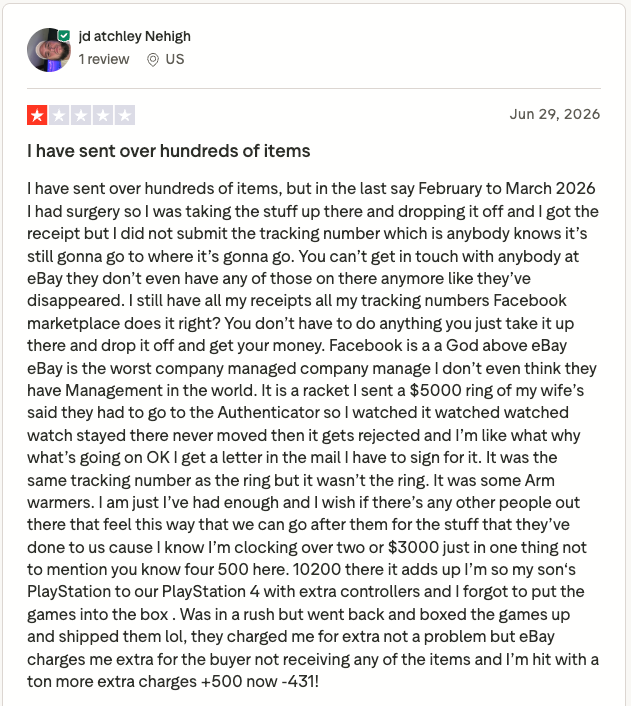
“You can’t get in touch with anybody at eBay they don’t even have any of those on there anymore like they’ve disappeared.” (JD., Trustpilot; June 29th, 2026)
Bottom line
eBay fits resellers who want worldwide exposure and access to advanced selling tools, even if that means dealing with several fees and heavy competition. Sellers with niche, handmade products may find platforms like Etsy more practical.
2. Etsy: Best for creators and crafters
What it is: Etsy specializes in handmade goods, vintage items (20+ years old), and craft supplies. It connects around 86.6 million active buyers to independent creators worldwide.
Best for: Sellers of handmade jewelry, vintage clothing, and craft supplies.
I sell pottery clay on Etsy to buyers worldwide. Usually, my clay sells in as little as 2 days and as long as 3 weeks. Sometimes I use Etsy Ads with a $5 daily budget to promote my clay, and it usually sells within 2 to 5 days of the ad being activated.
Key features
- Handmade‑first marketplace: Etsy attracts buyers who actively look for handmade goods, vintage items, and craft supplies, and many are willing to pay higher prices for unique or customized products.
- Built‑in SEO and search tools: The website provides keyword fields, listing quality scores, and data on what buyers search for.
- Google Shopping exposure: Your listings can appear on Google Shopping and other external channels, which can increase visibility beyond Etsy’s internal search.
Etsy pros
- Inventory tools: Etsy offers inventory tracking, buyer messaging, discount and coupon tools, tax summaries, and advertising options to help manage and grow your shop.
- Global buyer access: The platform reaches buyers worldwide, with strong buyer activity in North America and Europe. Etsy also handles currency conversion, some shipping estimates, and region‑specific payment methods.
Etsy cons
- High competition: With over 5.5 million active sellers, standing out can be difficult for new shops, and Etsy’s search system tends to reward listings and shops with strong sales history, good reviews, and consistent optimization.
What real users say

“Etsy is a great shopping website and I especially love the jewellery shops and their Sellers. I am a customer who loves gemstones and I have purchased a number of truly beautiful rings and pendants.” (Karina F., Trustpilot; June 19th, 2026)
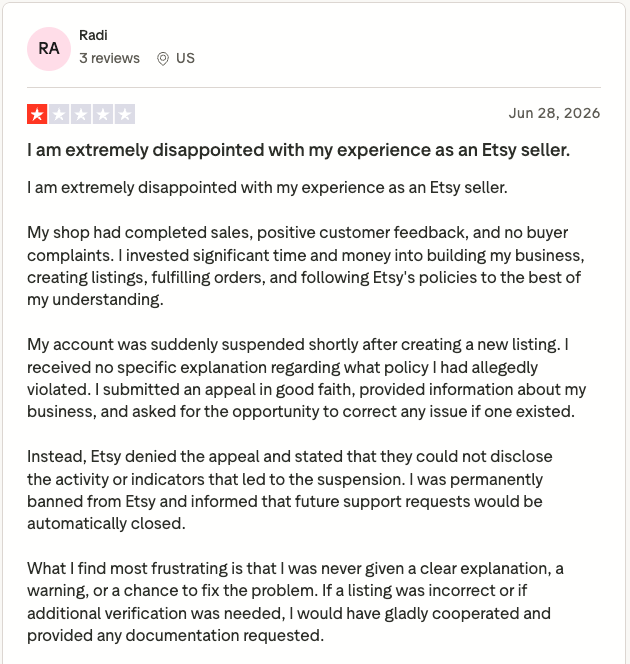
“My account was suddenly suspended shortly after creating a new listing. I received no specific explanation regarding what policy I had allegedly violated. I submitted an appeal in good faith, provided information about my business, and asked for the opportunity to correct any issue if one existed.” (Radi., Trustpilot; June 28th, 2026)
Seller fees
Etsy charges a $0.20 listing fee when you create a listing. The listing lasts 4 months, and renewing it (including auto-renew on multi-quantity listings) costs another $0.20.
U.S. sellers typically pay a 6.5% transaction fee on the item price plus shipping. They also pay a payment processing fee, which is often around 3% + $0.25 per order, though rates vary by country and may change.
If your listing currency differs from your payment account currency, Etsy may charge a currency conversion fee, commonly around 2.5%, in addition to converting the payment at the market rate.
Shops with under $10,000 in sales over the past year can choose to use Offsite Ads, which cost 15% on attributed orders. Shops that reach $10,000 in sales must participate, but they pay 12% on those ad-driven sales.
When all these fees stack up together, especially with Offsite Ads or international orders, Etsy’s total fees can reach or exceed 20% of the order.
Bottom line
Etsy is a strong fit for sellers offering handmade, vintage, or craft products who are comfortable paying higher fees in exchange for that ecosystem. If you want less SEO and lower fees, try Mercari.
3. Mercari: Best for sellers clearing space at home
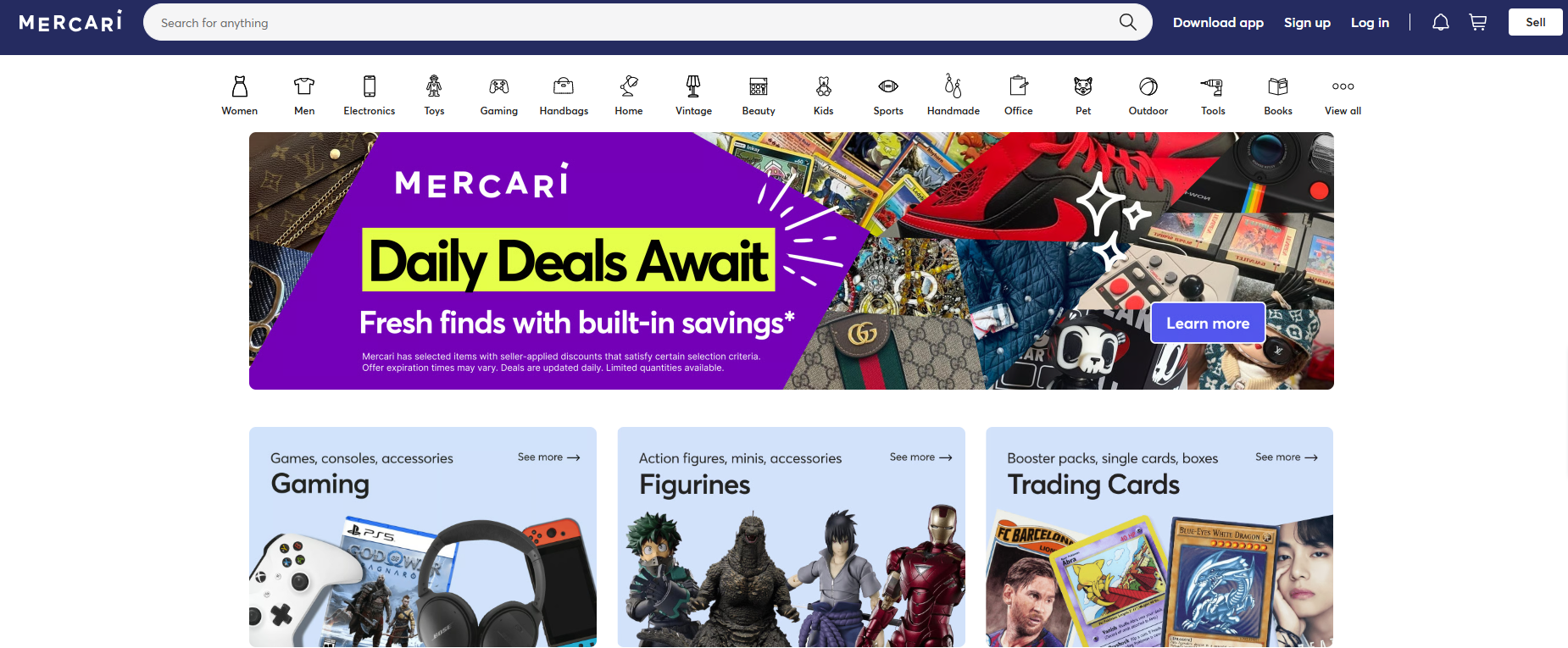
What it is: Mercari is a reselling website with over 22 million active users who buy and sell everything from clothing to electronics through a simple app interface.
Best for: Casual sellers decluttering homes, parents offloading outgrown kids' items, or side hustlers flipping thrift finds or cheap items.
I use Mercari to sell phone cases and wall clocks. Usually, I can take a quick picture with my phone and upload listings in under 2 minutes. Sometimes, items sell in just a few days, but most Mercari buyers drive a hard bargain, so be ready to negotiate.
Key features
- All-category marketplace: Mercari allows sellers to list almost any legal product, including electronics, home items, collectibles, books, toys, and apparel.
- Wide buyer appeal: Because sellers can list many product types, they can reach different buyer groups instead of relying on short-term trends.
- Built-in shipping and dispute handling: Mercari calculates shipping costs automatically and provides prepaid labels. Tracking, delivery confirmation, and dispute handling all stay within the platform.
Mercari pros
- Mobile-friendly selling: Mercari’s app lets sellers create listings in under 5 minutes using limited required fields, automatic category suggestions, and easy pricing tools.
- Low barrier to entry: The website doesn’t require a store setup, a monthly subscription, or an approval process.
Mercari cons
- Price pressure limits margins: Deal-focused buyers flood Mercari, and their haggling pushes prices down. Some sellers report that the “make offer” feature rarely converts, as buyers often continue searching for lower prices from other sellers. If you’re struggling with making an offer on Mercari, read our article.
Seller fees
Mercari takes a flat 10% selling fee on the total sale price, which includes buyer-paid shipping. Read our article that discusses Mercari’s fees and how they compare to other reselling platforms.
What real users say
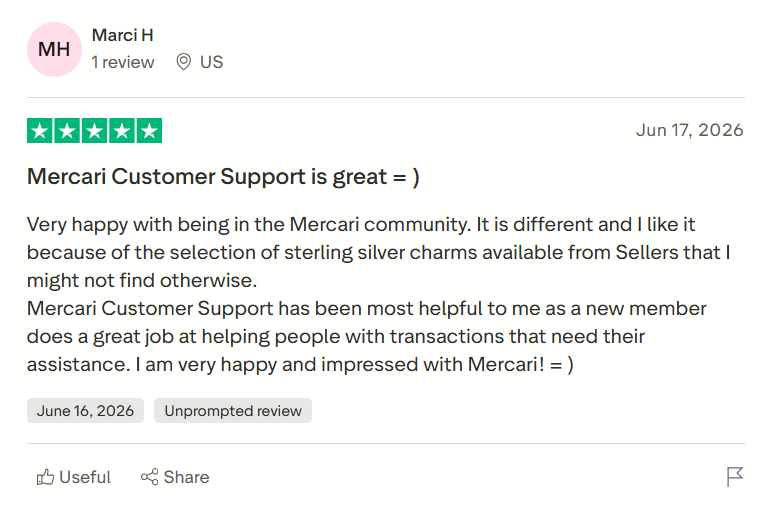
“Very happy with being in the Mercari community. It is different and I like it because of the selection of sterling silver charms available from Sellers that I might not find otherwise.” (Marci H., Trustpilot; June 17th, 2026)
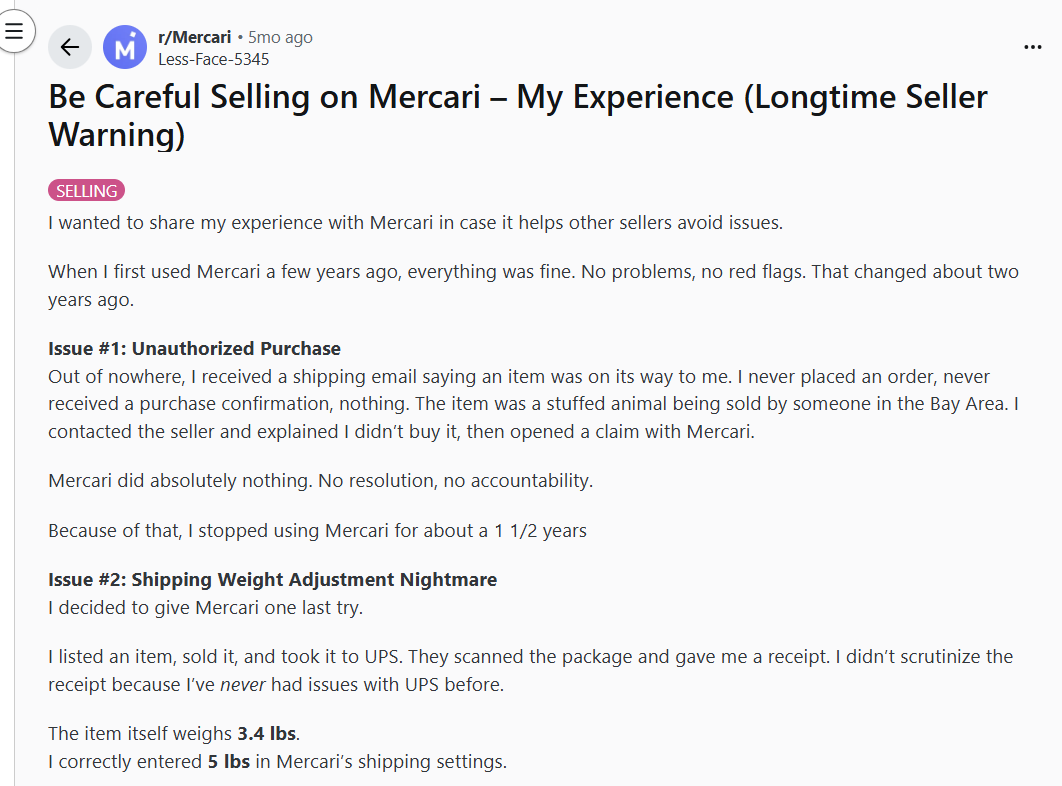
“Out of nowhere, I received a shipping email saying an item was on its way to me. I never placed an order, never received a purchase confirmation, nothing. The item was a stuffed animal being sold by someone in the Bay Area. I contacted the seller and explained I didn’t buy it, then opened a claim with Mercari.” (Mercari seller, Reddit; February 3rd, 2026)
Bottom line
Mercari works well for casual sellers with varied inventory who want an easy, low-fee selling experience without category restrictions. Sellers aiming for higher price points may prefer specialized or niche platforms like Poshmark or Whatnot.
4. Poshmark: Best for social selling

What it is: Poshmark is a resale marketplace for sellers in the U.S. and Canada. It offers social media features like sharing, following, and community parties. Users can browse, buy, and interact with sellers in a feed-style interface.
Best for: Fashion, accessory, and home decor resellers who enjoy building personal brands, boutique owners leveraging social engagement, or sellers who treat their closet like a storefront requiring daily attention.
I’ve sold vintage Nirvana shirts and hoodies on Poshmark. I need to share my entire closet about 3 times daily, so my listings stay at the top of the search results. If I don’t share my closet, my sales actually decline by around 40% within a week.
Key features
- Large buyer base: Poshmark boasts over 130 million registered users, primarily concentrated in North America.
- Community engagement features: Poshmark’s algorithm rewards community activity like sharing, live shows, and interaction between buyers and sellers. From my experience, this model attracts repeat buyers.
- Smart Sell automated offers: Use the Smart Sell system to automatically send and manage offers to interested buyers up to a floor price you set.
Poshmark pros
- Fashion- and accessories-focused buyers: The platform’s users shop for branded clothing, shoes, and accessories at lower prices.
- Strong seller protection: Poshmark manages returns, authentication, and disputes with structured case management, so sellers don’t handle problems alone.
Poshmark cons
- High fees: Poshmark takes 20% on sales over $15. For sales under $15, it takes $2.95, making it one of the more expensive reseller websites.
Seller fees
Poshmark fees begin at $2.95 on sales under $15. For sales over $15, the platform takes a 20% commission.
Shipping fees
Buyers pay a flat $6.49 shipping rate for packages up to 5 lb. If a package is between 5.1 lb and 10 lb, sellers pay an extra $5, bringing the total to $11.49.
Poshmark adds an additional $10 (seller-paid) to packages between 10.1 lb and 15 lb, bringing the total to $16.49. Shipping labels support packages up to 15 lb only. Items over 15 lb aren’t supported under Poshmark’s shipping label system.
What real users say
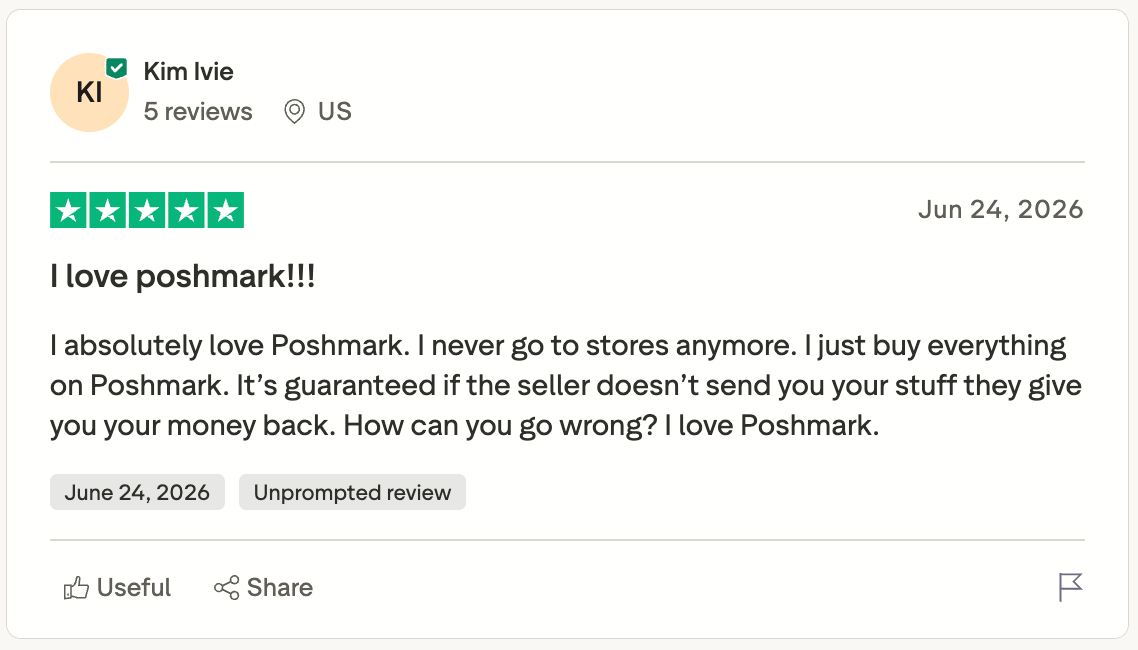
“I absolutely love Poshmark. I never go to stores anymore. I just buy everything on Poshmark. It’s guaranteed if the seller doesn’t send you your stuff they give you your money back. How can you go wrong? I love Poshmark.” (Kim I., Trustpilot; June 24th, 2026)

“First, the new redesign is terrible. I miss looking at an item I liked and then being able to search based on that item’s color/size/brand. This new design lets me see a handful of items slightly related to my like and then that’s it. No more search, no more scroll. I simply cannot find things anymore.” (Poshmark user, Reddit; May 17th, 2026)
Bottom line
Poshmark works well for fashion‑focused sellers who want built-in social features and fashion-savvy buyers. Sellers with non‑fashion inventory or those looking for lower fees should opt for a reselling website like eBay or Mercari.
5. Depop: Best reseller website for Gen Z and young Millennials
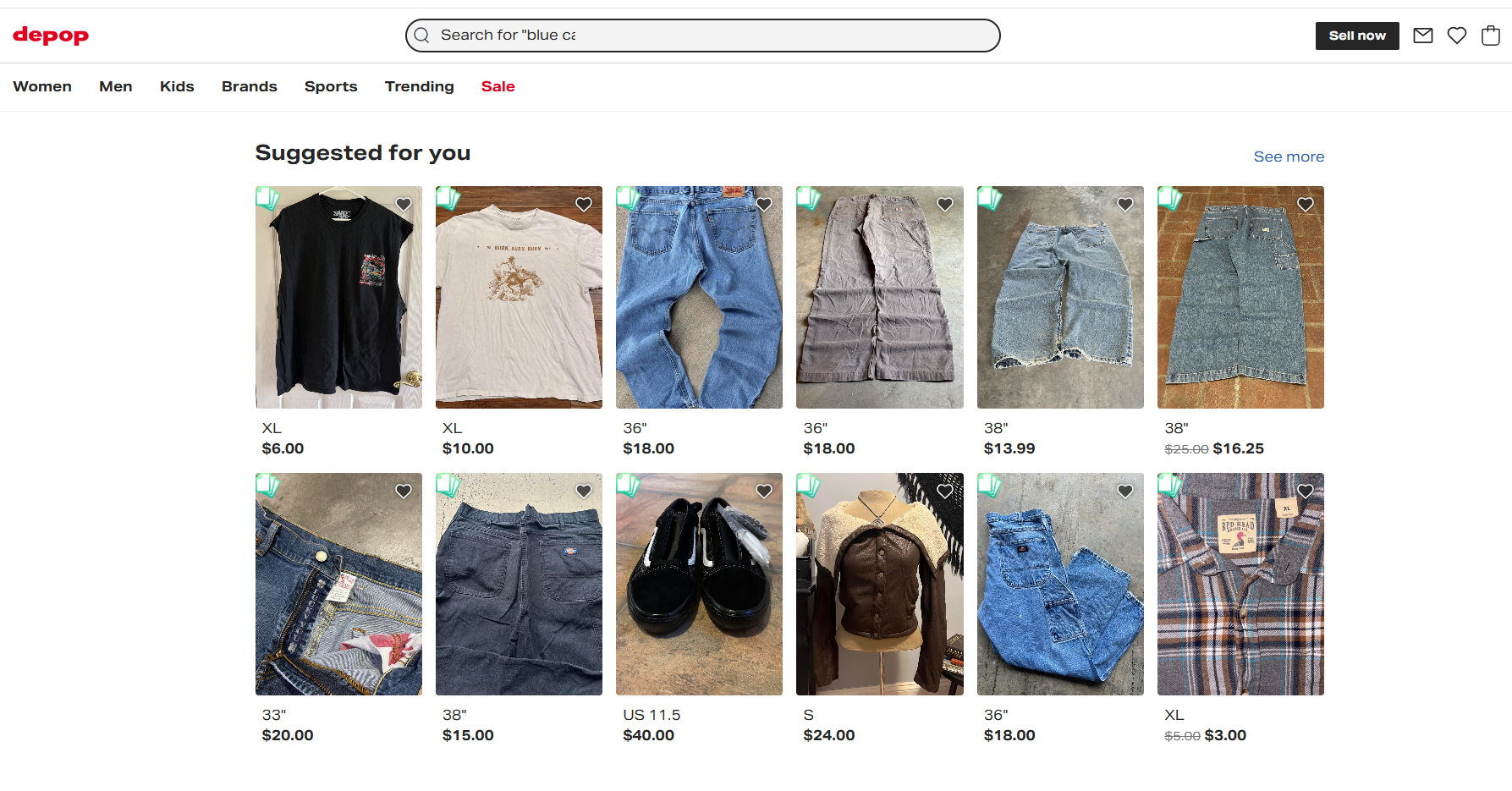
What it is: Depop is a reseller marketplace built like Instagram, where sellers post fashion items in a scrollable feed. The platform emphasizes aesthetic presentation and personal branding over traditional e-commerce layouts.
Best for: Vintage curators selling Y2K fashion, streetwear enthusiasts targeting Gen Z or young Millennial buyers.
I crosslist most of those hoodies and vintage Nirvana tees from Poshmark to Depop, which helps me reach more buyers. For items to sell well, I find that Depop requires more photo touch-up than Poshmark. Nifty’s photo-editing tool and Photoroom background remover usually do the trick.
Key features
- Feed-based discovery and branding: Depop uses a social-style feed that lets buyers find items by scrolling, following sellers, and engaging with posts. Sellers often prefer this layout because it highlights unique listings that might stay buried on platforms like Mercari.
- International buyer access: The platform supports global selling with international shipping, while Mercari limits transactions to domestic buyers.
- Trend-driven audience: Depop attracts Gen Z and younger Millennial shoppers who actively look for vintage, Y2K, alternative fashion, and distinctive pieces that differ from mass-produced styles.
Depop pros
- Zero U.S. seller fees: U.S. sellers keep more profit, paying only 3.3% + $0.45 payment processing per sale.
- International buyer pool: Your listings reach fashion-conscious shoppers across Europe, Asia, and beyond domestic markets.
Depop cons
- Slow payout timing: Depop releases funds two days after delivery confirmation, which can slow your cash flows.
What real users say
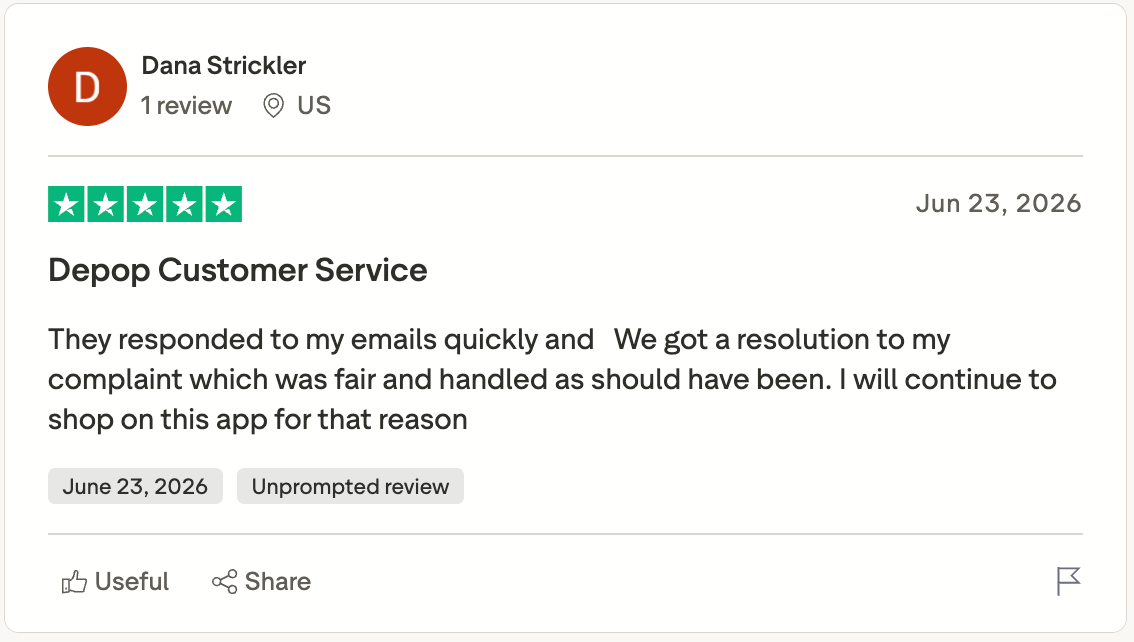
“They responded to my emails quickly. We got a resolution to my complaint which was fair and handled as should have been. I will continue to shop on this app for that reason.” (Dana S., Trustpilot; June 23rd, 2026)

“No, no, it's not just you. Depop is a sinking ship filled with dropshippers/resellers (Chinese fast fashion at 50–100% or more markup. You have WAY too many minors buying and selling. There are far too many people who can't put an apartment # in unless there's a specific space for it.” (Depop user, Reddit; April 1st, 2026)
Fees
Depop has no seller fees for U.S. sellers. It only charges payment processing costs of 3.3% + $0.45 per transaction. International sellers outside the U.S. and U.K. pay a 10% seller fee plus extra processing charges.
The bottom line
Depop works well for social-media-savvy sellers, offering no seller fees and a strong appeal among younger buyers and vintage fans. Sellers focused on non-fashion categories or older shoppers looking for mainstream brands may find the platform too informal, and should try one like eBay instead, or even Whatnot, which is starting to grow fashion listings.
6. Facebook Marketplace: Best for selling large items

What it is: Facebook Marketplace is a reselling platform integrated into Facebook's enormous social network.
Best for: Local sellers moving furniture, appliances, or exercise equipment, and anyone dealing with bulky items that cost too much to ship.
Marketplace is my go-to when I need to sell large items. A few weeks ago, I listed a desk for local pickup with photos taken from my phone. Three buyers messaged within an hour, and one picked it up that evening with cash at a nearby park that we used as a meeting spot. Shipping this desk would have cost $80 and eliminated any profit.
Key features
- Verified profiles build trust: Facebook Marketplace displays real buyer and seller profiles with visible account history.
- Ideal for bulky items: The platform connects local buyers and sellers, making it a strong option for furniture, appliances, and gym equipment that cost too much to ship.
- Higher take-home profit: Local pickup transactions between individuals have no selling fees, so sellers keep the full sale amount.
Facebook Marketplace pros
- Lower scam risk for local deals: Real-name accounts and visible profiles add accountability by showing activity history and mutual connections between buyers and sellers.
- Immediate buyer exposure: Facebook’s roughly 3 billion monthly users give sellers instant access to large audiences without needing to build followers or invest time in platform-specific promotion.
Facebook Marketplace cons
- Limited shipping support: Facebook provides basic tools for shipped orders, but sellers must handle pricing, packaging, and delivery logistics for non-local sales.
Fees
Facebook Marketplace doesn’t charge fees for local pickup sales between individuals. For shipped items, the platform charges a 10% selling fee on the total order value, including item price and shipping, with a minimum fee of $0.80 per shipment. Payment processing is included. Sellers can choose whether they or the buyer covers shipping costs.
What real users say

“The key is figuring out a way to deal with knowing people will waste your time with ghosting you or ridiculous lowball offers. I have been able to convert a lot of the "can you deliver this, I don't drive" people into ebay sales, and showing them that the $60 item I have listed is $99.99 on Amazon - so they can either buy it from me for a huge discount or pay full price there.” (FBMP user, Reddit; February 13th, 2026)

“I listed my riding mower and got LOTS of exposure. [...] I did not get notified when I got a message about my mower. I could not figure out what messages I had answered and which ones I had not.” (Gary M., Trustpilot; April 26th, 2026)
Bottom line
Facebook Marketplace works well for selling large items locally due to its no-fee structure and massive user base. Sellers focused on small, shippable goods may find the platform restrictive because of its local-first setup.
7. Grailed: Best for top-end fashion reselling

What it is: Grailed is a fashion marketplace that focuses on designer streetwear, luxury brands, and vintage items for men and women.
Best for: Resellers offering popular brands like Supreme and Off-White, as well as rare or older designer pieces.
To test Grailed, I listed a vintage Raf Simons jacket with detailed measurements and seasonal information in the description. The details allowed buyers to filter by designer and season, so many found this listing within minutes of posting. My jacket sold in just 2 days, and I made a 50% profit.
Key features
- Search filtering: Grailed offers strong search and filter tools, including options to filter by designer and other details.
- Authentication and condition checks: The platform authenticates luxury items and provides condition grading.
- Excellent for designer brands: The reselling website is popular for designer brands like Chrome Hearts, Balenciaga, Rick Owens, and others.
Grailed pros
- Responsive support: Many users point to Grailed’s support team for quick and helpful issue resolution.
- Experienced buyer community: Grailed attracts informed menswear collectors, streetwear enthusiasts, and industry professionals who recognize value.
Grailed cons
- Crowded seller environment: The platform hosts established dealers and professional resellers with large followings and strong sales history, making it harder for new sellers to gain visibility.
What real users say

“I’ve been using Grailed as both a buyer and seller for over 8 years, and I’ve consistently had great experiences with their customer support team. Most recently, I ran into an issue with an order, and the support team handled everything professionally and efficiently from start to finish.” (Zoltan H., Trustpilot; May 20th, 2026)
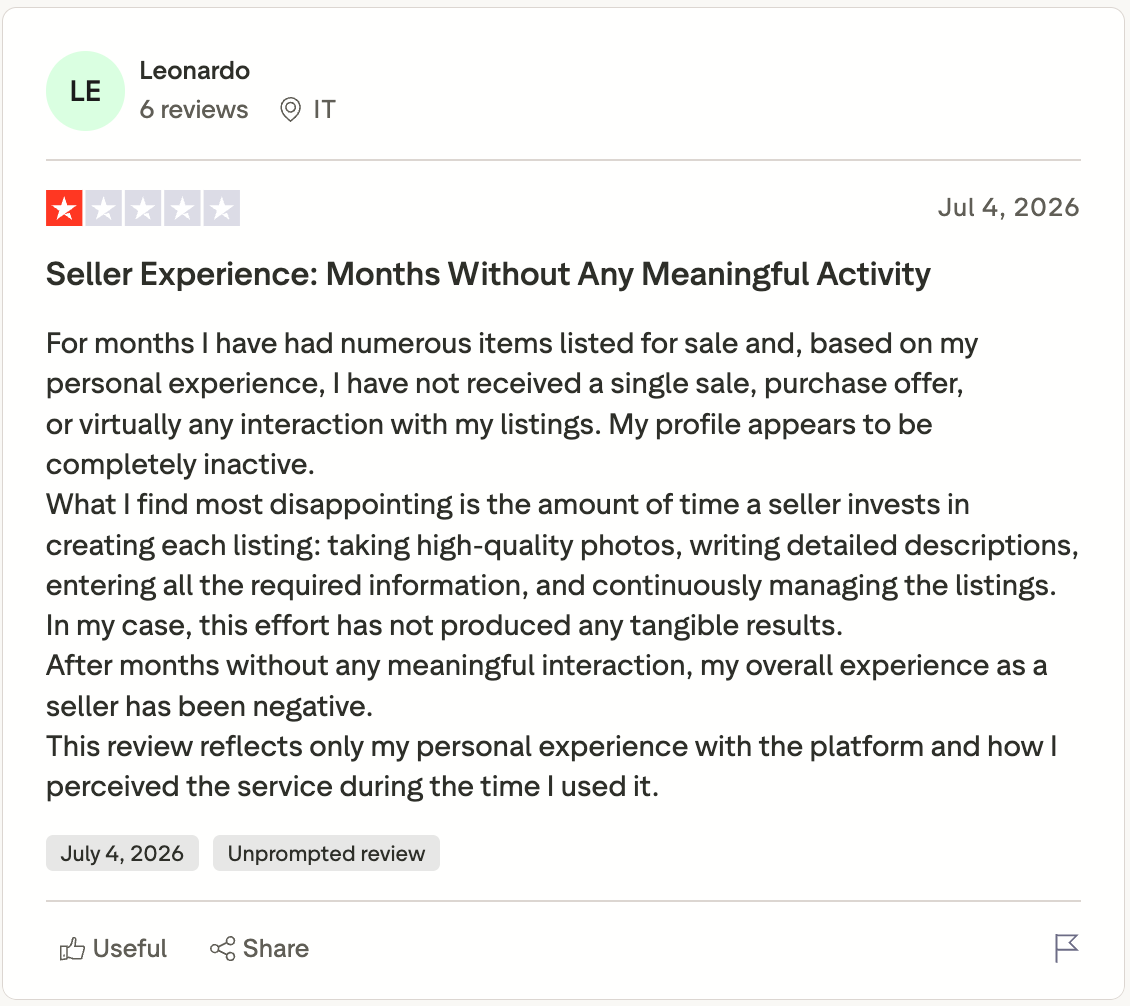
“For months I have had numerous items listed for sale and, based on my personal experience, I have not received a single sale, purchase offer, or virtually any interaction with my listings. My profile appears to be completely inactive. […] After months without any meaningful interaction, my overall experience as a seller has been negative.” (Leonardo, Trustpilot; July 4th, 2026)
Fees
Grailed charges a 9% seller fee on sales of $120+ and a 6% fee on sales under $120. For U.S. transactions, Grailed also charges 3.49% + $0.49. International sales include a 4.99% + $0.49 payment processing fee.
Bottom line
Grailed works best for sellers with strong fashion knowledge and authentic designer, streetwear, or vintage pieces who want higher price points. Casual sellers or those without deep fashion expertise may struggle with Grailed and might want to consider Mercari, Depop, or Poshmark instead.
8. Whatnot: Best live auction reselling website

What it is: Whatnot is a live‑streaming marketplace where sellers host real-time video shows to auction items, run buy‑it‑now deals, and interact directly with buyers.
Best for: Trading card, vintage toy, and memorabilia sellers, and other niche or fashion resellers who are comfortable performing on camera.
When I tested Whatnot, I hosted a 30-minute live show where I offered the Pokémon cards I collected as a kid. Bidders competed aggressively in real time, pushing final prices 60% above my expected value. Plus, chatting with buyers during the live auction was thrilling, but for me, selling consistently on Whatnot would take extra stamina and even more caffeine.
Key features
- Audience-building tools: Whatnot allows sellers to build repeat audiences who return for scheduled shows, creating the opportunity for ongoing revenue.
- Live selling format: Real-time streaming lets sellers show authenticity, condition, and details as items are presented live.
- Interactive selling mechanics: Compliant surprise products (like approved mystery boxes or grab-bag-style sets) and other live engagement tools add an entertainment layer beyond standard product listings.
Whatnot pros
- Mystery box gamification: The platform lets you offer grab bags and blind boxes to attract buyers seeking excitement over specific merchandise purchases.
- Competitive auctions can raise prices: Live bidding encourages competition and urgency, which can sometimes push final prices above comparable fixed-price listings.
Whatnot cons
- Shipping structure limits seller control over costs: Sellers don't fully control Whatnot's shipping program. Recent updates require changes to packaging, shipping profiles, and fulfillment workflows to avoid additional carrier fees.
What real users say

“I don’t even know where to begin! This app, the sellers/shops and the buyers are beyond anything I expected. The community created has resulted in a vibrant, fun, sassy, classy & brilliant experience for anyone and everyone, every time!” (Bob, Trustpilot; June 29th, 2026)

“I’ve been on there for a month. Overall, I wouldn’t recommend it! Scammers galore. Shipping fees add up quick. Becomes 1/3 of total cost. Refund process is not made easy, seems to be designed to dissuade folks from going through with it. For example, they want me to return 3 crystal palm-stones back to the scammer. Ordered 4 items, got 3 stones in one small box.” (Whatnot user, Reddit; February 5th, 2026)
Fees
For most sellers in the U.S., Canada, and Australia, Whatnot charges a 4–8% selling fee depending on the category, plus a 2.9% + $0.30 payment processing fee per completed transaction. Some regions use different commission and VAT structures.
Bottom line
Whatnot fits sellers who enjoy live interaction and have the time and personality to host engaging streams. Sellers who prefer passive listings or lack time for show preparation may find the platform demanding and should try an alternative like eBay.
9. StockX: Best for investors
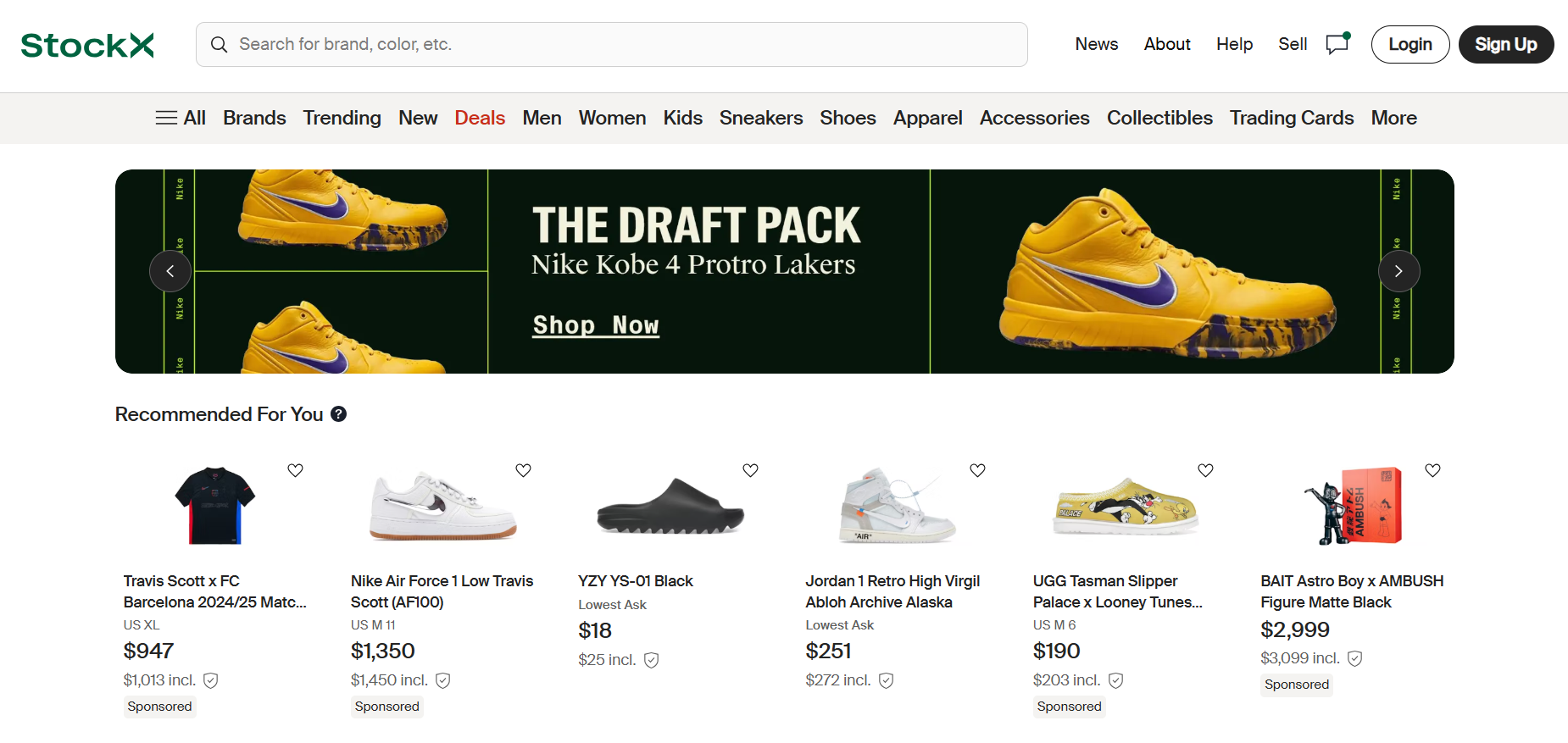
What it is: StockX is a bid/ask marketplace that operates like a stock exchange for high-demand consumer goods, using live bids, asks, and sales data to show market value.
Best for: Resellers who treat their products as investment assets, collectors and luxury buyers who want transparent market pricing and strong verification, and higher-volume businesses that manage authenticated high-end inventory.
To test StockX, I placed an ask for 1994 limited-edition Jordans at $450. A buyer's bid matched my ask within 5 hours, and the transaction completed automatically. The stock market model eliminated all negotiation and delivered instant sales at my target price.
Key features
- Bid-and-ask pricing model: Instead of fixed-price listings like Mercari, StockX uses a live bid-and-ask system where buyers submit offers and sellers set asking prices.
- Market data and tracking tools: StockX offers live price charts, past sales history, volatility signals, and portfolio tracking features that help users monitor item value over time.
- Anonymous transactions: The platform removes direct contact between buyers and sellers, with StockX managing communication, shipping, and transactions.
StockX pros
- Can support big margins: Multiple buyers can place competing bids on a product, and seeing higher bids over time may encourage sellers to raise their asks or hold for a better price.
- Reduced fraud risk: StockX’s verification and fraud-prevention systems significantly lower the risk of counterfeits reaching buyers and help reduce disputes and chargebacks.
StockX cons
- Authentication delays payouts: 5-day verification holds prevent immediate reinvestment in time-sensitive inventory opportunities.
What real users say
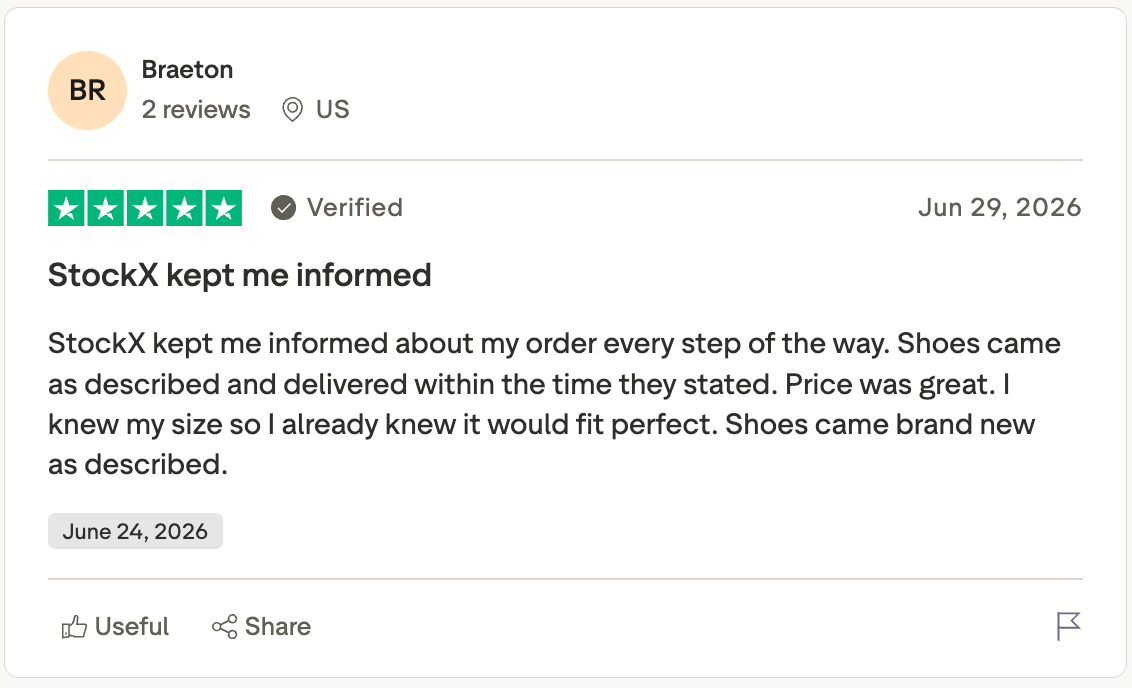
“StockX kept me informed about my order every step of the way. Shoes came as described and delivered within the time they stated. Price was great. I knew my size so I already knew it would fit perfect. Shoes came brand new as described.” (Braeton, Trustpilot; June 29th, 2026)
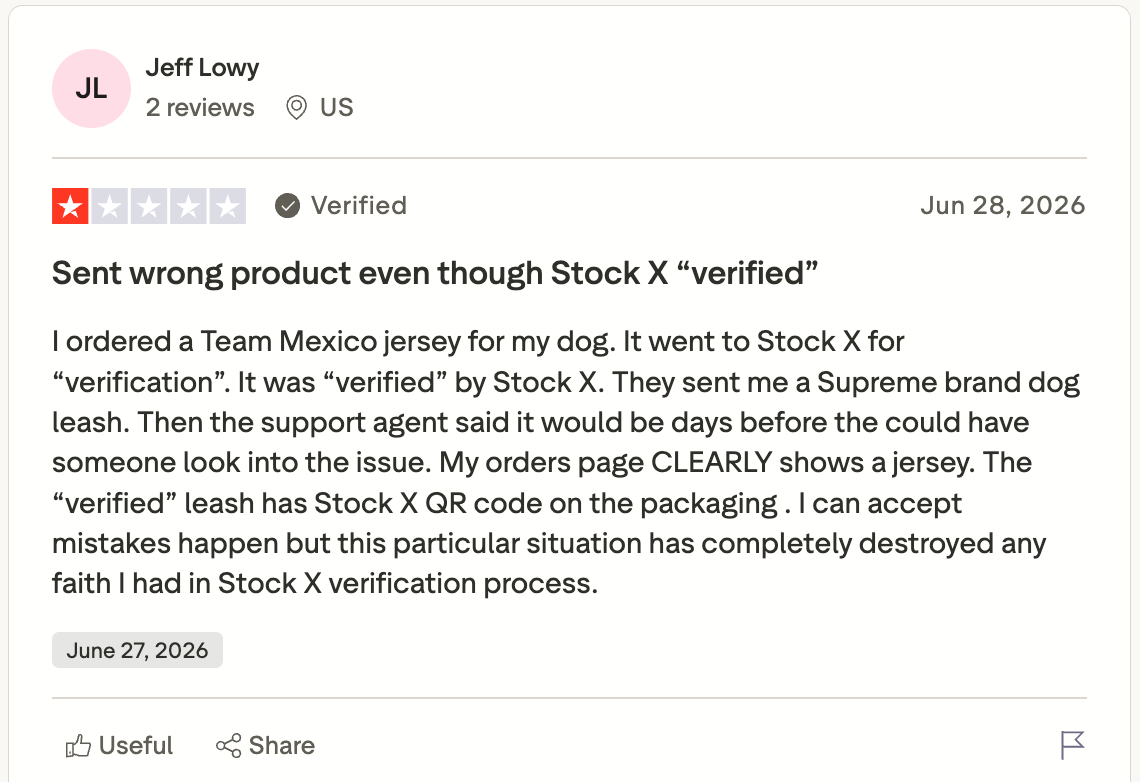
“I ordered a Team Mexico jersey for my dog. It went to Stock X for “verification”. It was “verified” by Stock X. They sent me a Supreme brand dog leash. Then the support agent said it would be days before the could have someone look into the issue. My orders page CLEARLY shows a jersey.” (Jeff L., Trustpilot; June 28th, 2026)
Fees
StockX charges a variable seller transaction fee that typically ranges from 7–9% based on your seller level, plus a separate 3% payment processing fee on every sale. The fees you pay already cover platform operations like item verification, so there’s no separate authentication surcharge.
Bottom line
StockX’s stock market-style pricing and verification can support strong, trust-backed prices for in-demand and luxury goods. But sale prices still follow overall market demand rather than guaranteeing a premium. General resellers or casual sellers with broad, everyday inventory might be better served with Mercari or eBay.
10. Curtsy: Best website for women’s fashion

What it is: Curtsy is a mobile marketplace specializing in secondhand women's clothing and accessories.
Best for: Female college students clearing out dorm closets, young professionals refreshing wardrobes seasonally, or casual sellers focused exclusively on women's fashion and accessories.
To test Curtsy, I listed 5 Forever 21 dresses that I picked up at my local thrift shop. After quickly snapping pictures, I priced each between $15 and $25. All 5 dresses sold within 5 days.
Key features
- Visual discovery tools: Style feeds, outfit inspiration, and an Instagram-style browsing feed give well-presented items visibility.
- Fashion-first audience: Curtsy draws young women shopping for clothing, shoes, and accessories rather than general household goods.
- Responsive support: Sellers frequently report quick, helpful responses from Curtsy’s support team, with many ranking it higher than other resale platforms.
Curtsy pros
- Fast fashion moves quickly: Trendy items under $30 often sell within days to buyers scrolling during off-hours or work breaks.
- No listing complexity: Simple photo upload and price entry get items live faster than platforms requiring measurements and descriptions.
Curtsy cons
- Women's clothing exclusively: Men's items, home goods, and electronics get rejected outright.
What real users say
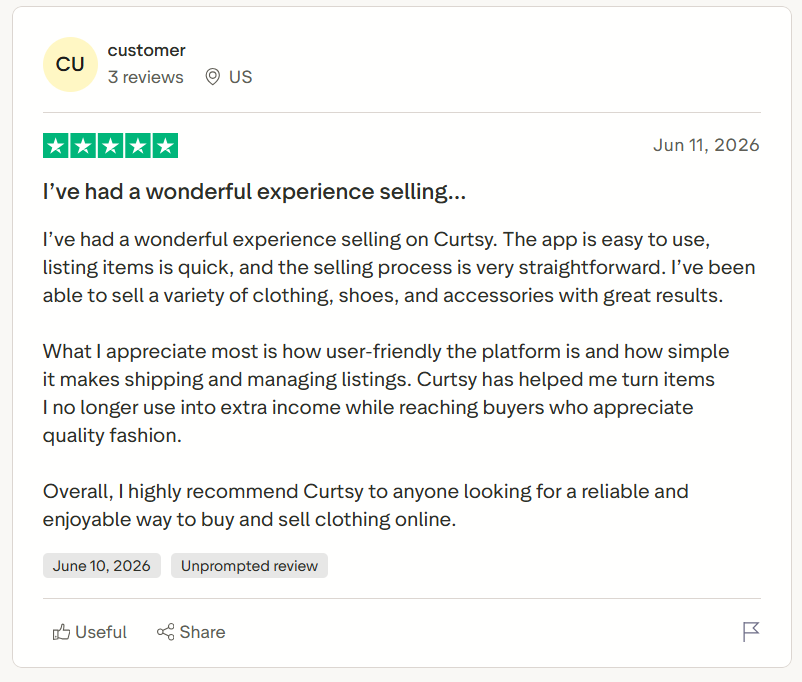
“I’ve had a wonderful experience selling on Curtsy. The app is easy to use, listing items is quick, and the selling process is very straightforward. I’ve been able to sell a variety of clothing, shoes, and accessories with great results.” (Curtsy user, Trustpilot; June 11th, 2026)

“I use to make a slow but steady amount of sales on Curtsy but now it’s crickets. I get maybe 3 likes on a handful of items each month and every offer is for free shipping on items priced for less than $10, which means I would make $1–2 on each sale. They have a very small company [...] and the CS can be unprofessional at times.” (Curtsy user, Reddit; May 2nd, 2026)
Fees
Curtsy takes $1 + 5% selling fee, plus a 2.9% payment processing fee (imported listings without free shipping carry over original platform's fees).
Bottom line
Curtsy is strong in young, feminine, trendy fashion, with a community and a fashion-forward app experience that attracts engaged buyers. But if you’re selling to both men and women, try Poshmark, Depop, or Grailed.
My final verdict: Which reselling website should you choose?
Each reselling website that made my top 10 solves different problems for different seller types. Here’s how to pick the right marketplace (or multiple marketplaces for crosslisting):
| Choose … | If you … |
|---|---|
| eBay | Want international buyer access and professional tools for scaling across multiple product categories. |
| Etsy | Create handmade items, sell vintage goods, or craft supplies. |
| Mercari | Need fast mobile listings with minimal setup and low fees. |
| Poshmark | Sell fashion and accessories, and want to build a personal brand through daily sharing, community engagement, and social selling features. |
| Depop | Sell to younger buyers with trendy vintage fashion and want zero seller fees. |
| Facebook Marketplace | Need to sell large furniture or bulky items locally. |
| Grailed | Specialize in designer clothing, luxury streetwear, or high-end vintage fashion pieces. |
| Whatnot | Enjoy performing live on camera and want to build a community around collectibles through real-time auctions. |
| StockX | Treat sneakers and luxury goods as investment assets and want to sell them on a platform similar to a stock exchange, with professional authentication. |
| Curtsy | Focus exclusively on affordable women's fashion. |
Sell more with Nifty
Choosing the right platform matters, but managing inventory across multiple reseller websites creates hours of repetitive work. If you’re aiming to simplify listing across multiple websites, go with Nifty. It’s a crosslisting and automation tool that lets you put all your inventory on a central command center and upload it to different platforms with just a few clicks.
Here’s why over 10,000 resellers trust Nifty:
- AI listing generation: Snap a pic and let Nifty's AI build a high-quality listing, with SEO-optimized titles and descriptions, and trending hashtags already filled out for you. Plus, it's cloud-based, mobile-friendly, and easy to use.
- Crosslist now: With a couple of clicks, post your items across Poshmark, eBay, Mercari, Depop, and Etsy. No copy-paste and no multi-tab chaos. (More marketplaces coming soon!)
- Automatic delisting? Handled: When you make a sale, Nifty's sales detection auto-delists that item from every marketplace. Say goodbye to double-selling disasters and “sorry, it's already gone” apology messages.
- Bulk tools = no busywork: Share and relist daily with just a few clicks. Update or discount dozens of items at once. You can even schedule drafts to go live while you sleep.
- Analytics and profits are real: Track sales, fees, top performers, and slow movers in one clean dashboard, so you can actually see what's working and what's just dead space.
Nifty pays for itself in just a few weeks. Start with a 7-day free trial and see how Nifty can help you sell more items across several reseller websites.
FAQs
1. Can I sell the same item on multiple reseller websites at once?
Yes, you can sell the same item on multiple reseller websites at once. This is called crosslisting, and tools like Nifty automate the process. You’ll upload your items to a central interface and then transfer them to connected platforms with a few clicks. Crosslisting tools save time and increase your buyer base.
2. Which platform is best for selling vintage clothing?
Depop is best for selling vintage clothing to Gen Z buyers, as it offers zero U.S. seller fees and international shipping. Etsy works well for authentic vintage items over 20 years old. Grailed excels at men's designer vintage pieces, while Poshmark suits vintage sellers who are comfortable with daily sharing.
3. Which reseller website has the lowest fees?
Facebook Marketplace has the lowest fees if you’re selling items for local pickup, at 0%. For shipped items, Depop charges U.S. sellers only 3.3% + $0.45 payment processing with no platform fee. Whatnot’s 4–8% fees and Mercari’s 10% fee are also some of the lowest among reseller websites.


.png)
.png)
.png)