
What I wish I knew before selling on Poshmark: 9 truths | 2026
.png)
What I wish I knew before I started selling on Poshmark is that I should have found a niche and checked the selling price for similar items before listing mine. I’ll share the 9 biggest lessons I’ve learned over the years, so you can avoid the mistakes that caused me to lose money in the beginning.
What I wish I knew before selling on Poshmark: TL;DR
1. You don’t get rich quickly on Poshmark: It requires daily work
Running a Poshmark closet is closer to opening a small brick-and-mortar shop than buying a passive index fund, just without the rent and inventory loans.
The platform’s search and recommendation system rewards sellers who stay active. Active sellers post new listings and share them daily. Active sellers also respond to offers and keep up with buyer messages. Ghosting and going quiet after a buyer sends an offer is a no-no and will lead buyers to cancel.
What I do now that I’ve learned
I’m active on Poshmark daily, visiting my account and doing something at least once every 2 or 3 hours. I’ve made a habit of listing new items and sharing them every day, and touching bases with past buyers by messaging them.
You can use a Poshmark bot to automate sharing, liking, and following, but when buyers send offers, I always respond within an hour at most.
2. Small sales don’t add up & margins disappear fast
Selling huge volumes of cheap T-shirts might sound profitable, but the reality’s different. Most buyers make offers and rarely pay your listing price. These buyers are on Poshmark to find deals better than what they’d find on Amazon or Walmart. For low-cost items, your profit ends up being very small.
Here's a real example. I once sourced several vintage Nirvana tees for $5 each. I listed them at $15, which meant buyers would pay well over $20 total with Poshmark's shipping. But most buyers refused the listing price, made offers, and the tees sold for between $10 and $12 on average.
Buyers covered shipping, but after Poshmark took their fee of $2.95 on sales under $15, I walked away with just a $2 to $3 profit per shirt.
What I do now that I’ve learned
I stopped sourcing those low-ticket tees and focused on selling pieces with at least $25–$40 resale potential. Higher prices gave me room for offers, fees, and mistakes. I also factored in how much time I spent. Moving 5 cheap tees took more time communicating with buyers, packing, and sending, compared to selling one solid item with a higher margin.
3. Low pricing doesn’t help you sell
Pricing on Poshmark is effectively a negotiation game from the start, and your initial list price sets the anchor for every offer that follows. Here are 4 things you need to know about pricing:
- No room to counter: On Poshmark, many buyers see the list price as a starting point for negotiation. If your starting price is already lean, you may have very little room to counter without risking your margins.
- When low pricing backfires: Very low pricing can attract more aggressive bargain hunters who expect to pay less. When your margin is already thin, small discounts can shrink it even more.
- Fees before your profit: Poshmark takes its fee off the top of whatever price you accept. For example, on a $12 sale in the under‑$15 fee tier, the flat fee leaves you with $9.05, which can sting if you already discounted from a lean starting point. For anything over $15, Poshmark takes 20%.
- The first price becomes the anchor: Your initial price often becomes a psychological reference point for buyers.
What I do now that I’ve learned
Now, I price every listing with a predetermined counteroffer of 10–20% already built in. If I want $15, I list it at $20. Starting high gives you room to meet buyers and still make a profit. Starting low almost guarantees the final sale price won’t give good margins.
4. Not checking comps leads to unsold listings
In most cases, your listings aren’t special. Many Poshmark sellers have already sold the same items you’re currently offering. Follow these pointers when referencing items for a price:
- Check recent sold listings, not active ones: A sold listing is market evidence, but timing matters. Items that sold over 6 weeks ago might not reflect the current price buyers will pay now. Try to find sold listings from as recently as possible, ideally, a few days.
- Consider condition versus price differences: Two identical jackets listed at different prices sold at different rates for a reason. Condition language in the title and description directly affects perceived value, and buyers price-check against the cleaner listing every time.
- Calculate averages: One sold listing could be an outlier. The average of five sold listings could be a possible starting point. The average tells you where buyers consistently land, which is more useful than the highest price someone once paid.
What I do now that I've learned
Before listing anything, I filter Poshmark search results to sold items and check the last 5 sales for that exact item. That number, which I usually inflate by 10% to 20% to account for bargaining, sets my ceiling.
5. Always buy inventory with a plan
Don’t buy your inventory on impulse. Every item you buy without knowing whether people want it is a gamble, so I follow these rules of thumb when sourcing products for resale:
- Don’t buy based on brand alone: A recognizable name on a tag doesn't guarantee demand. Brand value on Poshmark depends on the category. A label that sells fast in one style can sit ignored in another. Check sold listings before you buy, not after.
- Pay attention to condition or flaws: A flaw you miss at the thrift store can turn into a return request or a bad review. Condition sets the ceiling on what you can charge. A damaged item you bought cheaply rarely makes back its margin.
- Beware of overpaying at thrift stores: Thrift store prices have gone up a lot as reselling has become popular. Estate sales can be a better alternative than thrift stores because sellers are aiming to liquidate the property as fast as possible.
- Bulk-sourcing around a trend peak is usually too late: When a trend is obvious enough to build inventory around, the early sellers have already sold through the demand. Inventory you buy to meet last month's peak sits there until the cycle resets.
This is different from staying generally aware of what's selling. Monitoring demand is essential, but it should inform individual buying decisions, not trigger bulk buys.
What I do now that I’ve learned
I usually make a list of items I want to buy before I go shopping, and average out 5 or 6 sold listings on Poshmark. While sourcing, I’ll subtract what I’ll pay from the average sale price so I can plan out a profit margin. If my margin is less than $10, I move on. Many sellers follow a similar strategy, sourcing items for very little and selling at a profit margin of over $10/item.
6. Track your numbers early, or you’ll lose money
Reseller bookkeeping is a real thing. If you don’t track each sale from the start, small losses add up quietly until the numbers finally surprise you. Focus on these:
- Cost of goods per item: The sourcing price is the number most new sellers forget to write down. Without it, every sale looks like pure income instead of money you are recovering. What you paid sets the floor for every decision after that.
- Poshmark fees per sale: Poshmark's fee changes at the $15 mark, which catches a lot of sellers off guard. A sale that looks like a $4 profit over your sourcing cost can shrink to $1.05 once the flat fee comes out.
- Shipping discounts: Offering a shipping discount to close a sale is a real cost that comes out of your pocket, not Poshmark's. If you offer free or reduced shipping without factoring it in, you are covering the buyer's cost without even realizing it.
- Net profit after all costs: Profit is what is left after you subtract your sourcing cost, any shipping discounts, and your time. Mixing up revenue and profit is how sellers stay busy and still fall behind.
What I do now that I’ve learned
I use reseller software that lets me log what I paid at sourcing. The tool then calculates what it sold for, which fee tier applied, and any shipping discount I offered.
7. Miss details like measurements, and buyers will ignore you
When I started on Poshmark, I thought adjective-heavy listing titles like “🔥🔥RARE AMAZING VINTAGE NIRVANA GRUNGE ROCK BAND T SHIRT COOL UNISEX OMG WOW🔥🔥” would surely grab the attention of every 90s-kid Poshmark shopper.
It did the opposite. My listings sometimes got zero likes and almost no sales. To change, I simply deleted the fluffy words and added the following to descriptions:
- Exact measurements: Tag sizes are unreliable, especially on vintage and pre-owned items. A buyer who needs a 21-inch pit-to-pit will scroll past. Chest, length, and sleeve measurements in the listing remove the hesitation before it forms.
- Clear condition notes: Condition is subjective until you make it specific. “No stains, minor cracking on front graphic, no holes” tells them exactly what they're buying and removes the main reason they'd ask before purchasing.
- Flaws or wear: Disclosing a flaw upfront keeps a buyer's trust after the package arrives. If you fail to mention wear details, you’ll probably get return requests that wipe out any margin.
- Fabric and sizing details: Fabric content affects fit, care, and buyers who care about it will not purchase without it. A 100% cotton vintage tee and a poly-blend version of the same shirt are different products to the person buying them.
What I do now that I’ve learned
Every listing I post now includes sizing and any flaws photographed and described in the notes. Buyers rarely have condition questions, and seldom do I get return requests or complaints.
8. Pick a niche and scale
Selling everything means you’ll have a scattered closet that forces you to learn pricing, sourcing, and buyer behavior across dozens of categories. This will most likely end in burnout.
Avoid burnout on Poshmark by picking one category: Vintage workwear, Y2K accessories, designer denim, whatever. Just find something you’re interested in, study up, and become an expert. You’ll learn what a good sourcing price looks like and how to create listings that sell. Over time, you’ll gather a following and a loyal buyer base.
What I do now that I’ve learned
I stopped sourcing anything that caught my eye and started sourcing only vintage 90s band tees and hoodies. After around 3 months of sourcing and loads of manual effort on Poshmark, I started seeing consistent sales.
9. Demand and trends sell more than brand names alone
A brand name doesn’t determine an item’s demand or price. I learned this the hard way after holding Gucci bags with a style no one wanted. You need to keep up with current trends so you know what has a higher chance of selling.
What I do now that I’ve learned
I keep up to date with what’s selling on Poshmark by visiting the Trends page and dropping in to Posh Live Shows to see the items that have the most bids. I also follow sellers who offer items similar to mine and study their sales history. Noting specific items, prices, and dates in a spreadsheet helps me determine when to sell specific items.
New seller checklist to avoid these mistakes
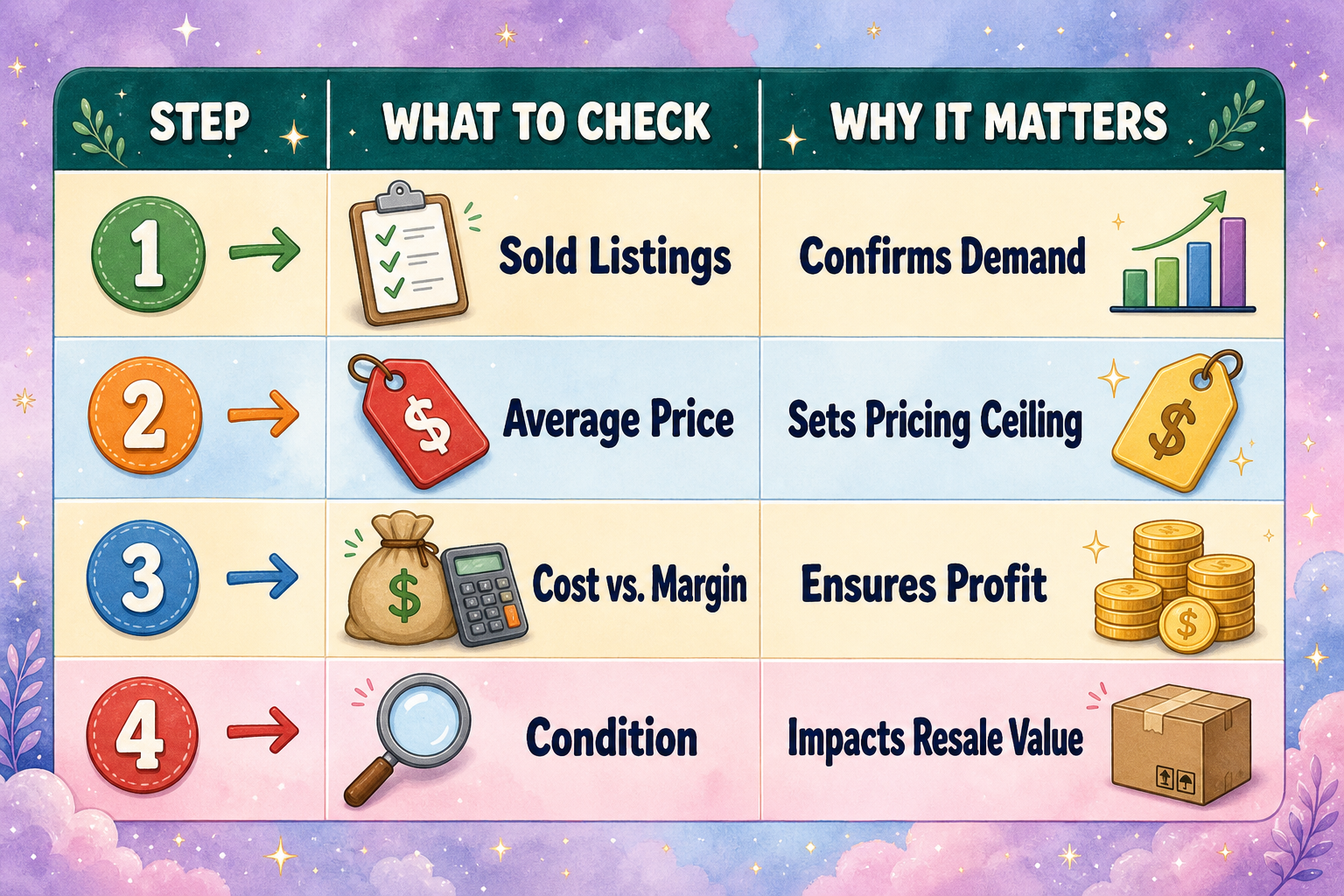
Here’s a quick cheat sheet that sums up the lessons I’ve learned from making mistakes on Poshmark:
- Check sold listings before sourcing: A 2-minute check of sold listings before you buy tells you what the item will probably sell for.
- Set a margin floor so you don’t lose money: Every sale below your margin floor uses up sourcing money you now have to replace before you can grow.
- Share your closet daily: Poshmark's feed is time-based, and listings that go unshared sink quickly. Sellers who share consistently show up in front of active buyers.
- Stop sourcing items under $15 resale value: Below $15, Poshmark's flat fee eats most of your margin before a buyer even makes a counteroffer. The time it takes to source, list, and ship costs the same no matter what the item sells for. At that price point, the math just does not work.
Start selling with a system and avoid expensive mistakes
You now know what I wish I knew before selling on Poshmark. A great tool that will help you avoid even more mistakes is Nifty. It lets you crosspost your Poshmark items to other platforms so you can increase your buyer base. Nifty also has Poshmark automation features like sharing, following, and relisting.
Here's why more Poshmark sellers go with Nifty:
- AI listing: Snap a pic and let Nifty's AI build a complete listing with SEO-optimized titles, descriptions, and trending hashtags already filled in. No starting from scratch on every item.
- Crosslist now: Post your items across Poshmark, eBay, Mercari, Depop, Whatnot, and Etsy in a couple of clicks. No copy-paste insanity, no multi-tab chaos. (More marketplaces coming soon!)
- Automatic delisting? Handled: When a sale comes in, Nifty auto-delists that item from every marketplace. No double-selling, no awkward apology messages to buyers.
- Bulk tools, no busywork: Share and relist daily in just a few clicks. Schedule drafts to go live while you sleep.
- Analytics and profits are real: Track sales, fees, top performers, and slow movers in one dashboard so you can see exactly what's working and what's just taking up space.
Nifty pays for itself in just a few weeks. Start with a 7-day free trial and build the kind of Poshmark operation I wish I had when I started selling.
FAQs
1. Is selling on Poshmark worth it for beginners?
Yes, selling on Poshmark is worth it for beginners. But you need to treat Poshmark like a real business. You need a consistent listing, sharing, and pricing strategy to see results. If you expect quick profits with minimal effort, you’ll lose time and money early.
2. How much can you realistically make on Poshmark?
Most beginners realistically make between $100 and $500 in their first few months. Fees, buyer offers, and low-margin inventory quickly eat into earnings. Part-time sellers who refine their sourcing and pricing typically earn $100 to $1,000 per month. Full-time experienced sellers can reach $1,500 to $3,000 or more per month.
3. What is the biggest mistake new Poshmark sellers make?
The biggest mistake new Poshmark sellers make is sourcing items without checking sold listings first. This leads to overpriced inventory that sits or underpriced items that kill profit. Every buying decision should start with real sales data; don’t make assumptions about brand or style.


.png)
.png)
.png)