
5 best sites to sell sports cards: Tested & reviewed 2026
.png)
I tested 10 sports card selling sites with real listings to find which platforms reach the most buyers and provide the best returns. eBay offers the largest buyer pool (135 million users), while COMC handles all photography, listing, and shipping through full consignment processing.
Compare my reviews to learn which is the best site for selling your sports cards.
5 best sites to sell sports cards: At a glance
| Site | Strengths | Weaknesses | Fees |
|---|---|---|---|
| 1. eBay | Massive buyer reach across 135 million users | Combined fees eat away at profits, not exclusively for cards | 13.25% final value fee + $0.35 insertion fee after 250 listings. |
| 2. SportsCardsPro | Low fees with market comp data | Smaller buyer pool means slower sales times | 2.9% + $0.30 PayPal processing fee per transaction |
| 3. Whatnot | Live auction pressure drives competitive bidding | Time-intensive streaming prep and consistent camera presence | 8% seller fee + 2.9% + $0.30 payment processing |
| 4. Beckett Marketplace | Brand trust attracts buyers expecting grade premiums | Narrower reach results in longer listing times | Contact Beckett to apply as dealer for fees |
| 5. COMC | Consignment, handles photographing, listing, and shipping | Processing and storage fees hurt low-value inventory | Starts at $0.65/item processing + 5% transaction + 10% cash-out fees |
How I tested each sports card-selling site
I started with 10 reselling platforms and created test accounts on each platform. Then, I listed actual baseball cards for evaluation. Here’s what I looked for:
- Fee structures and total cost: Platform fees directly affect your profit margin. I listed cards of similar value across multiple sites and found take-home amounts after all fees.
- Speed to sale and buyer traffic: I tracked days-to-sale across platforms for similar card types and conditions. Platforms with established buyer bases consistently sold cards 30–50% faster than smaller audiences.
- Listing workflow and time investment: The hours spent photographing, describing, and managing listings add hidden costs. I timed how long it took to list 20 cards on each platform, including photography and data entry.
I also considered these factors:
- Authentication and fraud prevention: I submitted cards to platforms offering pre-sale authentication and tracked how this affected selling prices and dispute rates.
- Platform stability and payment reliability: I researched each platform's ownership history, read seller forums for payment complaints, and tested actual payout timelines.
1. eBay: Best for maximum buyer reach
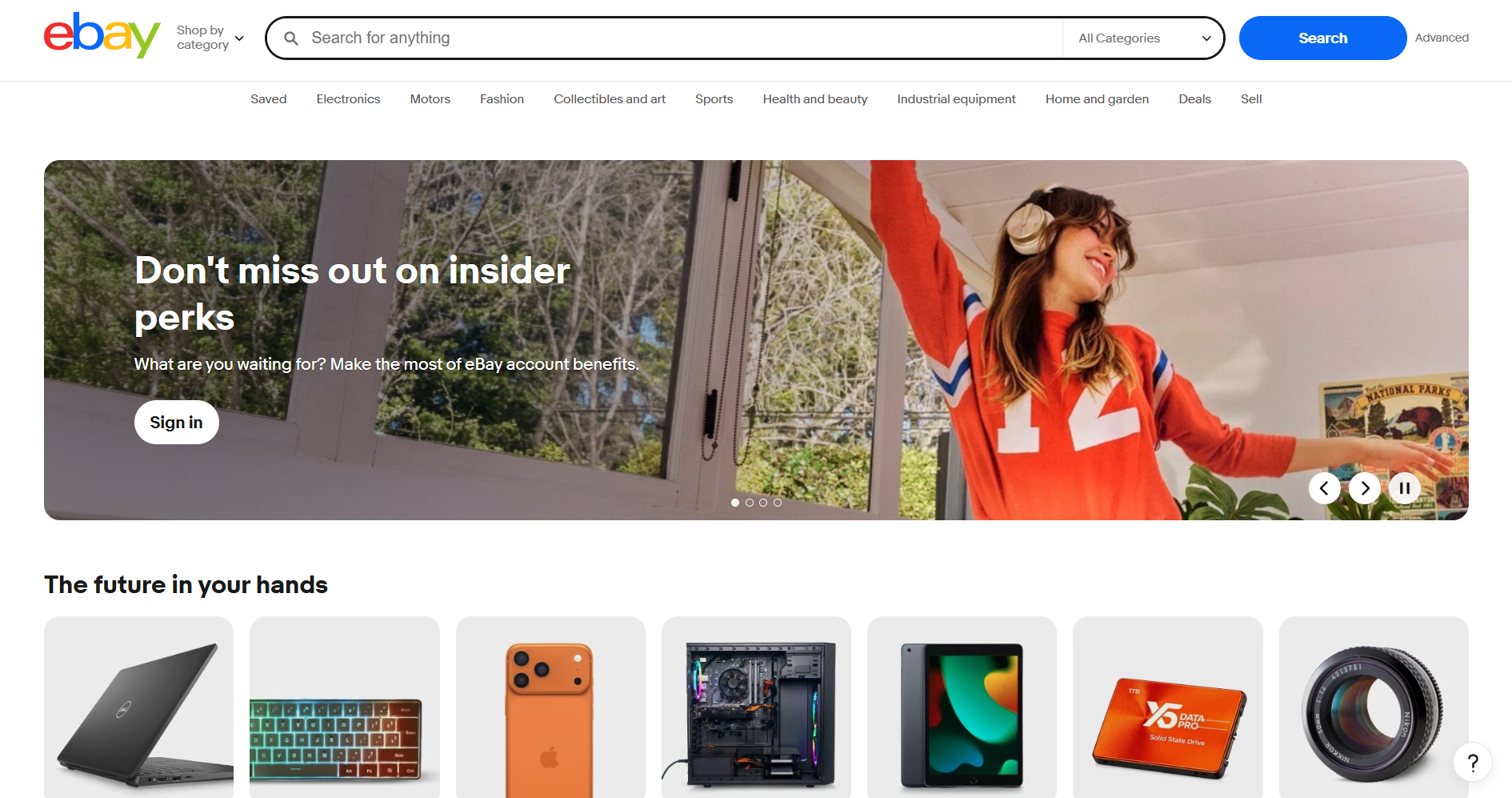
What it does: eBay connects your cards to a buyer base of 135 million people globally.
Best for: Sellers moving individual cards or small lots who need immediate access to ready-made buyer demand.
I’ve used eBay for several years, selling mainly clothing and electronics. To test how well I could sell trading cards, I listed unopened packs of Topps 2010 Baseball cards.
The platform allowed me to use the paid promoted listing function to promote the cards, which helped them appear in more search results. This action helped improve sales 12% more than unpromoted listings. In my test, eBay charged a 5% promotional fee on the total sales value (within the platform's 2–10% ad fee range).
Key features
- Auction format: Competitive bidding can push the final sale price up.
- Best offer system: Buyers submit private offers you can accept, decline, or counter within 48 hours.
- Global shipping program: eBay handles international logistics and ships to over 190 countries.
Pros
- Flexible Fees models: Switch between auctions, fixed Fees, and negotiable offers based on card urgency.
- Integrated payment processing: Funds clear directly to your bank account without a third-party payment gateway setup.
Cons
- Fees eat away at final value: Combined seller and payment fees reach between 10% to 15% on most sports card transactions.
Fees
eBay charges 13.25% final value fee on the total sale amount (item price + shipping), with a $0.35 insertion fee if the listing exceeds 250. Optional promoted listings add a 2–10% ad fee per sale, depending on card value and time of promotion.
Bottom line
eBay works best if you want quick access to lots of buyers without running your own marketing. If you want to sell through live auctions, Whatnot is a better option.
2. SportsCardsPro: Best for low fees and market data
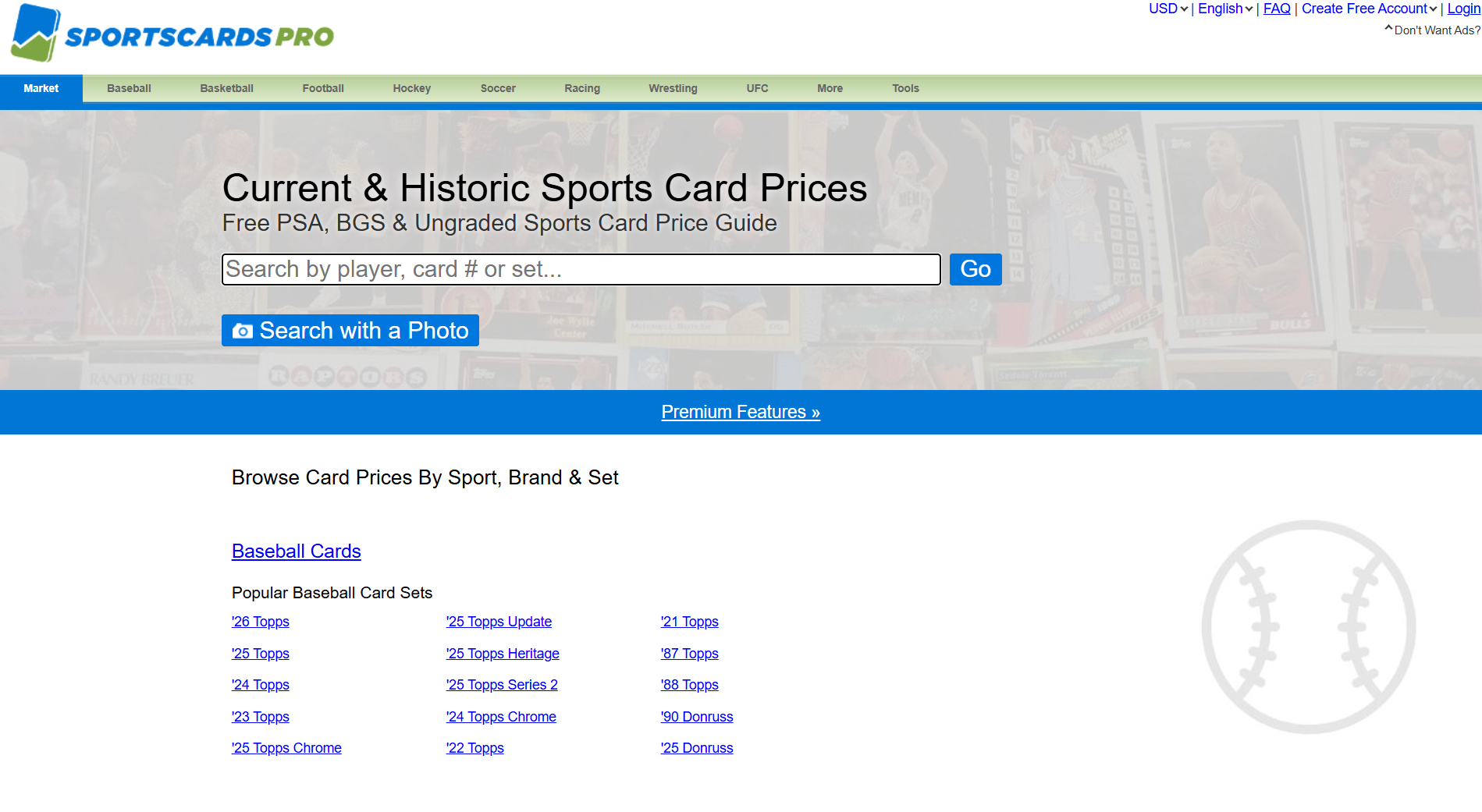
What it does: SportsCardsPro combines a no‑fee sports card marketplace with detailed market data based on sold listings from eBay and its own marketplace.
Best for: Sellers of nearly any kind of card, from sports cards to Pokémon cards, who want lower fees and easy access to price guides, past sales, and collection tools.
During testing, I listed 40 cards across three price tiers to use comp data for my pricing decisions. The platform showed recent sales for 38 of the cards I had, along with timestamps and grade breakdowns. I adjusted prices on 22 listings based on that data. However, the total time in sales was 2-3 days longer than eBay.
Key features
- Comp database: View completed sales with grades, dates, and final prices pulled from eBay and SportsCardsPro’s own marketplace to use as pricing comps.
- Low marketplace fees: Creating an account, listing cards, and selling on SportsCardsPro’s marketplace are all free; you only pay standard PayPal payment processing fees.
- Batch and collection tools: Import or manage many cards at once using text/CSV collection import, price guide data, and collection‑tracking tools.
Pros
- Sales analytics: Built‑in price guide, historical comps, and collection tracker help you see value trends and track your inventory’s performance over time.
- Data available: Historical comp data and live pricing reduce guesswork and help prevent underpricing cards you don’t monitor closely.
Cons
- Smaller buyer pool: SportsCardsPro’s marketplace has less traffic and brand recognition than eBay or COMC.
Fees
Payment processing fee of 2.9% + $0.30 transaction fee on final sale price. The platform charges no listing fees, promotional costs, or monthly subscriptions required.
Bottom line
SportsCardsPro works best when you're selling consistent volume and the 10-point fee difference between this and mainstream platforms materially affects your operating profit. But if you’re looking for faster turnover without managing pricing, fulfillment, or buyer communication, COMC is the better option.
3. Whatnot: Best for live card auctions

What it does: Whatnot lets you live auction your cards via live stream. The platform also provides buy-it-now features.
Best for: Sellers comfortable on camera with the energy and charisma to connect with buyers on live auctions.
When I tested Whatnot, I ran a 45-minute live stream with 20 cards to see how video presentation affected bidding behavior. Viewers asked condition questions in real time, and I showed closeups that prevented post-sale disputes. All in all, I sold 9 cards during the show.
Key features
- Real-time bidding interface: Buyers submit competing bids during your stream that display instantly.
- Follower notification system: Alert your audience when you go live so repeat buyers join streams immediately.
- Instant checkout flow: Winners pay through the app immediately after auctions close.
Pros
- Bidding competition: Live auction pressure often pushes cards above starting bids more consistently than static listings.
- Builds repeat buyer base: Regular streams can convert casual viewers into followers who return for future shows.
Cons
- Time-intensive: Each show requires live preparation and live screen time instead of “set it and forget it” passive listings.
Fees
For trading cards and collectibles, Whatnot charges an 8% seller fee on the final sale price. It also takes a payment processing fee, adding 2.9% plus $0.30 per transaction on the order total.
Bottom line
Whatnot makes the most sense if you love being in front of the camera and have the time to prep for regular streaming shows. Sellers who aren’t keen to get in front of a camera and hustle should try a silent auction platform, such as eBay.
4. Beckett Marketplace: Best for graded card credibility
What it does: Beckett Marketplace connects Beckett-graded cards to buyers who trust the platform’s grading authority.
Best for: Sellers who use the Beckett grading system and want the brand association to command premium prices over ungraded cards.
I listed 10 Beckett-graded cards alongside identical raw cards to measure the price premium buyers paid. On average, graded versions sold for nearly 2x more compared with eBay, but took about a week longer than eBay to sell.
Key features
- Graded-card focus: Oriented toward graded and higher-end cards, so buyers are used to evaluating slabs and grade premiums.
- Search and filters: Buyers can search by player, set, year, and grading company/grade details to narrow in on specific slabs.
- Price references: The broader price‑guide tools help sellers benchmark value when setting asking prices.
Pros
- Brand trust: Beckett’s name recognition in grading and price guides can increase buyer confidence.
- Grade-aware audience: The typical buyer base is more trading-card savvy than general marketplaces and is used to thinking in terms of grades and subgrades.
Cons
- Narrower reach: Beckett Marketplace’s traffic is much less than on mass marketplaces like eBay, so even desirable cards may take longer to sell.
Fees
You’ll need to contact Beckett Marketplace and apply to be a dealer to learn the fees.
Bottom line
Beckett Marketplace makes sense when you're familiar with the Beckett-grading system and need buyers who understand grade premiums. If the Beckett system isn’t your thing, try eBay, which offers authentication services, or SportsCardsPro.
5. COMC: Best for bulk card consignment
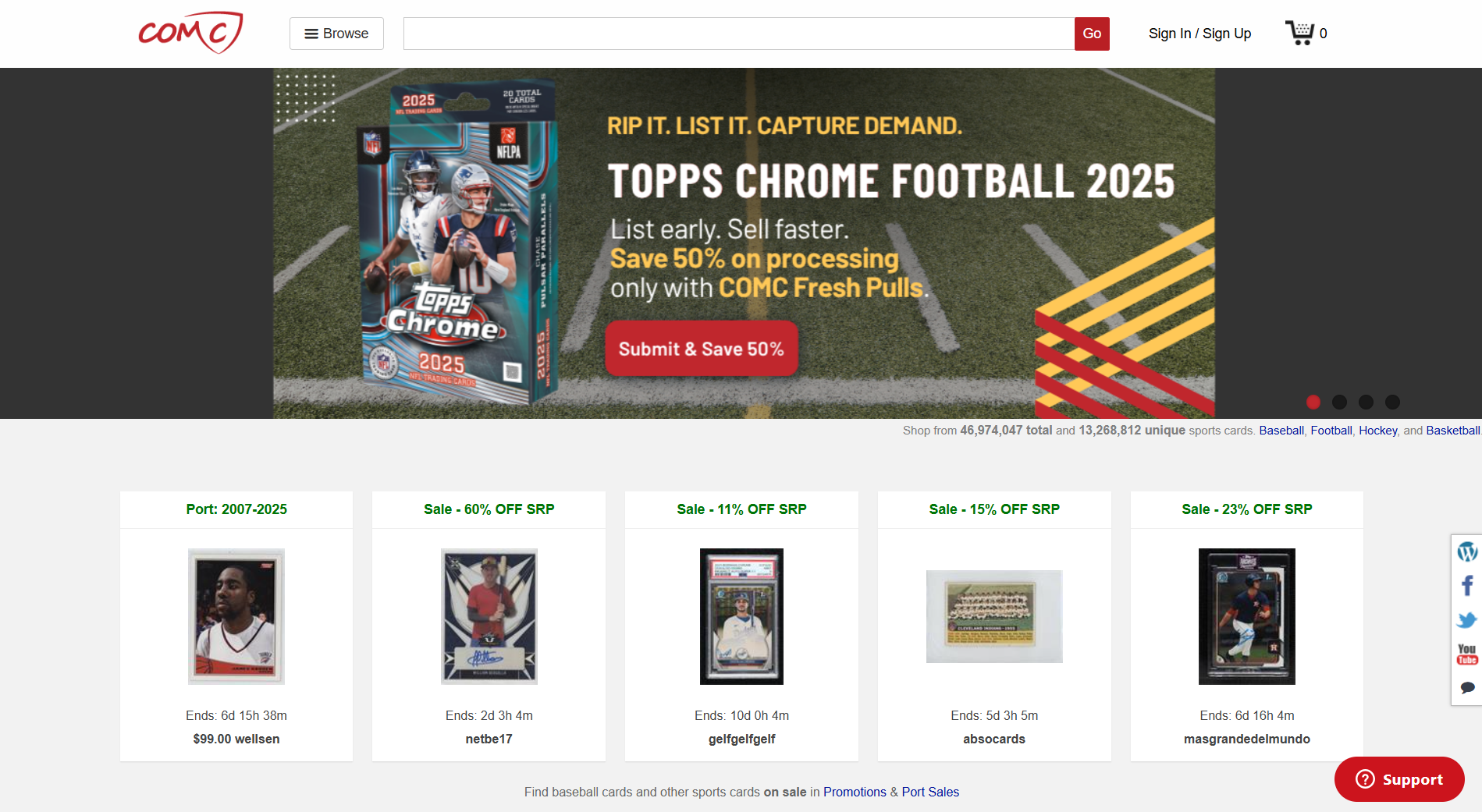
What it does: COMC (Check Out My Cards) removes photographing, listing, shipping, and customer service from your workflow by handling bulk card consignment.
Best for: Sellers liquidating collections of hundreds or thousands of cards who can't justify individual listing labor.
To test COMC, I shipped a few dozen mixed sports cards to test how the consignment processing compared to self-listing individual cards. COMC photographed and listed all cards within 2 weeks using Elite processing, and some started to sell within a week. Overall, the time savings let me source 2 more collections instead of spending dozens of hours listing cards myself.
Key features
- Bulk card processing: Ship large batches or entire collections to COMC, and its team handles photographing, describing, and listing your cards for you.
- Centralized inventory storage: Your cards stay in COMC’s warehouse, so it manages storage and individual order fulfillment.
- Pricing and automation tools: COMC lets you adjust prices individually or in bulk, and you can use simple rules or batch actions to reprice.
Pros
- Simple inventory management: Once processed, your cards can sell over time with minimal day‑to‑day work.
- Reduced shipping overhead with consignment: You send one or a few bulk shipments to COMC, and the company handles all buyer shipping and packaging on individual orders.
Cons
- Fees eat into low‑end cards: Processing, selling, and storage fees take a larger percentage of profit on cheap, slow‑moving cards.
Fees
COMC charges separate processing, selling, and storage fees that vary by service level and card type. For instance, Standard Service starts at $0.65 per item, transaction fees start at 5%, and cash-out fees start at 10%.
Bottom line
COMC suits sellers who don’t want to spend time creating listings by offering consignment services. If your focus is on a smaller number of high‑value singles or on building long‑term relationships with repeat buyers, try a platform like Whatnot.
My final verdict: Which sports card selling site should you choose?
Each of my top 5 best sites to sell sports cards serves different seller needs based on your inventory type, time availability, and profit goals. Here's how to pick the one for you:
Choose eBay if you …
Need immediate access to 135 million buyers and want flexible selling formats.
Choose SportsCardsPro if you …
Sell consistent volume and need historical comp data to price cards accurately.
Choose Whatnot if you …
Have strong live selling skills and want to build a follower base.
Choose Beckett Marketplace if you …
Focus exclusively on Beckett-graded cards and need buyers who understand grade premiums.
Choose COMC if you …
Have hundreds or thousands of cards to liquidate and want consignment processing.
Manage your sports card inventory with Nifty
Now that you know the best sites to sell sports cards, it's time to maximize your reach across multiple platforms without multiplying your workload.
If you're selling on more than one marketplace, Nifty handles the crosslisting grunt work. You'll be able to list and manage your sports cards across eBay, Mercari, Depop, and other platforms all in one place.
Here's why Nifty's so helpful:
- AI listing: Snap a pic of your card and let Nifty's AI build a marketplace-ready listing, with SEO-optimized titles and descriptions, and relevant keywords already filled out for you. Plus, it's cloud-based, mobile-friendly, and easy to use.
- Crosslist now: With a couple of clicks, post your sports cards across eBay, Poshmark, Mercari, Depop, and Etsy. No copy-paste and no multi-tab juggling. (More marketplaces coming soon!)
- Automatic delisting? Handled: When you make a sale, Nifty's sales detection auto-delists that card from every marketplace. Say goodbye to double-selling disasters and "sorry, it's already gone" apology messages.
- Bulk tools = no busywork: Share and relist daily with just a few clicks. Update or discount dozens of cards at once. You can even schedule listings to go live during peak buyer traffic hours.
- Analytics and profits are real: Track sales, fees, top performers, and slow movers in one clean dashboard, so you can actually see which cards are moving and which platforms drive the best margins.
Nifty pays for itself in just a few weeks. So … what are you waiting for? Start with a 7-day free trial to see how Nifty can help manage your sports cards on multiple platforms.
FAQs
1. What is the best site to sell high-value sports cards?
The best site to sell high-value sports cards is Beckett Marketplace for graded cards because it connects you with buyers who understand grade premiums and pay accordingly. eBay also works well for high-value cards with its massive 135 million buyer base and promoted listings, though you'll pay higher combined fees of around 13–15%.
2. Is it better to sell sports cards individually or in bulk?
It’s better to sell sports cards individually when a card has strong demand and real value on its own. However, it’s better to sell in bulk when cards are low-value commons or semi-commons. Many sellers list cards worth $20 or more one by one to earn more. Then, they group cheaper cards into team lots, player lots, or bulk boxes to sell faster.
3. What fees should I expect when selling sports cards online?
You should expect total fees between 6% and 15% when you sell sports cards online. Sites like eBay and Whatnot usually fall in the low-to-mid-teens once you include selling and payment fees. Lower-fee marketplaces often charge little or no commission but still take standard payment processing fees, which are usually around 2.9% plus $0.30 per sale.


.png)
.png)
.png)