
Whatnot vs. Etsy: Which platform suits sellers best? (2026)
.png)
Choosing between Whatnot and Etsy goes beyond comparing fees: The better platform depends on what you sell, how you prefer to sell it, and the type of buyers you want to attract.
I compared both marketplaces across the factors that matter most to sellers, considering buyer profiles, fees, discoverability, shipping, return policies, and real user experiences.
By the end, you'll know whether Whatnot or Etsy is the better fit for your business, or whether selling on both marketplaces gives you the strongest opportunity to grow.
Whatnot vs. Etsy: Differences at a glance
Whatnot fits collectible sellers who enjoy interacting with shoppers through live auctions. Etsy suits sellers of handmade and vintage items as well as those offering craft materials. Let’s take a close look at these differences:
Whatnot: Overview, user base, key features

Whatnot centers on live shopping and auction-style sales, but sellers can also offer items at fixed prices. Buyers come to Whatnot for collectibles, including trading cards, sports memorabilia, and coins. But it also supports categories like fashion, electronics, and home goods. In 2025, more than 20 million accounts were created on Whatnot.
Etsy: Overview, user base, key features
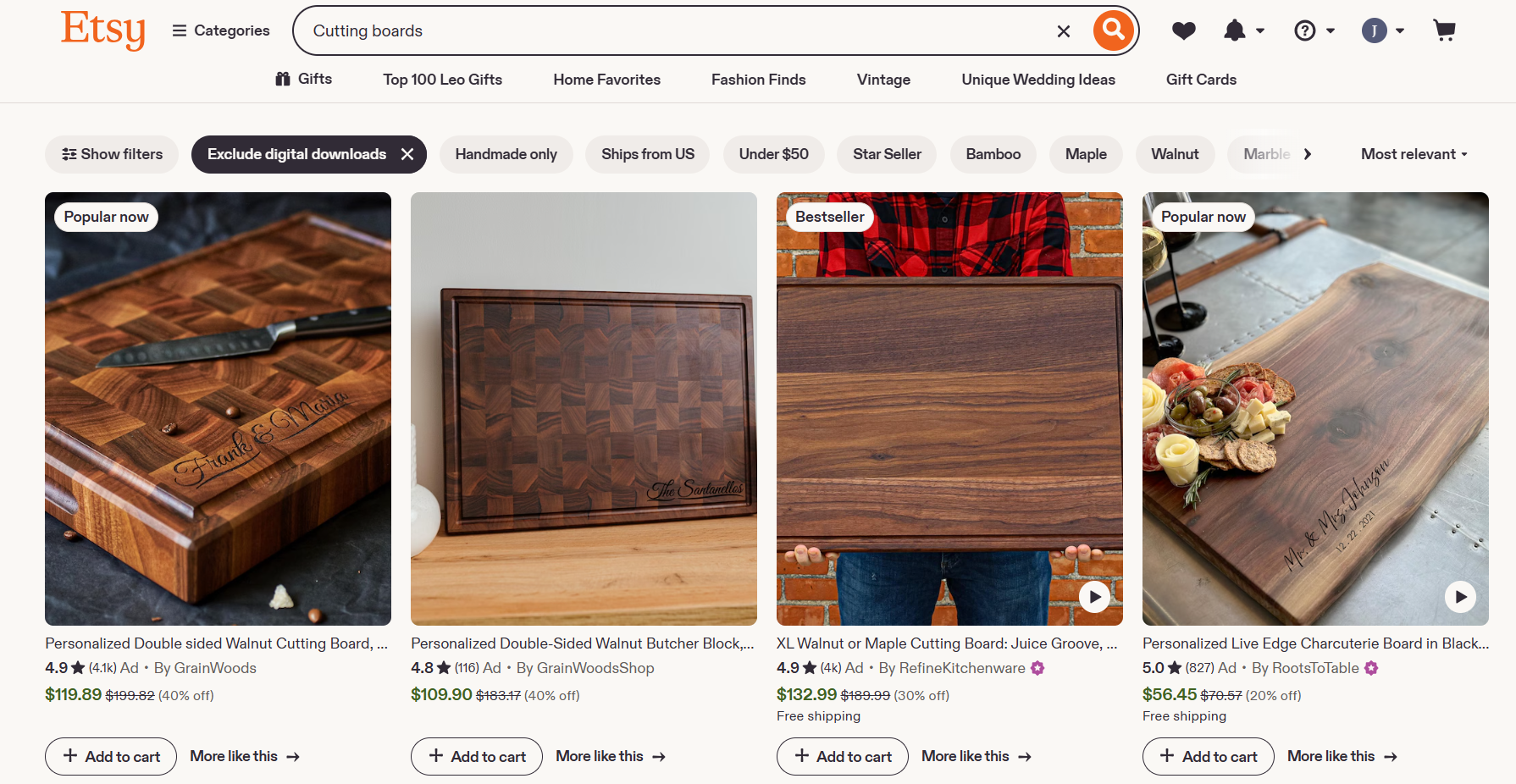
Etsy is an online marketplace that has more than 86 million active buyers around the globe. But it limits most sales to handmade, vintage, or craft supply products. Unlike live shopping platforms, Etsy relies on search, SEO, and ads to help buyers discover listings.
Whatnot vs. Etsy: Buyer profile
Whatnot buyer profile
- Whatnot started as a marketplace for trading cards, sports memorabilia, and other collectibles. But it’s expanded into categories like fashion, electronics, and home goods.
- Buyers expect sellers to demonstrate products, answer questions, and interact throughout the stream. Live engagement is a very important part of the Whatnot experience.
- Most buyers shop through livestreams and live auctions instead of browsing traditional product listings.
Etsy buyer profile
- Shoppers arrive looking for handmade goods, vintage finds, craft supplies, and other unique products that are difficult to find in traditional retail stores.
- Many buyers are willing to pay more for original, handmade, or custom items because they value craftsmanship and uniqueness.
- Etsy customers typically expect professional communication, reliable shipping, and a polished brand experience from sellers.
Buyer profile winner: Etsy
Etsy wins for buyer profile because its shoppers are willing to pay premium prices and want unique handmade or vintage products rather than bargain hunting or auction excitement. Whatnot remains an excellent choice if you enjoy livestream selling and can consistently entertain.
Whatnot vs. Etsy: Fees and payouts
Whatnot fees and payouts
- Whatnot charges a seller fee ranging from 4% to 8% of each sale, depending on the product category. It takes 4% from coins, while sports cards, toys, clothing, and most other categories are charged 8%. These fees currently apply to the first $1,500 of a sale (for eligible categories), with no commission charged on any amount above that threshold.
- All sellers also pay a payment processing fee of 2.9% plus $0.30 per order.
- Most U.S. sellers receive payouts after the buyer receives the item. Once Whatnot releases funds, direct deposits typically arrive within 1 to 3 business days. New sellers may experience temporary payout holds while Whatnot reviews account activity.
- Qualified sellers in the United States, Canada, and Japan can join Whatnot's Early Payout Program. This program releases earnings after you create a shipping label instead of waiting for the item to be delivered.
Etsy fees and payouts
- Etsy takes a $0.20 listing fee per item, a 6.5% transaction fee on the combined item and shipping price, and a payment processing fee of 3% plus $0.25 per order. Shops earning more than $10,000/year must participate in Offsite Ads and pay a 12% fee on attributed sales, while smaller shops can opt in and pay 15%.
- Sellers choose a daily, weekly, biweekly, or monthly payout schedule. Daily deposits typically require an available balance of ~$25 before Etsy sends funds, while payout minimums vary by country and account settings.
- Eligible U.S. sellers can use Instant Transfers for a 1% fee, with a minimum charge of $0.25 and a maximum of $1. Funds typically arrive within 30 minutes. Etsy limits these to between $25 and $500/day, depending on your status.
Fees and payouts winner: Whatnot
Whatnot wins, with seller fees barely topping 10% on some items, while sales above $1,500 (in eligible categories) avoid additional commission for a limited time. Eligible sellers can receive funds before delivery through the Early Payout Program. Etsy offers flexible payout schedules, but its overall fee structure is more complex.
Whatnot vs. Etsy: Listing and discoverability
Whatnot listing and discoverability
- Whatnot recommends live shows through its "For You" feed. It bases recommendations on a shopper's viewing history, followed sellers, saved shows, and category interests. Sellers also gain visibility through category browsing and paid Promote Tools placements.
- To make money on Whatnot, you need to attract viewers and keep them engaged throughout live streams. Many sellers grow their audience through social media, creator collaborations, and consistent activity on the platform.
- You can reach new buyers with community features such as Raids, which let one host send viewers directly to another seller's live stream after a show ends. This feature helps both sellers build their audience.
Etsy listing and discoverability
- Creating an Etsy listing involves uploading photos, writing a description, setting shipping details, and adding keywords to titles and tags. Etsy also offers AI tools to help generate titles and respond to customer messages.
- Search drives Etsy product discovery. Sellers weave keywords into titles, descriptions, and tags to improve their visibility in Etsy search results.
- Each seller receives a dedicated shop page. Well-optimized listings can also appear in Google search results, bringing in buyers from outside the Etsy marketplace.
Listing and discoverability winner: Tie
Etsy and Whatnot tie for listing and discoverability because they reward different strategies. Whatnot favors sellers who can build an audience through livestreams and community engagement. Etsy rewards strong SEO, optimized listings, and long-term search visibility. The better choice depends on whether you prefer hosting live shows or organic search.
Whatnot vs. Etsy: Shipping
Whatnot shipping
- Whatnot provides discounted shipping labels through USPS. As of July 31, 2026, USPS Ground Advantage is the default service (it replaced Priority Mail); Priority Mail remains available as a pricier option, and First-Class Mail Letter is still used for trading cards. Sellers are typically expected to ship orders within 2 business days.
- The platform manages much of the shipping process by generating labels and standardizing fulfillment steps, making it easier for sellers to ship orders.
- Whatnot only lets approved sellers use self-managed shipping in certain situations.
Whatnot shipping rates
Etsy shipping
- Etsy lets sellers choose their own shipping carriers, rates, handling times, and delivery methods. Sellers can also purchase discounted shipping labels through USPS, UPS, and FedEx directly from the platform.
- The platform includes shipping tools such as reusable shipping profiles and customs forms for international orders.
- Sellers are responsible for resolving most shipping issues directly with buyers. In some countries, Etsy also collects taxes such as VAT and GST during checkout.
Shipping winner: Whatnot
Whatnot wins for user-friendliness. It provides discounted pricing, prepaid labels, and built-in protection.
But Etsy suits more experienced sellers because it’s flexible. Although it also provides prepaid labels, you can customize rates and create similar profiles as your shop scales.
Here's how to choose based on shipping: Choose Whatnot if you want a simple, platform-managed shipping process. Choose Etsy if you need more control over shipping rates, carriers, and fulfillment.
Whatnot vs. Etsy: Return policies
Whatnot return policies
- Whatnot allows refunds only under its Buyer Protection Policy for situations such as damaged items, missing deliveries, or products that differ significantly from their description. Claim deadlines vary by product category and region.
- Buyers generally can’t return an item simply because they changed their mind. This policy gives sellers more protection against preference-based returns.
- Approved refunds are sent back to the buyer's original payment method. Processing times depend on the payment provider, but Whatnot completes many refunds within a few business days.
Etsy return policies
- Etsy allows sellers to make their own return policies, including return windows and eligibility requirements.
- Buyers should contact the seller first if an item arrives damaged or doesn't match its description. If the issue isn't resolved, they can open a case with Etsy within the allowed timeframe.
- Etsy Purchase Protection may refund eligible buyers for lost or damaged orders, while qualifying sellers can still keep their payment if they meet Etsy's shipping and tracking requirements.
Return policy winner: Etsy
Etsy wins because sellers have more control over their return policies while buyers only receive Purchase Protection when orders are lost, damaged, or significantly different from the listing. Whatnot's stricter Buyer Protection Policy offers stronger protection against preference-based returns, but it gives sellers less flexibility in setting their own policies.
What real users are saying
I looked at platforms like Facebook, Trustpilot, and Reddit to learn other users’ opinions on Whatnot and Etsy:
Whatnot pros
- One reviewer finds that Whatnot attracts buyers purchasing multiple lower-priced items because combined shipping encourages larger orders overall. (November 5th, 2025)
- A buyer enjoyed an engaging first Whatnot experience, praising the entertaining livestream, quality sports card selection, and accurate fulfillment. (July 21st, 2026)
Whatnot cons
- On Trustpilot, a Whatnot buyer said that they spent thousands but received only about half of the purchased packages. (July 20th, 2026)
- A seller stated that they received a poor review from a buyer over a $6 item that shipped and arrived on time. (May 23rd, 2026)
Etsy pros
- An Etsy seller said that the platform is profitable if you invest the time researching, designing, and refining original products. (May 21st, 2026)
- One Etsy buyer praised the platform’s buyer protection policy, saying it strengthened their purchasing confidence. (July 19th, 2026)
Etsy cons
- One seller had issues when they first opened their shop, saying that Etsy held all their earnings for a month. (April 21st, 2026)
- An Etsy seller argued that the platform’s combined transaction, renewal, and flat fees consumed a much larger share of revenue from lower-priced items than many sellers expect. (July 17th, 2026)
My verdict: How to choose between Whatnot and Etsy
The right platform depends on what you sell, how you want to reach buyers, and your tolerance for fees. Here’s how to pick:
Whatnot is better if you …
- Sell collectibles or trending products: Many buyers flock to Whatnot for trading cards, sneakers, electronics, and other in-demand collectibles.
- Enjoy selling through livestreams: Buyers expect demonstrations, answers to questions, and real-time interaction.
- Want a simpler selling process: Simple shipping, lower fees, and live discovery make it easier for new sellers to get started.
Etsy is better if you …
- Sell handmade or unique items: Etsy buyers actively want original, handcrafted items and are often willing to pay more for quality work.
- Are aiming to build a recognizable brand: Dedicated shop pages and repeat customers make Etsy well suited for growing a long-term business.
- Prefer search-driven traffic: Listings can attract buyers through Etsy Search and Google search if you optimize your keywords well.
Crosslist on Etsy and Whatnot if you …
- Have a goal of reaching more buyers: Selling on both platforms exposes your products to two very different audiences.
- Want to compare platform performance: Crosslisting shows which products sell faster and generate higher profits on each marketplace.
- Aim to reduce sales risk: Multiple selling channels can help offset slow periods, algorithm changes, or account issues on a single platform.
Sell more on Whatnot and Etsy with Nifty
If you want to sell on both Whatnot and Etsy but don’t want manual tasks like copying and pasting listings, try Nifty. It’s a crosslisting and automation tool that lets you list the same products on Whatnot, Etsy, and other platforms. Nifty also offers tools for fast listing creation and inventory management.
Here's why over 10,000 sellers trust Nifty:
- Customized AI listing: Snap a pic and let Nifty's AI build a high-quality listing, with SEO-optimized titles and descriptions, and trending hashtags already filled out for you. You can even configure how AI writes your listings to match each platform’s buyers, like short and sweet for Whatnot and more of a narrative style for Etsy.
- Crosslist now: With a couple of clicks, post your items across Whatnot, Etsy, Mercari, Poshmark, eBay, and Depop. (More marketplaces coming soon!) No copy-paste clutter and no multi-tab hopscotch between Whatnot and Etsy dashboards.
- Bulk crosslisting and one-off exports: Crosslist up to 25 items at once with your pricing and shipping rules applied automatically. Plus, export listings straight to Facebook Marketplace via CSV (coming soon!), with all the category, size, and description mapping already done for you.
- Automatic delisting? Handled: When an item sells on Whatnot, Nifty auto-delists it from Etsy (and other connected platforms that it supports) immediately. Say goodbye to double-selling disasters and "sorry, it's already gone" apology messages.
- Bulk tools = no busywork: Share and relist daily in just a few clicks. You can even schedule drafts to go live while you sleep and set automatic discounts that run deeper over time. This feature helps you manage Whatnot's fast-moving buyers and Etsy's search-driven shoppers.
- Analytics and profits are real: Track which platform actually makes you more money. See sales, fees, top performers, and slow movers side-by-side in one clean dashboard. Stop guessing if Whatnot or Etsy is worth your time and put more energy where it pays off.
Nifty pays for itself in just a few weeks. Start with a 7-day free trial and see how Nifty can help you win on Whatnot, Etsy, and other platforms.
FAQs
1. What sells best on Whatnot compared with Etsy?
Trading cards, sneakers, electronics, and other collectibles sell best on Whatnot. These products benefit from live auctions and bidding. Etsy is better for handmade goods, vintage products, personalized items, and craft supplies that buyers typically discover through search.
2. Is it worth selling on both Whatnot and Etsy?
Yes, it’s worth selling on both Whatnot and Etsy if your products fit both marketplaces. Crosslisting exposes your inventory to two different buyer audiences and helps reduce reliance on a single platform. You can also compare which marketplace generates more sales and profit. Crosslisting tools like Nifty simplify selling on multiple platforms by letting you manage listings from one command center.
3. Which platform is easier for beginners: Whatnot or Etsy?
Etsy is generally easier for beginners because you can create listings that continue attracting buyers through search without hosting live events. Whatnot has a steeper learning curve because sellers need to build an audience and consistently run livestreams. However, if you’re outgoing and really know what you’re selling, Whatnot may be easier.


.png)
.png)
.png)