9 Etsy alternatives I evaluated + how to choose (2026)

Your earnings from a $40 Etsy sale can shrink quickly after the platform's 6.5% transaction fee, payment processing fees, and applicable Offsite Ads charges. Add thousands of competitors, and it’s no surprise that many sellers start looking elsewhere.
I looked at 9 Etsy alternatives, from handmade marketplaces like Amazon Handmade and Folksy to standalone storefronts like Shopify and Big Cartel. Learn about marketplace fees, buyer audiences, allowed products, and which tools each gives its sellers.
By the end, you'll know which platform best suits your products, budget, and selling goals.
TL;DR: 9 Etsy alternatives by marketplace type
I broke down these Etsy alternatives into two separate categories:
Category 1: Marketplaces with buyer traffic
Marketplaces such as Amazon Handmade and Folksy function similarly to Etsy. You open a seller account and list your products, though Amazon Handmade approves makers first and Folksy only accepts UK-based sellers. Here are six marketplaces:
- Amazon Handmade: Best for reaching more handmade shoppers
- eBay: Best for selling vintage items and collectibles
- Depop: Best for selling vintage and trendy fashion
- Poshmark: Best for selling clothing and accessories
- Folksy: Best for UK-based artists and makers
- Artisans Cooperative: Best for independent artists seeking cooperative ownership
Category 2: Independent online storefronts
Independent online storefronts require sellers to create their own store or website and manage their own marketing to attract customers. Let’s look at the three that made my list:
- Shopify: Best for building a scalable online store
- Big Cartel: Best for artists selling small product catalogs
- Squarespace: Best for creating a design-focused online store
Why look for Etsy alternatives?
Many folks look for Etsy alternatives to avoid Etsy’s high fees, heavy competition, and restrictions:
- Fees reduce profit margins: Etsy charges a 6.5% transaction fee on the item price plus shipping, and U.S. sellers pay 3% + $0.25 per order for payment processing. Offsite Ads add 15% on attributed orders, or 12% once a shop makes $10,000 in a 365-day period, after which the ads are mandatory for life. On a $40 sale with Offsite Ads at 15%, combined fees pass 25%.
- Competition makes visibility harder: Sellers compete with similar handmade businesses, vintage shops, and craft suppliers. Search rankings depend on factors such as listing relevance, quality, and customer experience.
- Customer relationships have restrictions: You can communicate with buyers about orders, but you need their explicit consent before adding them to marketing email lists. The platform also controls how shoppers discover products and receive recommendations.
- Storefront customization is limited: Shop owners can customize banners, logos, announcements, and sections, but storefronts still follow Etsy's standard layouts. Sellers can't freely redesign product pages or the checkout experience, and they have limited options for building advanced sales funnels.
Which Etsy alternative should you choose?
Your best Etsy alternative depends on what you sell, where your buyers shop, and how much marketing you can handle. Use these quick picks to decide.
Choose Amazon Handmade if you ...
Make handmade goods, meet Amazon's shipping standards, and want access to its shoppers while paying a 15% referral fee per sale.
Choose eBay if you ...
Sell one-of-a-kind vintage pieces or collectibles and want auctions, Best Offer, and sold-listing data.
Choose Depop if you ...
Sell trendy or vintage clothing to Gen Z shoppers and want to avoid standard selling fees.
Choose Poshmark if you ...
Resell secondhand fashion and want prepaid shipping labels and live shows.
Choose Folksy if you ...
Make original handmade products or craft supplies in the UK and want a smaller, maker-focused marketplace.
Choose Artisans Cooperative if you ...
Sell handmade work in the US or Canada and want co-ownership and the ability to share eligible profits.
Choose Shopify if you ...
Already drive traffic through social media or email and want a branded store that scales with apps, wholesale, and multiple sales channels.
Choose Big Cartel if you ...
Sell a small catalog of prints, stickers, or merch and want a simple store with no selling commission.
Choose Squarespace if you ...
Need a portfolio, blog, and store in one design-focused website, especially if you also sell workshops or digital downloads.
Stick with Etsy if you ...
Depend on marketplace search to find buyers and lack time to market your own store.
Etsy alternatives: At a glance
1. Amazon Handmade: Best for reaching more handmade shoppers
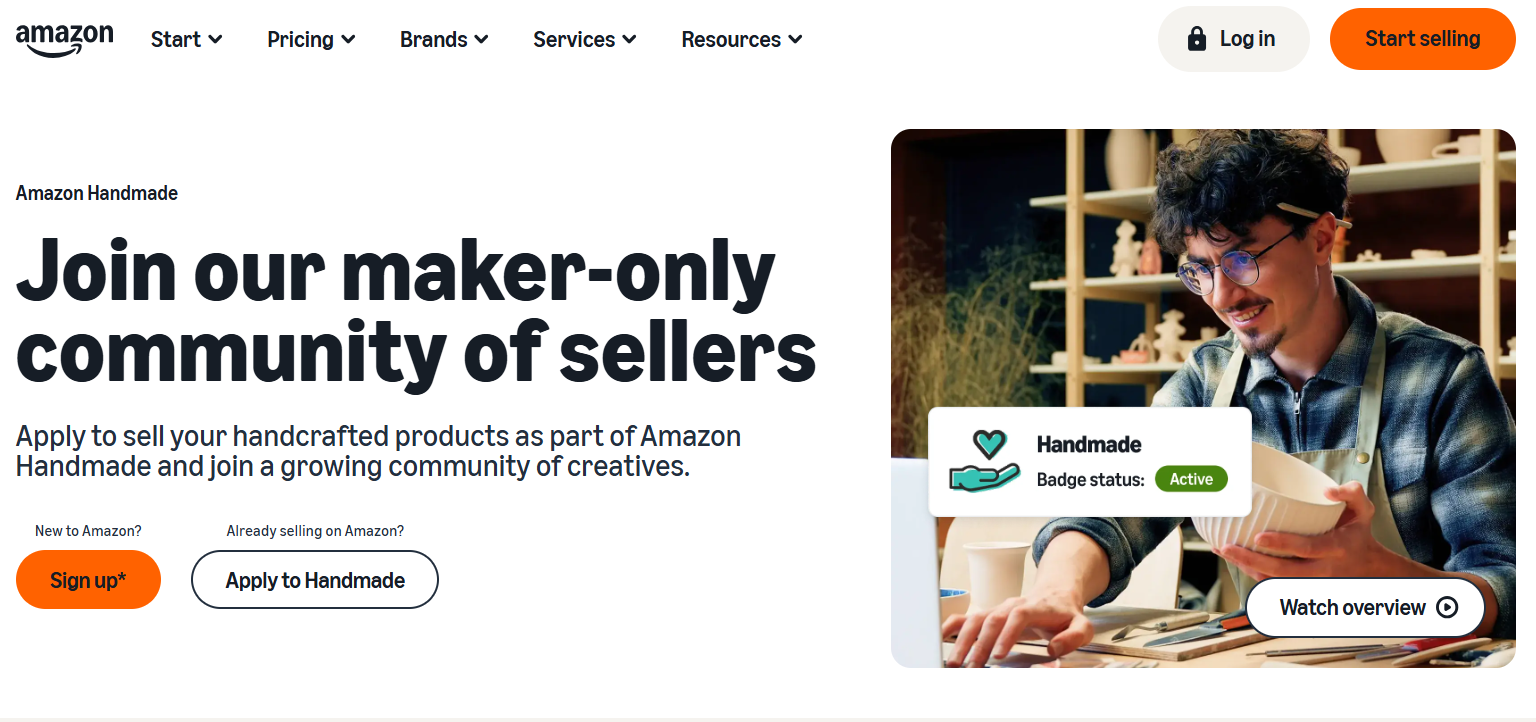
Amazon Handmade lets approved makers sell handcrafted or upcycled products through Amazon's marketplace.
“... I made almost $60,000 on Amazon in gross revenue.” (PlanwithStormy, YouTube, March 18th, 2026)
Key features
- Fulfillment by Amazon: You can use Amazon to store and ship qualifying products while also handling customer service and returns for those orders. Personalized items can’t use FBA.
- Maker profile: Share your creative process and showcase your products.
- Amazon Custom: Let buyers choose personalization options when ordering.
Pros
✅ No listing fees: Add products without paying individual listing fees.
✅ Simple selling fees: Pay one Handmade referral fee per sale, with no separate Amazon payment processing fee.
✅ Prime eligibility: Qualifying FBA products can offer Prime shipping.
Cons
❌ Product restrictions: Regular resale and vintage items generally don't qualify for Handmade.
❌ Customer contact limits: You can only use buyer information to fulfill orders, and Amazon prohibits marketing messages to buyers.
Best for
- Makers selling handmade products
- Sellers who can meet Amazon's shipping requirements
- Etsy sellers looking for another sales channel
Fees
Amazon Handmade charges a referral fee of 15% of the total sale price or $0.30 per unit shipped, whichever is higher. This includes the item price and any shipping or gift-wrapping fees paid by the buyer. Taxes calculated through Amazon's tax services are excluded.
Creating listings and a maker profile is free. Amazon Handmade requires a Professional selling plan, which costs $39.99 per month in the U.S. Approved Handmade sellers pay for the first month, after which Amazon waives the monthly fee.
FBA, advertising, and other optional services cost extra.
2. eBay: Best for selling vintage items and collectibles
eBay gives vintage and collectible sellers access to over 130 million buyers. Our Etsy vs. eBay breakdown compares the two in more detail.
“The selling fees on eBay UK are very competitive, which incentivises sellers to list items at good prices.” (Anhua, Trustpilot, October 7th, 2026)
Key features
- Auction-style listings: Buyers bid on items, helping sellers test demand for unusual inventory.
- Best Offer: Buyers can send offers on eligible listings, and you can accept, decline, or counter.
- Sold listings search: Recent completed sales provide pricing benchmarks for comparable products.
Pros
✅ One-of-a-kind listings: Sell individual vintage pieces, even if you never restock the same item.
✅ Collector audience: Reach buyers searching for specific brands, models, production years, and collectibles.
✅ Free listing allowance: Eligible U.S. sellers receive up to 250 zero-insertion-fee listings monthly.
Cons
❌ Category-dependent fees: Final value fees vary by product category, seller plan, and applicable fee rules.
❌ Limited handmade specialization: Handmade listings compete with manufactured products across broader marketplace categories.
Best for
- Vintage dealers selling unique inventory
- Collectors selling rare or discontinued products
- Resellers managing varied product catalogs
Fees
Fees vary by category, but in most categories eBay charges 13.6% of the sale up to $7,500 per item and 2.35% above that, plus $0.30 to $0.40 per order. Other categories have different rates and thresholds.
If eBay's fees don't fit, our list of eBay alternatives covers 20 more options.
3. Depop: Best for selling trendy fashion
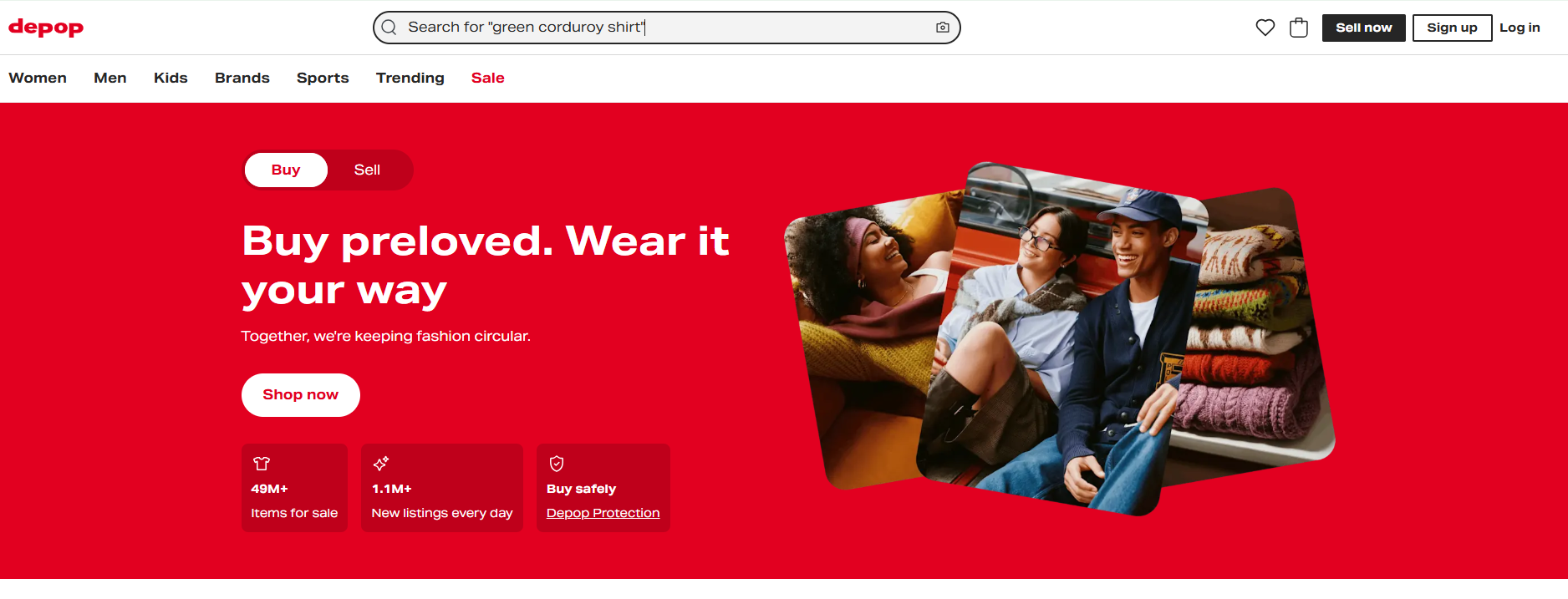
Depop is a fashion resale marketplace that is ideal for Gen Z and young millennial buyers.
“Great company. They will be proactive and supportive if you ever need support or to raise an issue. Thankfully, this rarely occurs. But if it does, they are excellent at providing a resolution.” (Depop seller, Trustpilot, October 12th, 2026)
Key features
- Social shop profiles: Buyers can follow sellers and browse their products.
- Boosted listings: Pay to promote listings and reach more shoppers, with fees charged on qualifying sales.
- Bundles: Buyers can purchase several items from you, and you can offer discounts or shipping deals as a sweetener.
Pros
✅ No standard selling fees: Sellers in the U.S., UK, and Australia pay no standard selling commission.
✅ Easy mobile listing: List products, manage orders, and message buyers through the app.
✅ Style-based search: Search tools and personalized suggestions help shoppers find fashion they like.
Cons
❌ Fashion-focused audience: Craft supplies and handmade products outside fashion may attract fewer buyers.
❌ Different regional fees: Sellers outside the U.S., UK, and Australia generally pay a 10% selling fee plus payment processing fees.
Best for
- Vintage clothing sellers who regularly find new stock
- Sellers targeting younger, fashion-focused shoppers
- Fashion sellers who prefer managing orders on mobile
Fees
Depop charges no standard selling fees for UK listings created from March 20, 2024, and U.S. listings created from July 15, 2024. Australian sellers also pay no standard selling fees on sales in Australian dollars from July 22, 2026. Payment processing fees still apply.
U.S. sellers pay 3.3% plus $0.45 per transaction. UK sellers pay 2.9% plus £0.30, and Australian sellers pay 2.6% plus A$0.30. These fees are based on the item price, shipping charges, and any applicable taxes.
Depop also charges fees for optional Boosted Listings when a sale comes from a promoted listing. UK and U.S. sellers pay a 12% boosting fee on listings created from March 23, 2026, while Australian sellers pay 8%.
Sellers who don't qualify for these fee exemptions generally pay a 10% selling fee plus payment processing fees. Rates depend on the seller's location and the currency used. PayPal fees may also vary by location and account type.
For other fashion resale apps, see our list of Depop alternatives.
4. Poshmark: Best for selling vintage clothing and accessories
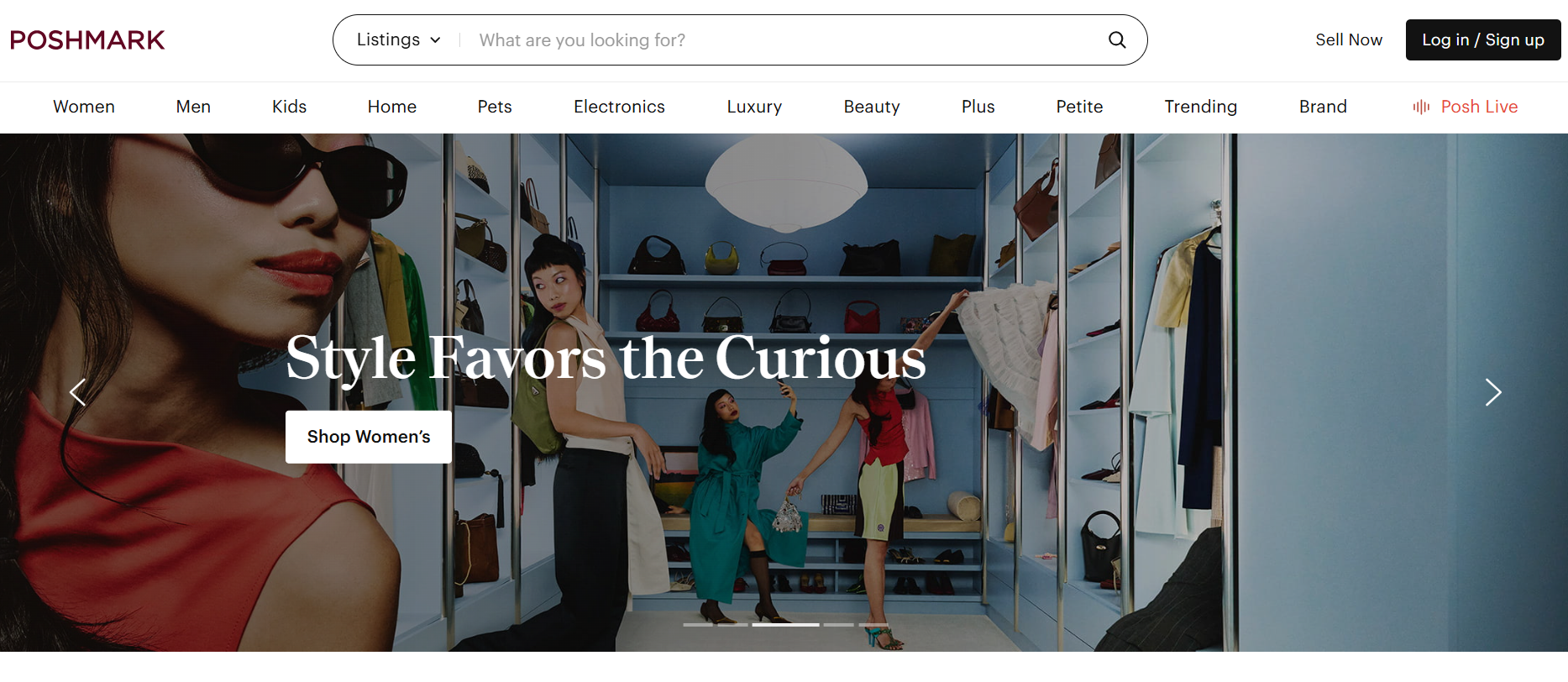
Poshmark suits vintage clothing and accessory resellers who want straightforward selling fees and social features.
“I had a flawless experience shopping with Poshmark. The item matched the description perfectly, and the price was the best I could find online. Shipping was on time, and the package/shoes arrived in perfect condition.” (Sara M., Trustpilot, July 1st, 2026)
Key features
- Prepaid shipping labels: Poshmark provides labels for eligible orders, simplifying shipping and fulfillment.
- Live shows: Sellers who activate hosting can run Posh Shows, Poshmark's live sales events, with Buy Now and live auction listings.
- Sharing to followers: Share your listings to increase exposure among shoppers.
Pros
✅ Straightforward selling fees: Standard commissions include one selling fee with no transaction fees.
✅ Fashion-focused buyers: Shoppers browse clothing, shoes, handbags, accessories, and other categories.
✅ Simplified shipping: Prepaid labels reduce manual postage calculations for eligible orders.
Cons
❌ 20% commission: U.S. sellers pay a 20% fee on sales of $15 or more.
❌ High fees on inexpensive items: A $2.95 fee on a $12 sale equals approximately 24.6%.
Best for
- U.S. and Canadian sellers
- Resellers offering secondhand vintage fashion
- Handmade jewelry and accessory makers
- Sellers who prefer prepaid shipping labels
Fees
U.S. sellers pay $2.95 on sales under $15 or 20% on sales of $15 or more. Canadian sellers pay C$3.95 on sales under C$20 or 20% on sales of C$20 or more, plus GST/HST on the fee.
On a $40 U.S. sale, sellers keep $32 before other costs. The same $40 sale on Etsy costs $4.05 in transaction and processing fees, before any Offsite Ads.
If Poshmark’s 20% fee feels steep, compare these sites like Poshmark.
5. Folksy: Best for UK-based artists and makers
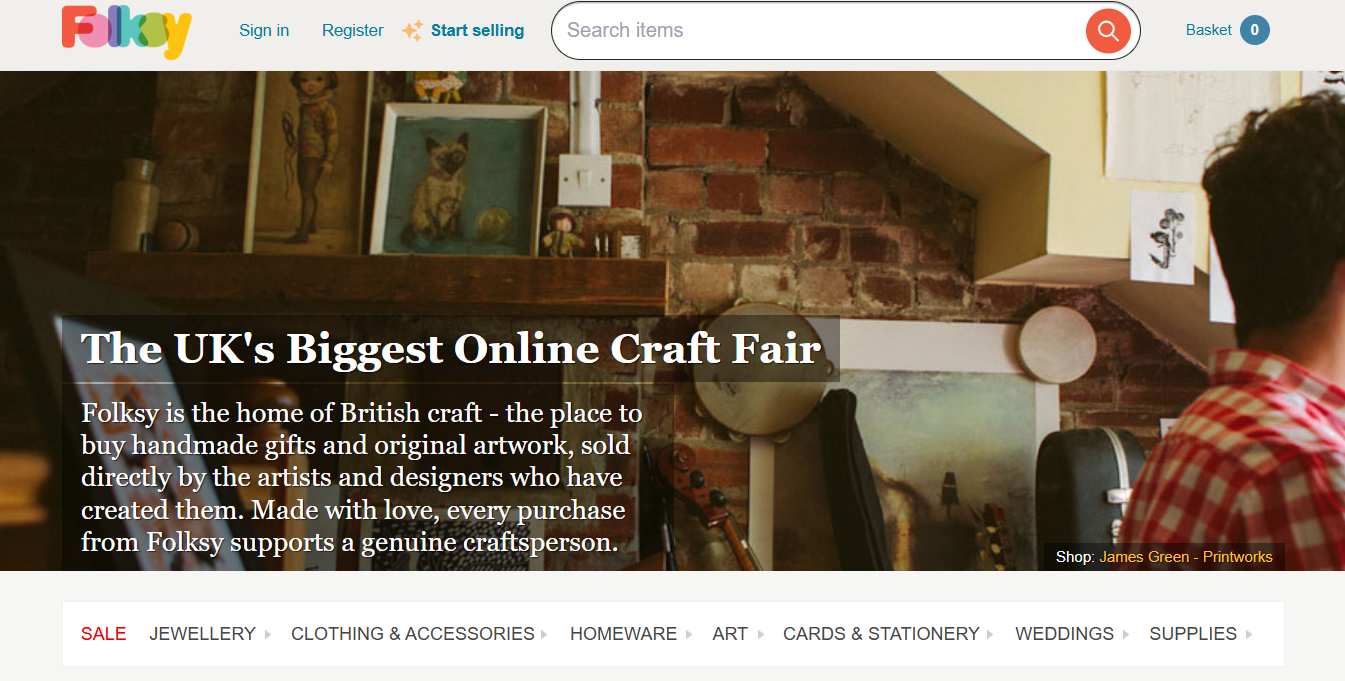
Folksy is an Etsy alternative for UK artists and makers who want a marketplace focused on handmade products, original designs, and craft supplies.
“Encouraging, nurturing, and supporting from the off to help you become a better seller. Easy to navigate platform that’s well worth the monthly subscription!” (Jo D., Trustpilot, September 18th, 2026)
Key features
- Handmade marketplace: Sell original handmade products, artwork, designs, and approved craft supplies.
- Marketplace promotion: Folksy promotes independent makers through its website, blog, and marketing.
- Folksy Plus listings: Get unlimited listings and free daily relisting with a Plus subscription.
Pros
✅ Direct payments: Receive customer payments through your connected payment service.
✅ Seller support: Access guides, forums, and learning resources built for independent makers.
✅ Plus referral discount: Plus sellers pay 3% + VAT instead of 6% + VAT on sales that come through their own referral link.
Cons
❌ Smaller audience: Folksy may attract fewer buyers than larger marketplaces. Plus, only UK-based sellers can open a Folksy shop.
❌ Extra payment fees: PayPal or Stripe charges apply on top of Folksy's selling fees.
Best for
- UK artists selling original handmade products
- Etsy sellers exploring another marketplace
- UK sellers offering craft supplies
Fees
Folksy Basic charges 15p + VAT (18p including VAT) per item listed or relisted. Standard commission is 6% + VAT, equivalent to 7.2% of the item’s selling price, excluding postage.
Folksy Plus costs £7.50 monthly or £75 yearly and includes unlimited listings. Sales that qualify for Folksy's referral discount pay 3% + VAT.
PayPal and Stripe charge separate payment processing fees.
6. Artisans Cooperative: Best for independent artists seeking cooperative ownership
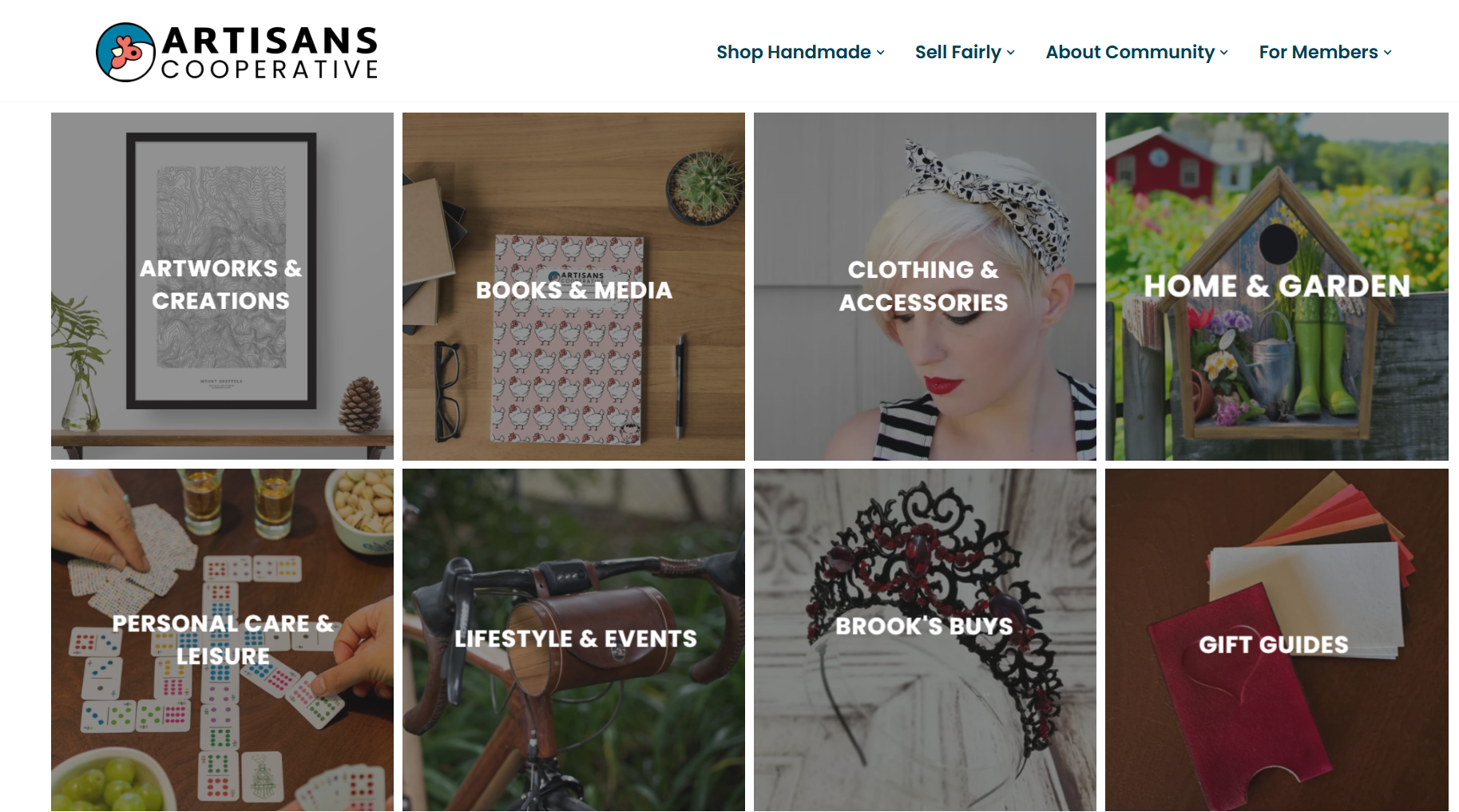
Artisans Cooperative lets makers become marketplace co-owners, participate in governance, and share in eligible profits.
“I bought in as a member in late October, and already made several sales and earned back this year's installment payment. It's super new and small, but I feel it has potential! It is 100% artisan-owned and run, and is 100% handmade-only products.” (Artisans Cooperative seller, Reddit, January 8th, 2024)
Key features
- Profit sharing: Eligible members may receive a share of the cooperative's profits when money is available.
- Handmade verification: Other makers review how sellers create their products and recognize those who meet handmade standards.
- Membership points: Members earn points toward ownership by completing approved activities.
Pros
✅ No listing fees: Sellers pay no standard listing, renewal, or subscription fees.
✅ Member voting: Members help choose leaders and shape marketplace rules.
✅ Handmade standards: Product rules limit mass-produced goods and regular resale.
Cons
❌ Smaller audience: The growing marketplace may attract fewer buyers than larger platforms.
❌ Membership costs: Ownership requires a cash payment plus participation points or extra cash.
Best for
- Handmade sellers interested in cooperative ownership
- Makers who ship original products to the US and Canada
- Makers willing to help shape marketplace decisions
Fees
The platform charges an 8% sales fee for artisan members, 9.5% for supporter members, and 12% for non-members. Payment processing costs another 3.49% + $0.49 per transaction.
Artisan membership requires $10 in cash, , with the rest of the one-time buy-in paid in participation points or extra cash.
For example, an artisan member selling a $50 item with no shipping charge pays about $6.24 in selling and processing fees. On Etsy, the same $50 sale costs $5.00 in transaction and processing fees.
7. Shopify: Best for building a scalable online store

Shopify suits sellers who want a branded online store, direct customer relationships, and greater control over how they sell their products.
“Amazing. I had an issue with my website page and the live support was amazing. Nesty took control of what I needed and fixed the problem. Kept me fully informed through the process.” (Bridie H., Trustpilot, September 9th, 2026)
Key features
- Shopify Messaging: Send up to 10,000 free marketing emails monthly on eligible plans, with fees for extra emails.
- App store: Add product reviews, subscriptions, personalization, and other features through thousands of apps.
- Multiple sales channels: Connect your products and inventory to supported social platforms and marketplaces.
Pros
✅ Room to grow: Manage more orders using Shopify's inventory tools, plans, and apps.
✅ Faster checkout: Shop Pay lets eligible customers save payment and shipping details for future purchases.
✅ No extra transaction fees: Orders paid through Shopify Payments skip Shopify's third-party transaction fees.
Cons
❌ Finding customers: You'll need to attract shoppers through marketing or other sales channels.
❌ Ongoing costs: Monthly plans, paid apps, themes, and advertising can increase expenses.
Best for
- Established Etsy sellers who want to expand
- Brands with an existing social media following
- Makers looking to sell products wholesale
Fees
Shopify's U.S. plans cost $39 monthly for Basic, $105 for Grow, and $399 for Advanced. Shopify Plus starts at $2,300 monthly with a three-year contract. Annual billing lowers Basic to $29 per month.
On Basic, Shopify Payments charges 2.9% + $0.30 per standard U.S. online card transaction.
8. Big Cartel: Best for artists selling small product catalogs
Big Cartel gives artists and makers a standalone online store with straightforward product management tools.
“I am happy with the way Big Cartel works. I have used it for many years and never had any problems whatsoever. It is safe and trustworthy.” (La Chulona D., Trustpilot, October 10th, 2026)
Key features
- Product importing: You can import listings from Etsy, Squarespace, and Shopify using supported import tools.
- In-person selling: On paid plans, mobile selling tools let merchants accept payments at markets, events, and pop-up shops.
- Print-on-demand integrations: On paid plans, apps such as Printful handle production and fulfillment, so you don't have to hold inventory.
Pros
✅ No selling commission: Big Cartel takes no percentage of sales, but payment processing fees still apply.
✅ Free plan: List up to five products with no monthly fee.
✅ Easy setup: Build your store using customizable templates, with no coding required.
Cons
❌ Limited free plan: Gold allows only five products and one image per product, and leaves out discounts, shipping labels, inventory tracking, and in-person selling.
❌ Limited marketing tools: More advanced marketing tasks may require outside apps or services.
Best for
- Illustrators selling prints and stickers
- Makers launching small product collections
- Craft fair sellers looking for an online store
Fees
Big Cartel's Gold plan is free and allows up to five product listings. Platinum costs $15 monthly for up to 50 listings, while Diamond costs $30 monthly for up to 500. Paid plans include more product images, inventory tracking, shipping labels, and package tracking.
The platform charges no selling commission or extra platform fees. However, Stripe or PayPal payment processing fees still apply.
9. Squarespace: Best for creating a design-focused online store

Squarespace lets you build an aesthetically pleasing online store that also serves as a portfolio and business website.
“I love how Squarespace makes everything easy to use. Starting with a template and making edits or adding pages is super simple and fits my needs. The forums are great for finding information when I have questions, and if I can't figure it out, the chat option is amazing!” (Sonya S., G2, May 20th, 2026)
Key features
- Integrated blog: Publishing articles alongside products supports content marketing and search engine visibility.
- Digital products: Sell downloadable patterns, courses, memberships, and other eligible digital content.
- Email campaigns: An optional marketing service lets sellers announce launches and promotions to subscribers.
Pros
✅ Visual designs: Image-focused templates help artists build attractive, professional-looking stores.
✅ Built-in website tools: Manage products, portfolios, blogs, and services in one place.
✅ No commerce fees on higher plans: Core, Plus, and Advanced charge no Squarespace commerce fees on physical products, downloads, and services.
Cons
❌ Fewer selling tools: Advanced inventory, shipping, and marketing tasks may require outside services.
❌ Finding customers: You must attract shoppers through search, social media, ads, or referrals.
Best for
- Artists combining portfolios with online stores
- Makers offering workshops alongside physical products
- Small businesses focused on website design
Fees
Squarespace offers four plans: Basic ($25/month), Core ($39/month), Plus ($65/month), and Advanced ($139/month). Basic charges a 2% selling fee, while the other plans charge no Squarespace selling fees on eligible standard sales.
Digital product fees, which cover courses, video pages, and member sites, are 7% on Basic, 5% on Core, 1% on Plus, and 0% on Advanced. Downloads fall under the commerce fee instead. Payment processing fees cost extra.
For standard U.S. card payments, Squarespace Payments starts at 2.9% plus $0.30 on Basic and Core. Plus charges 2.7% plus $0.30, while Advanced charges 2.5% plus $0.30.
Subscription prices depend on the plan and billing period. Annual billing usually lowers the monthly cost.
How to evaluate Etsy alternatives
The right Etsy alternative depends on your products, target buyers, selling costs, and ability to attract customers. Compare these four factors:
- True cost per sale: Start by adding up commissions, listing fees, payment processing, advertising, and subscription costs. Run your average sale amount through each platform and compare what you keep.
- Built-in buyer traffic: Look at how many shoppers visit each marketplace and whether they buy products like yours. Check how buyers find listings through search, recommendations, or promotions. But visitor numbers don't guarantee sales. If you don't have an audience, consider how much time and money you'll spend attracting buyers.
- Product rules: Before creating an account, check which handmade products, vintage goods, resale items, and craft supplies each platform allows. If you sell several types of products, make sure each category qualifies. For example, regular resale and vintage items generally don't qualify for Amazon Handmade.
- Platform reliability: Research how long each marketplace has operated and how often it changes fees or seller rules. Smaller platforms, like Folksy and Artisans Cooperative may have fewer resources. Larger ones can still restrict accounts or change policies. Check whether you can export listings if you decide to leave.
Sell more with Nifty
You can test these Etsy alternatives and keep your Etsy shop running, but re-entering every listing on four or five sites eats the hours you’d rather spend making or sourcing. With Nifty, you can list and manage your items across Etsy, eBay, Poshmark, and other marketplaces from one command center.
Here’s why over 30,000 sellers use Nifty:
- Customized AI listings: Upload photos and let Nifty generate search-optimized titles, descriptions, and item details tailored to each marketplace’s buyers. Review the draft, then use custom instructions to keep your shop’s voice consistent wherever you sell.
- Crosslist now: Selling items on Etsy, eBay, Poshmark, Whatnot, Mercari, and Depop in one place (more platforms coming soon). Marketplace access and features depend on your connected accounts and plan.
- Bulk crosslisting: Select multiple existing listings in Nifty, choose your target marketplaces, pricing, and shipping, then save the AI-generated results as drafts or publish them.
- Marketplace-specific Pricing Rules: Set Etsy or another marketplace as your primary channel, then create rules that adjust prices across platforms to account for different selling fees.
- Built-in auto-delisting: Enable auto-delisting, and Nifty can remove an eligible sold item from your other connected marketplaces, helping reduce the risk of selling a one-of-a-kind piece twice.
- Bulk tools = less busywork: Relist selected items in batches, schedule ready-to-publish drafts, and use supported automations to handle recurring selling tasks across every channel you add.
- Analytics and profits, made clear: Track sales, fees, and profit by marketplace, plus your top-selling brands and categories, so you can see which Etsy alternative actually earns its keep. You can also set seller goals and check your progress from Nifty’s home screen.
Start with a 7-day free trial and see how Nifty can help you test new marketplaces and grow your sales without giving up the Etsy shop you’ve already built.
FAQs
1. What is the best alternative to Etsy for selling handmade items?
The best alternative to Etsy for selling handmade items is Amazon Handmade. The platform gives approved makers access to Amazon’s shoppers with no listing fees. Sellers pay a 15% referral fee per sale, and qualifying FBA products can offer Prime shipping, which cuts your fulfillment work.
2. What are the best Etsy alternatives for digital products?
Squarespace and Shopify are the best Etsy alternatives for digital products. Both let you sell digital downloads through your own branded store. Squarespace sells downloads natively, with no commerce fee from the Core plan up, while Shopify delivers download links through an app, such as its free Digital Products app.
3. Which Etsy alternatives are best for artists?
Big Cartel and Squarespace are the best Etsy alternatives for artists. Big Cartel charges no selling commission and offers a free 5-product plan, which keeps more revenue from each print sale. Squarespace suits artists who want a polished portfolio, blog, and store on one site.