Whatnot vs. Poshmark: What's best for sellers in 2026?

Whatnot is a live-selling, auction marketplace, while Poshmark fits sellers who prefer static listings, though it also offers live shows. However, both platforms attract different seller types and have different earning potential.
Compare fees, payout times, and buyer profiles for Whatnot vs. Poshmark so you can pick the right marketplace for you. Or, maybe you’ll sell on both.
Whatnot vs. Poshmark: Differences at a glance
| Marketplace | Whatnot | Poshmark |
|---|---|---|
| Best for | Collectibles sellers who use live auctions | Fashion sellers who enjoy social features like following, liking, and live shows |
| Fees | 4–8% commission + 2.9% + $0.30 processing fee | Flat 20% over $15; $2.95 under $15 sales |
| Payouts | 1–3 business days; Early Payout Program available | Funds released after buyer acceptance, or 3 days post-delivery |
| Audience | Collectors, hobbyists, and live-auction buyers | Fashion buyers; North American community |
| Listing experience | AI-assisted listings (beta tool), live-auction focused | Fast AI listings, up to 16 photos, buy-it-now |
| Shipping | Variable rates based on item type, weight, and destination; international shipping available | Prepaid labels, flat rate of $6.49 to 5 lb, rates increase up to 15 lb |
| Visibility & discovery | For You feed, live shows, Promote Tools, and Raids | Social feeds; sharing improves discovery |
Whatnot vs. Poshmark: How do they compare?
The biggest difference between Poshmark vs. Whatnot is that Whatnot is a platform for collectibles sellers who love moving their goods via livestreaming auctions. Poshmark appeals to fashion sellers via social media-driven features and uses more buy-it-now features than Whatnot.
Choose Whatnot if you sell collectibles like trading cards, comic books, or coins and you’re OK with putting in the time to build a following and host live shows a few times per week.
Choose Poshmark if you sell designer brands, streetwear, sneakers, and fashion accessories, and you aim to grow your network by liking listings, following buyers and other sellers, and hosting Posh live shows like Closet Clear Outs.
Whatnot: A livestreaming platform for collectibles
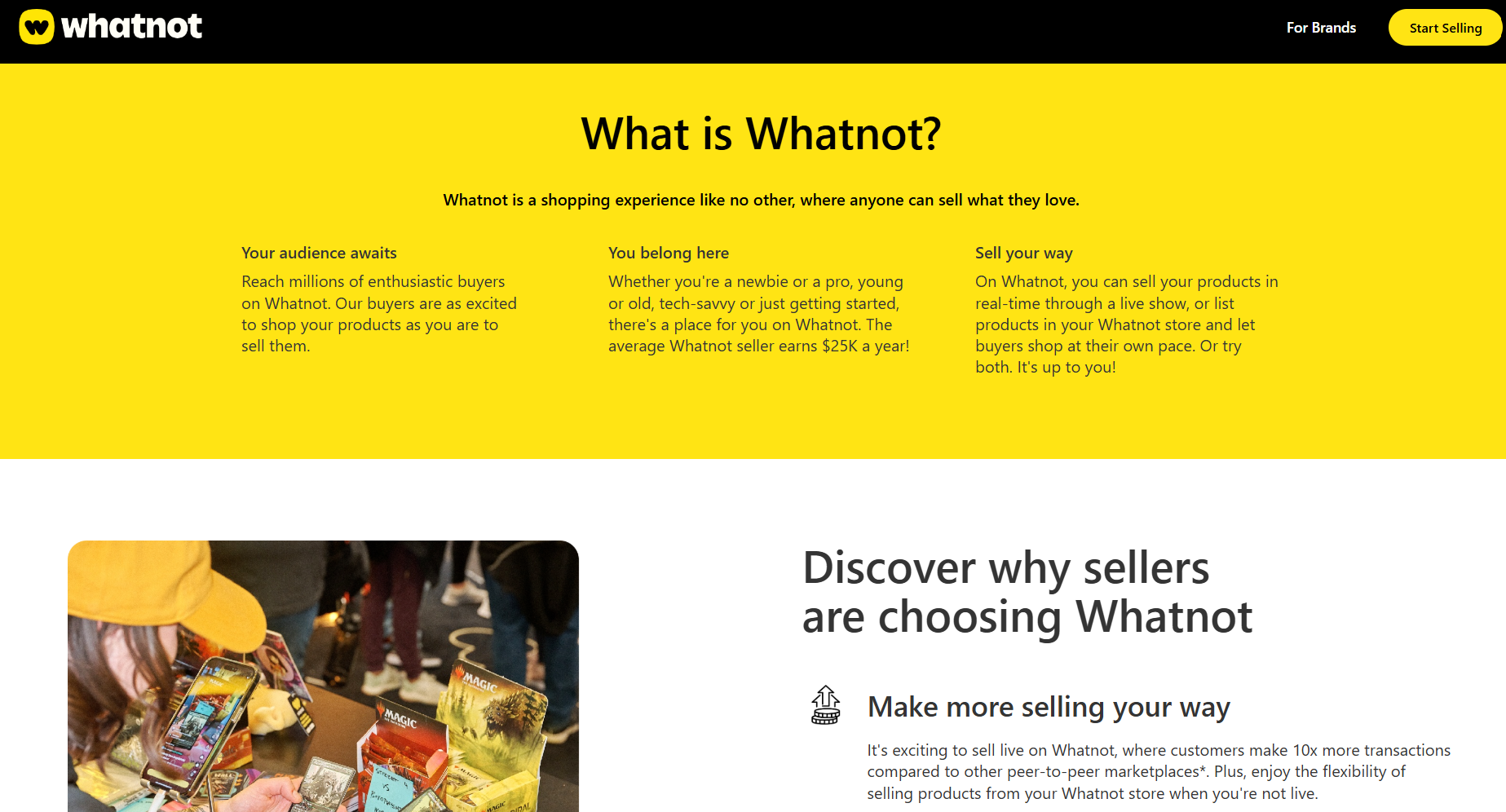
Whatnot lets you host livestream auctions while also allowing you to create buy-it-now listings. Buyers flock to the marketplace to find collectibles like trading cards and sports memorabilia, but more and more buyers seek other goods, like fashion and electronics. In 2025, Whatnot added over 20 million new accounts, allowing you to sell to several countries and regions.
Poshmark: A fashion-focused platform with social features
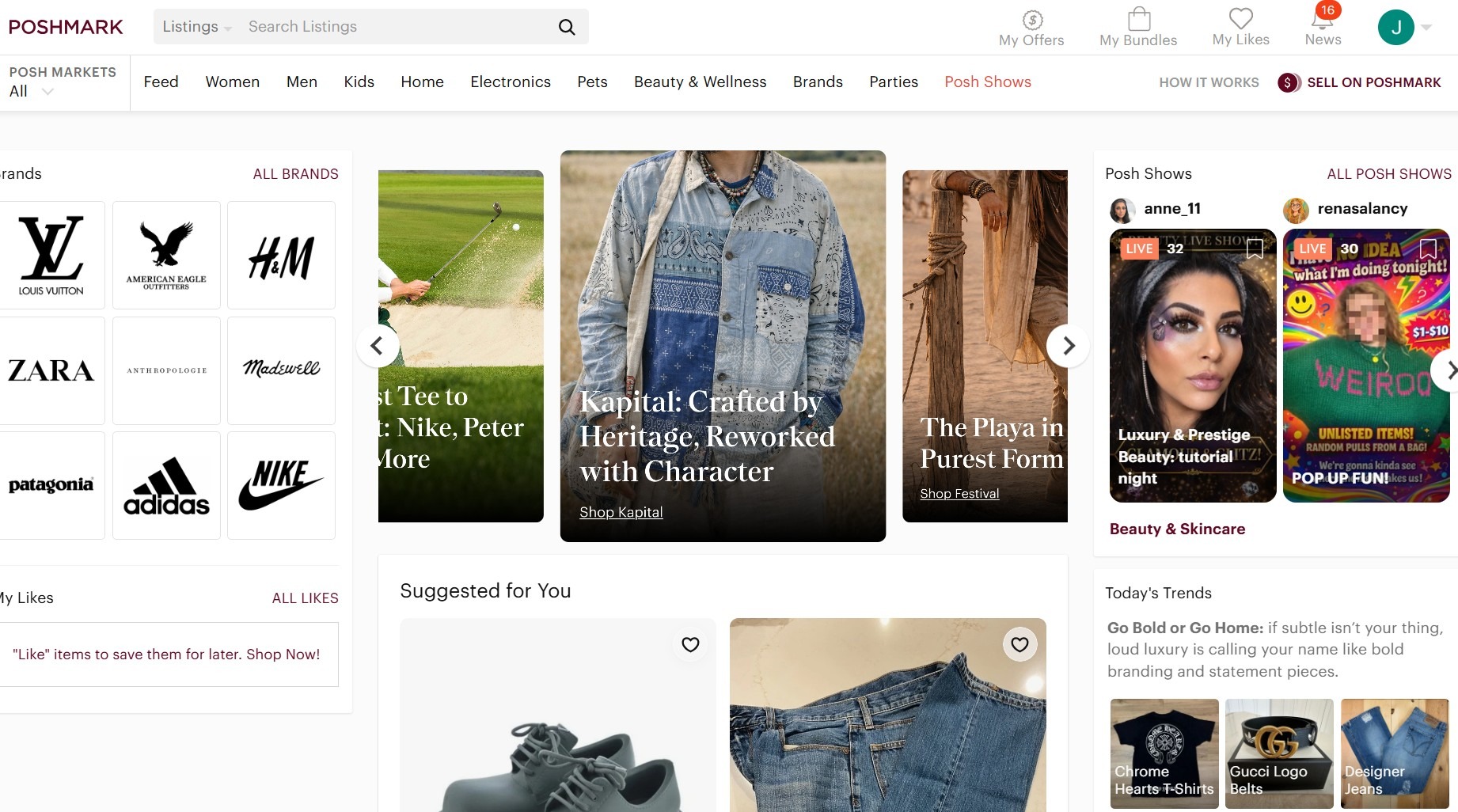
Poshmark has a community of around 130 million users across North America. Its social media feed allows buyers and sellers to follow each other, share their listings, and host live events called Posh Parties. Read our Poshmark review article for a breakdown of the platform.
Fees and payouts
| Marketplace | Whatnot | Poshmark |
|---|---|---|
| Final value fee | 4–8% depending on category | $2.95 flat (sales under $15); 20% on sales $15+ |
| Payment processing fees | 2.9% + $0.30 per sale | None |
| Payout timing | 1–3 business days | After buyer acceptance, or 3 days post-delivery |
| Early payouts? | Yes, if you’re eligible | Not available |
Whatnot fees and payouts
- Whatnot charges a commission of 4–8% of the sale price, depending on the category. Sports singles, toys, hobbies, and most other categories incur an 8% commission fee. Coins only incur a 4% fee. All sellers pay a payment processing fee of 2.9% + $0.30 per transaction.
- In the US, once an order is released for payout, ACH transfers usually reach sellers’ bank accounts within about 1–3 business days. New sellers may face additional payment holds of up to 7 days. Sellers in the UK, Netherlands, Belgium, and Australia receive payouts after delivery confirmation plus a 96-hour settlement period.
- Eligible sellers can also join the Early Payout Program. Available in the US, Canada, and Japan, this program allows sellers to access earnings as soon as a shipping label is generated.
- For a limited time, Whatnot is waiving commission fees on sales of items from included categories above $1,500, allowing sellers to pay 0% commission on qualifying transactions, but the 2.9% + $0.30 processing fee still applies.
Poshmark fees and payouts
- No matter what product category, Poshmark charges $2.95 for sales under $15 and takes a 20% commission on sales over $15. It doesn’t have listing or payment processing fees.
- Sellers receive payment after the buyer accepts the order or automatically 3 days after delivery if no action is taken.
- The platform adds earnings to your Poshmark wallet, which you can withdraw via direct deposit, check, or Poshmark credit. It usually takes 2–3 days for the money to hit your bank account if you choose direct deposit.
Winner
Whatnot wins the fees and payouts comparison by a mile. On many Whatnot sales, commission plus payment processing totals roughly 10–12% of the buyer’s payment, which is typically lower than Poshmark’s 20% fee on sales of $15 or more. Plus, Whatnot pays you out earlier than Poshmark, in more cases.
You can also get paid out in moments if you meet Whatnot’s Early Payout Program standards, but you need to sell a certain amount and have high ratings.
Buyer audience
| Marketplace | Whatnot | Poshmark |
|---|---|---|
| Main buyers | Collectors & hobbyists | Fashionistas & bargain hunters |
| Popular categories | Cards, collectibles, coins, & sports memorabilia | Premium + trending fashion, streetwear, accessories, & shoes |
| Buyer behavior | Live auction bids, expect seller knowledge | Liking similar items, then haggling via DM |
| Communication | Real-time communication & messaging | Messaging, live action, & threads on listings |
Whatnot buyer audience
- Whatnot’s collector audience particularly focuses on finding rare trading cards, sports memorabilia, and other collectibles. These segments generally attract a younger, predominantly male customer base. But interest in fashion, beauty, and general merchandise is expanding.
- Buyers attend livestream auctions rather than browse standard product listings. Many users follow their favorite sellers and regularly join scheduled shows, purchasing items through live auctions and competitive bidding.
- Successful sellers actively demonstrate products, explain key details, and answer questions in real time. Buyers expect sellers to be knowledgeable. This direct engagement helps build credibility and often influences purchasing decisions. But like building Rome, building a Whatnot following doesn’t happen overnight. Or in a week.
Poshmark buyer audience
- Poshmark attracts North American buyers shopping for clothing, shoes, and accessories. Many seek popular brands such as Nike, Coach, and Louis Vuitton at discounted prices.
- Buyers discover products through search, personalized recommendation feeds, and social features like shares, likes, Posh Shows, and Closet Clear Out promotions.
Winner
This one’s a tie because both Whatnot and Poshmark have niche best buyer profiles: Whatnot attracts collectors who expect high-energy live auctions, while Poshmark attracts fashion seekers. It all depends on the type of items you sell and your preferred selling style.
Listing and discoverability
| Marketplace | Whatnot | Poshmark |
|---|---|---|
| Discovery method | For You, live show feed to join live streams | Search, For You feed, recommendations, shares, likes, Posh Shows |
| Listing assistance | Photo-based AI listing (beta); manual promotion | Smart List AI, manual listing |
| Discovery tools | Promote Tools to boost profile, Raids from other sellers | Shares, Posh Shows, Closet Clear Out events, social engagement |
Listing on Whatnot
- With Whatnot’s photo-based AI listing tools (still in beta testing), sellers can quickly create listings that buyers can view during live auctions. Sellers can increase visibility through category pages and paid advertising placements using Whatnot’s Promote Tools.
- Whatnot’s discovery system centers on its For You feed. This scrollable feed recommends live shows based on buyer activity, followed categories, bookmarked shows, and past interactions with sellers. Sellers you know can use Raids to send viewers directly to your stream, helping everyone reach new audiences.
Listing on Poshmark
- Sellers create listings by uploading up to 16 photos, adding a title and description, and selecting details such as the item’s category, brand, size, and condition. It’s built for selling fashion.
- On iPhone and iPad, Smart List AI can generate a title, description, category, and key product details from a single photo, helping sellers create listings with less manual work.
Winner
Poshmark wins for listing and discoverability. Its Smart List AI system is battle-tested and accommodates buyers on the go through the mobile app. On Whatnot, growing a loyal following and keeping viewers engaged during live auctions has a bigger impact on sales than the listing alone.
Shipping and returns
| Marketplace | Whatnot | Poshmark |
|---|---|---|
| Shipping costs | $0.74–$1.32 (eligible cards/stickers); $9.21 flat for 1–5 lb; higher rates for heavier packages & international | Flat $6.49 (up to 5 lb); + $5 (5.1–10 lb); or + $10 (10.1–15 lb) |
| Free shipping option | Yes (seller covers the cost) | Yes (seller absorbs cost) |
| Geographic reach | Most countries, with some exceptions | North America only |
| Accepted reasons for return | Damaged, missing, or significantly different from the listing description | Damaged, misrepresented, missing, counterfeit |
Shipping and returns on Whatnot
- If you choose buyer-paid shipping: Eligible low-value trading cards or stickers that qualify for USPS First-Class Mail Letter typically ship for about $0.74–$1.32. Combined US domestic shipments weighing between 1 and 5 lb are charged a flat shipping rate of $9.21 ($8.77 + fees). Heavier packages use USPS commercial rates, which increase with weight and sometimes service type.
- International shipping is available through carriers such as UPS, with rates varying based on the destination, package weight, and selected service level.
- Sellers can also offer free shipping by covering the label cost themselves. However, Whatnot still charges marketplace fees on the full sale amount.
- Whatnot only requires refunds for issues covered by its Buyer Protection Policy, such as items that arrive damaged, are missing, or differ significantly from the listing description. Buyer’s remorse doesn’t qualify for a return.
- When Whatnot approves a claim, refunds are issued to the buyer’s original payment method and typically arrive within several business days, depending on the payment provider and bank.
Note: Whatnot is switching to USPS Ground Advantage from August 2026, dropping the 1–5 lb rate from $9.21 to $7.20 and ending Flat Rate packaging support. Sellers using Flat Rate boxes must switch to standard packaging to avoid a surcharge of up to $20.
Shipping and returns on Poshmark
- Poshmark charges buyers a flat $6.49 shipping fee through USPS Ground Advantage for packages weighing up to 5 lb.
- Heavier items: Packages weighing 5.1–10 lb require a $5 shipping upgrade ($11.49 total), while packages weighing 10.1–15 lb require a $10 upgrade ($16.49 total). Poshmark shipping is limited to North America. Buyers pay $6.49, and sellers pay the upgrade fee ($5 or $10).
- Sellers can choose to offer free shipping, but they must cover the shipping cost themselves, which reduces their profit on the sale.
- Poshmark only accepts returns when an item is damaged, significantly different from the listing, missing, or suspected to be counterfeit. Buyers can’t return items for fit issues or buyer’s remorse, and disputes are evaluated against the listing’s photos and description.
Winner
Poshmark wins for shipping and returns, but it’s close. Poshmark’s shipping system is easier to understand and more predictable for both buyers and sellers. The flat-rate shipping model covers most items commonly sold on the platform. Whatnot’s shipping structure varies based on item type, weight, and destination, which can get slightly confusing.
What real users are saying
I searched out reviews from sites like Reddit and Trustpilot to see how other buyers and sellers feel about Whatnot vs. Poshmark:
Whatnot pros
- A longtime user described Whatnot as a great marketplace, but warned that buyers must take the time to research sellers before making purchases. (October 5th, 2025)
- One buyer said they enjoy exploring multiple live shows and praised sellers for providing helpful descriptions that make purchasing decisions easier. (June 10th, 2026)
- Another buyer reported spending more than $5,000 on the platform and experiencing issues with only a handful of shipments. (June 10th, 2026)
Whatnot cons
- A seller expressed frustration with shipping-related problems and said customer support wasn’t helpful in resolving issues. (May 12th, 2026)
- Another seller advised against using Whatnot, citing high shipping costs and concerns about fraudulent buyers and sellers on the platform. (February 5th, 2026)
- A buyer reported receiving the wrong item and claimed that Whatnot denied their refund request despite providing evidence and returning the product. (February 14th, 2026)
Poshmark pros
- One seller said Poshmark has been an excellent tool for helping them clear out their old clothes. (June 5th, 2026)
- A buyer said they’ve found great vintage clothes at competitive prices on Poshmark. (February 22nd, 2026)
- Another buyer highlighted Poshmark’s large selection of designer brands, competitive pricing, and reliable shipping experience. (January 27th, 2026)
Poshmark cons
- One user expressed concern about Poshmark’s declining reputation, pointing to negative seller sentiment, poor app reviews, account suspensions, and a growing number of sellers leaving the platform. (March 3rd, 2026)
- A seller reported unusually slow shipping times to Hawaii and Alaska on Poshmark, noting that similar ground shipments on other marketplaces arrived significantly faster. (March 4th, 2026)
- A user complained about Poshmark for inactive seller accounts, delayed shipping, counterfeit listings, and the platform’s dependence on sharing to maintain visibility. (March 10th, 2026)
How to choose between Whatnot and Poshmark
Both Whatnot and Poshmark suit different seller types, so follow these guidelines to pick the one that fits your style:
Whatnot is best for …
- Collectibles sellers who love bringing their energy to live auctions. If you sell trading cards, sports memorabilia, or coins and enjoy real-time bidding, Whatnot is built for you.
- Sellers who want lower fees and faster payouts. Whatnot's ~11% total fee (if you sell something in the 8% category) beats Poshmark's flat 20%. The Early Payout Program gets money in your hands almost immediately if you qualify.
- Sellers who are ready to build a loyal, engaged following. Whatnot rewards sellers who host regular live shows, confidently demonstrate products, and interact with viewers.
Poshmark is best for …
- Fashion sellers who want a simple, social selling experience. If you're moving streetwear, sneakers, or designer accessories, Poshmark's 130-million-user community and social feed put your listings in front of motivated buyers. You can also dabble in live selling with Poshmark auctions, but they’re not required.
- Sellers who prefer predictable shipping and straightforward logistics. Poshmark's flat-rate prepaid labels take the guesswork out of shipping costs, making it easy to price items and manage buyer expectations consistently.
- Casual sellers clearing out their closets without a heavy time investment. Poshmark's Smart List AI and buy-it-now format let you list quickly and sell passively — no live shows or audience-building required.
Sell on both Whatnot and Poshmark with Nifty
Don’t stress over making one choice between Whatnot vs. Poshmark. Sell on both, and offload the manual work with Nifty. It’s an automation and crosslisting tool that helps you manage listings across 6 marketplaces.
Here's why over 10,000 sellers trust Nifty:
- Customized AI listing: Snap a pic and let Nifty's AI build a complete listing, with SEO-optimized titles and descriptions, and trending hashtags already filled out for you. You can even customize how AI writes your listings to follow your unique style.
- Crosslist now: With a couple of clicks, post your items across Whatnot, Poshmark, eBay, Mercari, Depop, and Etsy. No copy-paste clutter and no multi-tab hopscotch. (More marketplaces coming soon!)
- Automatic delisting? Handled: When you make a sale, Nifty's sales detection auto-delists that item from every marketplace. Say goodbye to double-selling disasters and "sorry, it's already gone" apology messages.
- Bulk tools = no busywork: Share and relist daily in just a few clicks. You can even schedule drafts to go live while you sleep and set automatic discounts that run deeper over time.
- Analytics and profits are real: Track sales, fees, top performers, and slow movers in one clean dashboard, so you can actually see what's working and what's just dead space. You can also set and track seller goals directly from your home screen.
Nifty pays for itself in just a few weeks. Start with a 7-day free trial and see how Nifty can help you sell on Whatnot and Poshmark simultaneously, with more reach, less busywork, and from one simple command center to run it all.
FAQs
1. Can I sell the same items on Whatnot and Poshmark at the same time?
Yes, you can sell the same items on Whatnot and Poshmark at the same time. Selling the same items on two or more platforms is called crosslisting. You can crosslist manually, but you’ll spend heaps of time copying and pasting and tracking orders. Instead, try a crosslisting tool like Nifty that lets you upload, bulk edit, and publish listings from one place.
2. Which platform charges lower fees, Whatnot or Poshmark?
Poshmark charges higher fees with a 20% flat rate on sales over $15. Whatnot's fees can run as high as roughly 12% if you sell an item in the 8% commission category and pay the 2.9% + $0.30 processing fee. Its lowest fees total ~7% with items in the 4% sales-commission category.
3. Should I do live shows to succeed on Whatnot?
Yes, you should do live shows to succeed on Whatnot. Although some sellers succeed with buy-it-now listings, live auctions are one of the main draws for buyers on Whatnot. Sellers who host regular shows consistently often outperform those who rely on static listings alone. Committing to 2–3 weekly shows helps build a loyal following faster and drives higher bids.


.png)
.png)