The 10 best reselling websites for UK sellers (2026)

The best reselling websites for UK sellers are Vinted for everyday fashion, eBay for general reselling, and Depop for trend-led and vintage fashion and streetwear.
I compared each platform based on my own experience or my colleagues’ and clients’ experiences, fees, and listing speed. By the end, you'll know which site fits what you're selling, what it will cost you in fees, and how to choose the right reselling website for your stock and target audience.
Top 10 reselling websites in the UK: TL;DR
- Vinted: Best for everyday fashion
- eBay UK: Best for general reselling
- Depop: Best for vintage and trend-led fashion
- Facebook Marketplace: Best for local sales
- Gumtree: Best for bulky items
- Shpock: Best for local second-hand goods
- Whatnot: Best for live auctions
- Vestiaire Collective: Best for designer fashion
- Etsy UK: Best for vintage goods
- Thrift+: Best for hands-off fashion resale
How I evaluated these reselling websites
I evaluated each reselling website on four criteria that affect your costs, workload, and selling experience:
- Fees: These are the charges the marketplaces deduct from your sales and can directly affect your margin. Compare what you actually keep after platform and payment fees.
- Listing speed: How quickly you can turn photos and product details into a live listing. Longer listing forms can slow down high-volume sellers, while simpler workflows make it easier to publish more inventory.
- Selling features: These are built-in tools such as offers, bumps, bundles, and promotions. These tools give sellers more ways to attract buyers and move older stock. For example, eBay's Send Offer feature lets you send discounted prices to eligible buyers who have shown interest.
- Ease of use: Reselling websites that offer simple account creation and verification are ideal for most sellers, because you can get started faster.
The 10 best reselling websites in the UK: Compared
1. Vinted: Best for everyday fashion
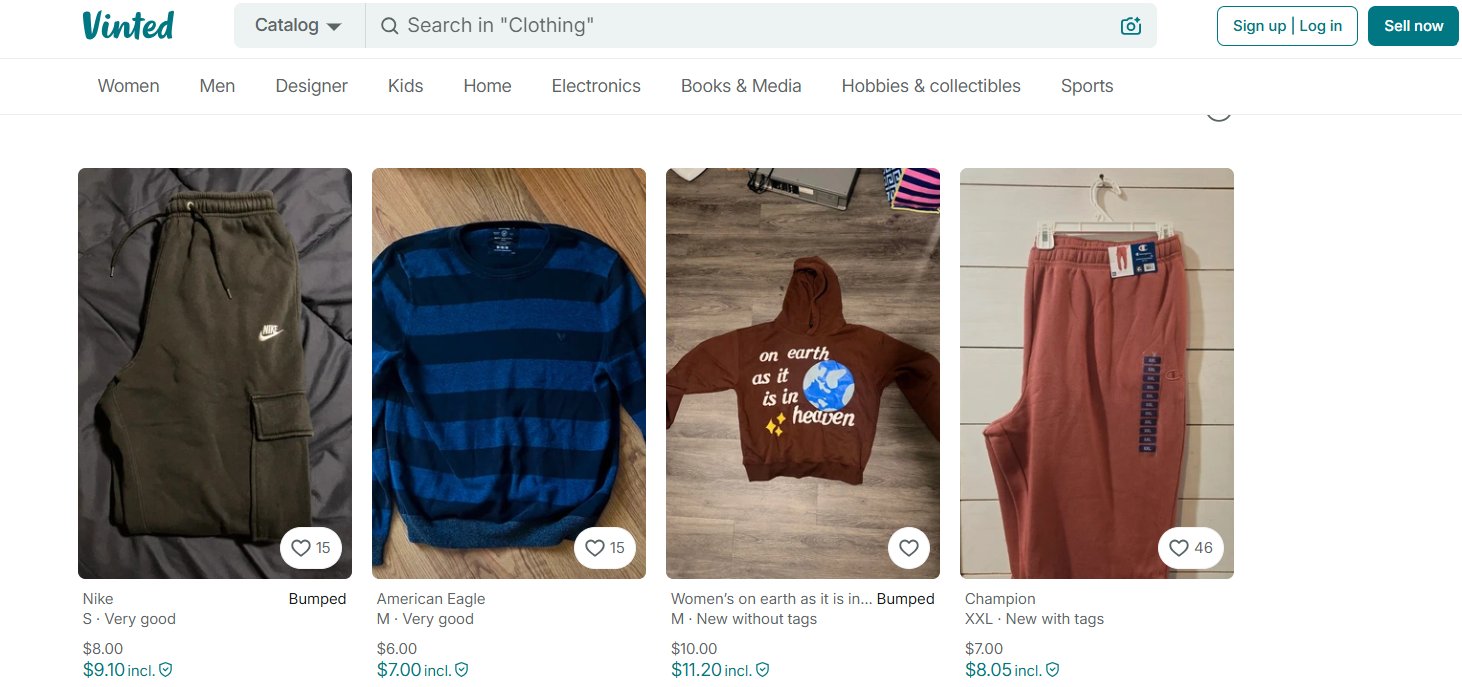
Vinted is a second-hand marketplace where UK sellers can list clothing and other eligible items without paying a standard selling fee.
Who it's for: Sellers aiming to make money by clearing their own everyday clothing on a platform with simple listings and no standard seller fee. If you buy or source stock to resell at a profit, you need to sign up as a Vinted Pro seller.
I helped my colleague list 12 high-street pieces. Vinted’s upload form walked us through photos, title, description, category, brand, condition, price, and parcel size, and we got each item live in about 2 minutes.
Key features
- Integrated shipping: Buyers pay shipping at checkout, with Vinted providing the shipping instructions or label when an integrated delivery option is used.
- Bundle purchases: Buyers can combine multiple items from the same seller into one purchase, while eligible sellers can offer bundle discounts.
- Paid visibility: You can pay to promote eligible listings through Vinted's optional visibility features.
Vinted pros
- No standard selling fee: A £25 item sold at its listed price gives the seller the £25 item price before any optional seller-paid services.
- Simple mobile listing: Photo-based listing tools can suggest information and reduce the amount of listing data you enter manually.
Vinted cons
- Offers can reduce selling prices: Buyers can negotiate through Vinted's offer system, so they’re looking to get good deals on everything.
- Fashion-focused marketplace: Although Vinted also supports electronics and home items, buyers come to the marketplace for second-hand fashion more than anything.
What real users say
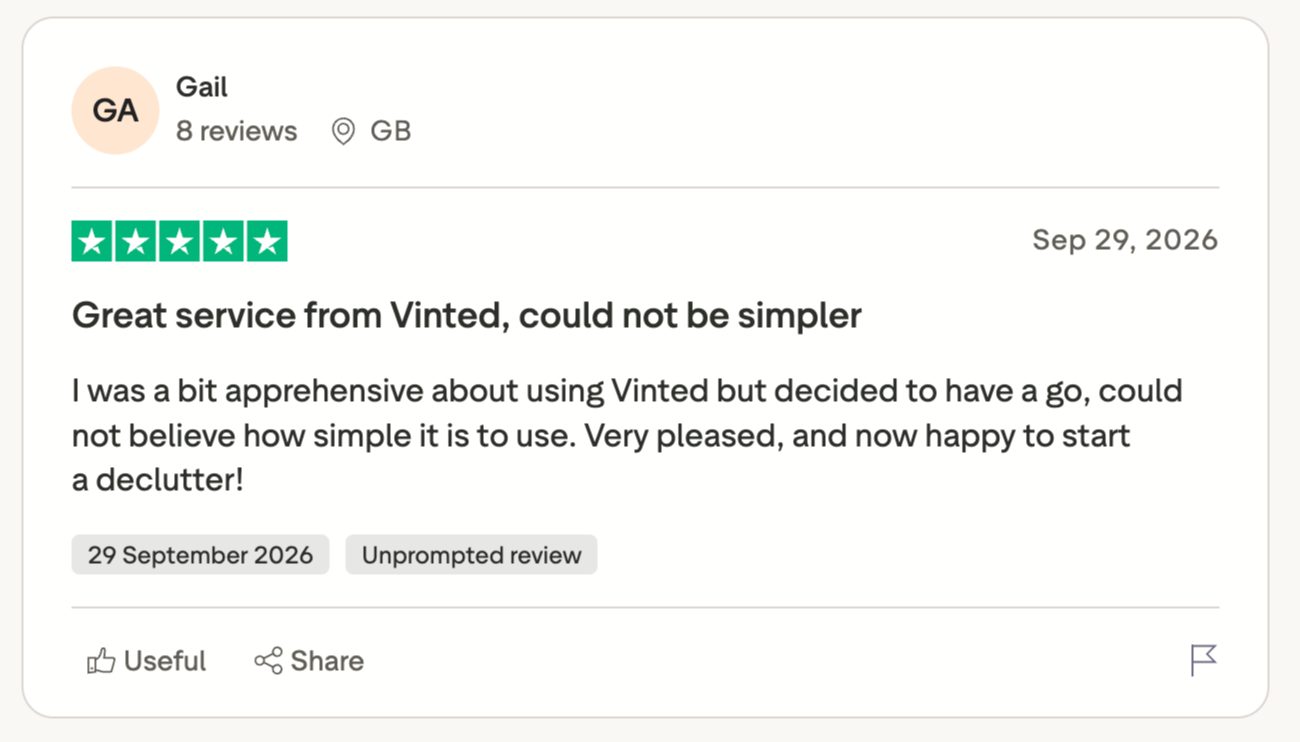
“I was a bit apprehensive about using Vinted but decided to have a go, could not believe how simple it is to use. Very pleased, and now happy to start a declutter!” (Gail, Trustpilot; September 29th, 2026)
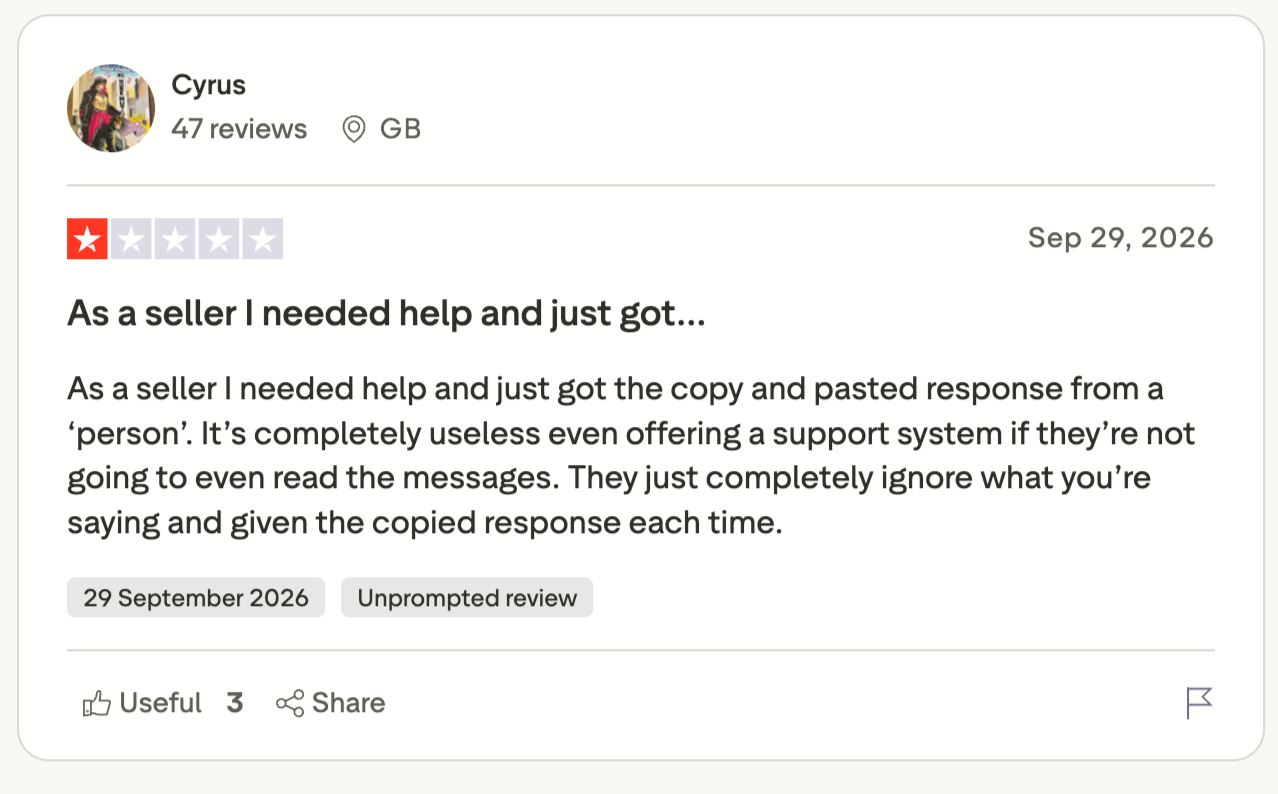
“As a seller, I needed help and just got the copy-and-pasted response from a ‘person’. It’s completely useless, even offering a support system if they’re not going to even read the messages.” (Cyrus, Trustpilot; September 30th, 2026)
Vinted fees
Vinted doesn’t charge sellers any selling, listing, or payment processing fees. Buyers pay a mandatory Vinted fee at checkout (usually 3–8% + £0.30 to £0.80), and sellers only pay if they choose optional Bumps or Showcase.
Bottom line
Vinted works when you're clearing high-street clothing in volume and care more about moving stock than chasing top resale value. But if you’re moving designer labels or non-clothing stock, you’ll probably get better prices on eBay.
2. eBay UK: Best for general reselling
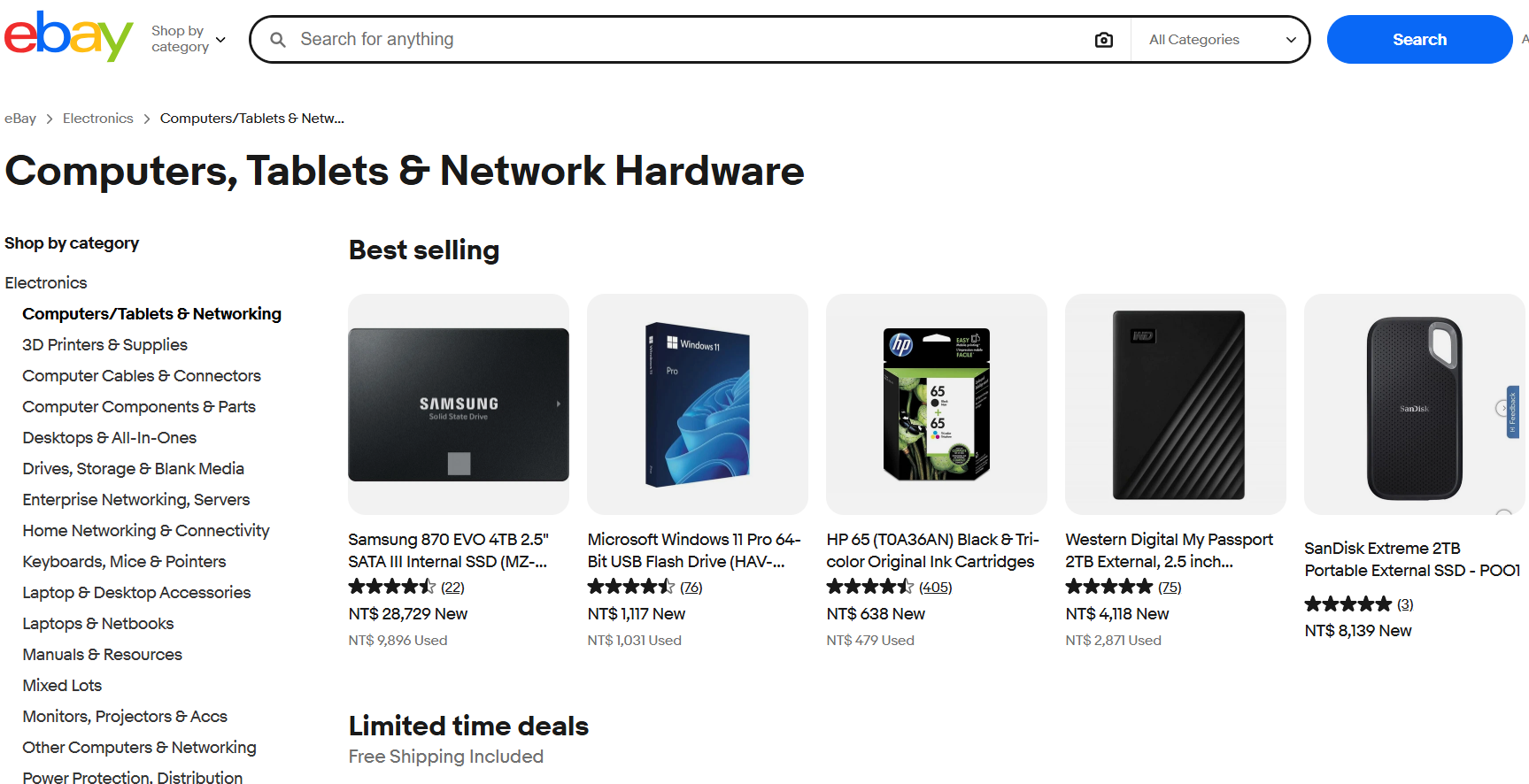
eBay UK is a general marketplace where you can list products across categories using auction or fixed-price formats.
Who it's for: Resellers and sellers handling nearly any kind of inventory, including electronics, collectables, clothing, auto parts, and other second-hand goods.
I ran 7-day auctions on 4 retired boxed LEGO sets. They attracted more than 20 watchers, and the auctions finished, on average, around £40 above comparable sold listings.
Key features
- Auction and fixed price: Choose auction-style bidding or set a Buy It Now price depending on how you want to sell.
- Sales research: Check recently completed listings or use Product Research for up to three years of eBay sales data.
- Offers to interested buyers: Send discounted offers to eligible buyers who have shown interest, such as watching an item or adding it to their basket.
eBay pros
- Free private selling: UK-based private sellers pay no final value or regulatory operating fees in most categories and receive 300 free listings each month.
- Broad product categories: You can list everything from clothing and collectables to electronics, tools, and spare parts, subject to eBay's listing policies.
eBay cons
- Business selling fees: Business sellers pay category-dependent final value fees plus a per-order fee and regulatory operating fee.
- More listing details: Listings can require product information, item specifics, postage choices, and seller preferences depending on the item and category.
What real users say
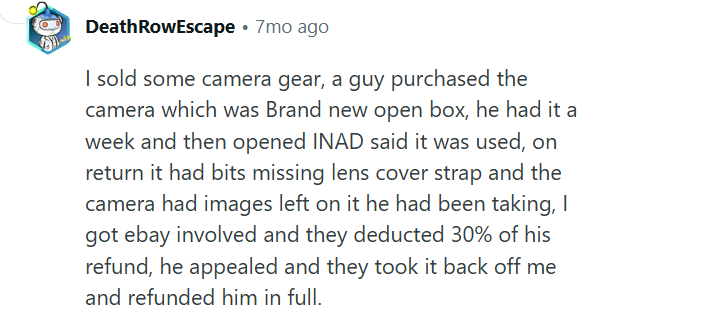
“I sold some camera gear. A guy purchased the camera which was Brand new open box, he had it a week and then opened It and said it was used, on return it had bits missing lens cover strap and the camera had images left on it he had been taking, I got ebay involved and they deducted 30% of his refund, he appealed and they took it back off me and refunded him in full.” (eBay seller, Reddit; February 25th, 2026)
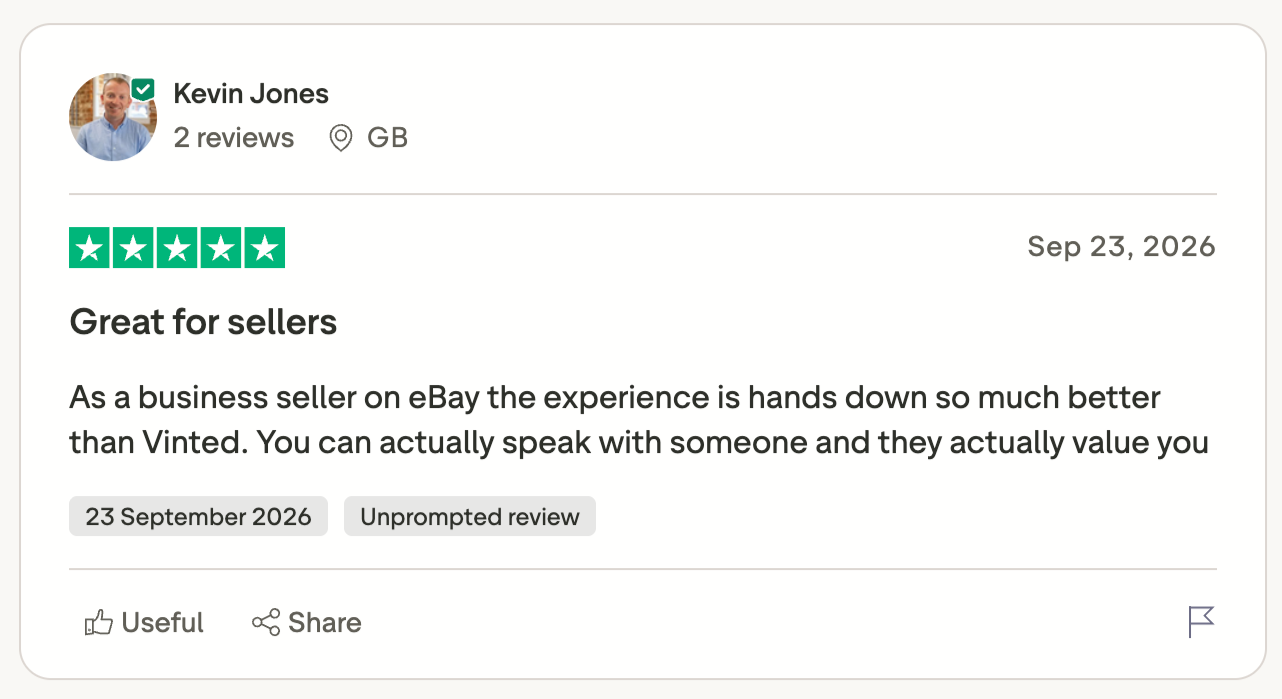
“As a business seller on eBay, the experience is hands down so much better than Vinted. You can actually speak with someone, and they actually value you.” (Kevin J., Trustpilot; September 23rd, 2026)
eBay fees
eBay UK breaks down fees into the following categories:
1. Private sellers
Private sellers sell casually, where items for sale come from stuff they already own; they don’t actively source items to resell them for a profit.
UK private sellers get 300 free listings each month. They also pay no final value or regulatory operating fees for most sales outside the Cars, Motorcycles & Vehicles categories.
After 300 listings, each extra listing costs 35p. Optional upgrades and international delivery may also cost extra. Vehicle listings have their own fees.
You can also pay £19.99 per month for a Private seller eBay Shop, which increases your allowance to 400 free listings.
2. Business sellers
Business sellers are folks who purchase stock from places like charity shops and car boot sales and resell it for a profit on eBay. These sellers must register for a business account.
Final value fees depend on the category you sell in, with rates commonly ranging from roughly 10–15%. eBay charges a percentage of the total sale amount, including postage and any taxes. It also charges a fee for each order.
The standard order fee is 30p for sales up to £10 and 40p for sales over £10. Some Collectables and Home, Furniture & DIY listings have a lower 10p fee on sales up to £10.
eBay also charges a 0.35% regulatory operating fee on the total sale amount. These business seller fees don’t include VAT.
3. Business-seller eBay Shops
Basic costs £27 per month, Featured £77, and Anchor £437, excluding VAT. These optional plans include different listing allowances and benefits, with 250 free fixed-price listings on Basic, 1,500 on Featured, and unlimited fixed-price listings on Anchor.
Bottom line
eBay UK suits resellers handling mixed stock because it combines broad product categories with auction, fixed-price, and sales-research tools. eBay Live lets eligible business sellers run livestream auctions, but if you’re looking for an eBay alternative built around live shows and auctions, go with Whatnot.
3. Depop: Best for vintage and trend-led fashion
Depop is a fashion-focused resale marketplace where sellers can list second-hand clothing, vintage pieces, streetwear, accessories, and other permitted items.
Who it's for: Sellers who are flipping vintage and trending fashion pieces and accessories and want social media features and a shop profile.
I’ve sold Nirvana hoodies on Depop for a few years now, and I enjoy using the Send Offer feature as soon as shoppers like one. The Bundle feature sometimes helps me move more stock when one buyer has liked multiple items.
Key features
- Shop profiles: Sellers have profiles where buyers can browse their available listings and follow their account.
- Send Offer: Sell more by sending a discounted price to one or all eligible buyers who have liked an item without changing its listed price.
- Boosted Listings: Promote individual listings or your shop across placements such as Search and the For You page, with a fee when an attributed boosted sale occurs.
Depop pros
- No Depop selling fee: UK sellers don't pay Depop's standard selling fee, although payment processing and optional boosting fees can still apply.
- Fashion-focused marketplace: Depop describes its marketplace as focused on buying, selling, and discovering unique fashion.
Depop cons
- Boosting can be expensive: For UK listings created from 23 March 2026, Depop charges 12% when a boosted listing leads to a sale. The fee applies to the item price.
- You can't sell most electronics: Depop doesn’t allow most electronics, including phones, computers, game consoles, and smartwatches.
What real users say
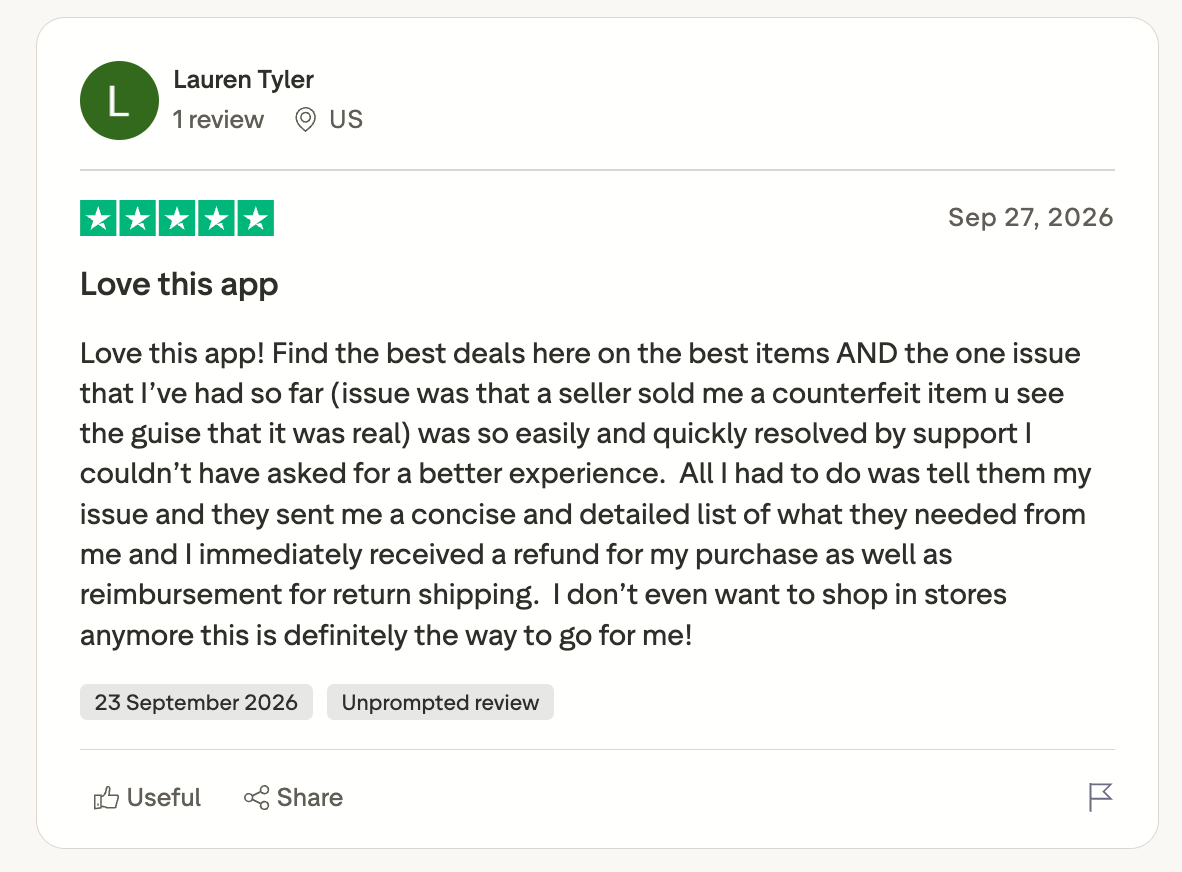
“Love this app! Find the best deals here on the best items AND the one issue that I’ve had so far (issue was that a seller sold me a counterfeit item u see the guise that it was real) was so easily and quickly resolved by support I couldn’t have asked for a better experience.” (Lauren T., Trustpilot; September 27th, 2026)
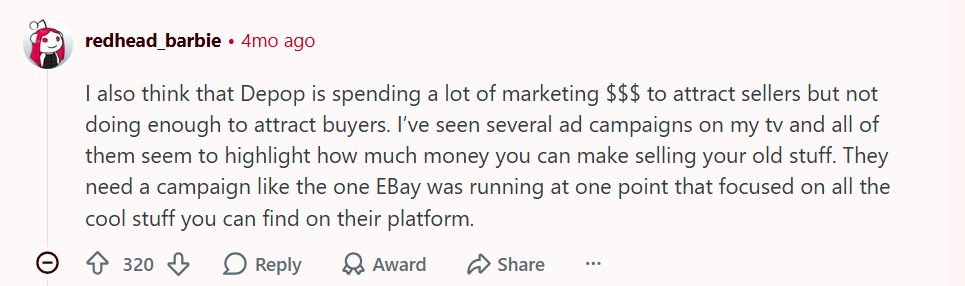
“I also think that Depop is spending a lot of marketing $$$ to attract sellers but not doing enough to attract buyers. I’ve seen several ad campaigns on my TV, and all of them seem to highlight how much money you can make selling your old stuff.” (Depop user, Reddit; June 10th, 2026)
Depop fees
- Selling fee: £0 for UK-based sellers.
- Payment processing: Depop Payments charges UK sellers 2.9% + £0.30 on the item price, shipping, and applicable taxes.
- Boosting fee: For new UK listings from 23 March 2026, an attributed Boosted Listings sale incurs a 12% fee. The fee applies when a buyer views, clicks, or likes the boosted listing and purchases it within 28 days. It is calculated on the item price excluding taxes, plus shipping if you arrange your own delivery.
- Bundles: The payment-processing fee applies once per bundle transaction. Bundle shipping costs depend on the seller's shipping and bundle settings.
Bottom line
Depop makes the most sense once you're selling vintage fashion and streetwear, because styled photos and a following let you price above generic resale averages. If you’re selling everyday high-street clothing, try a Depop alternative like Vinted.
4. Facebook Marketplace: Best for local sales
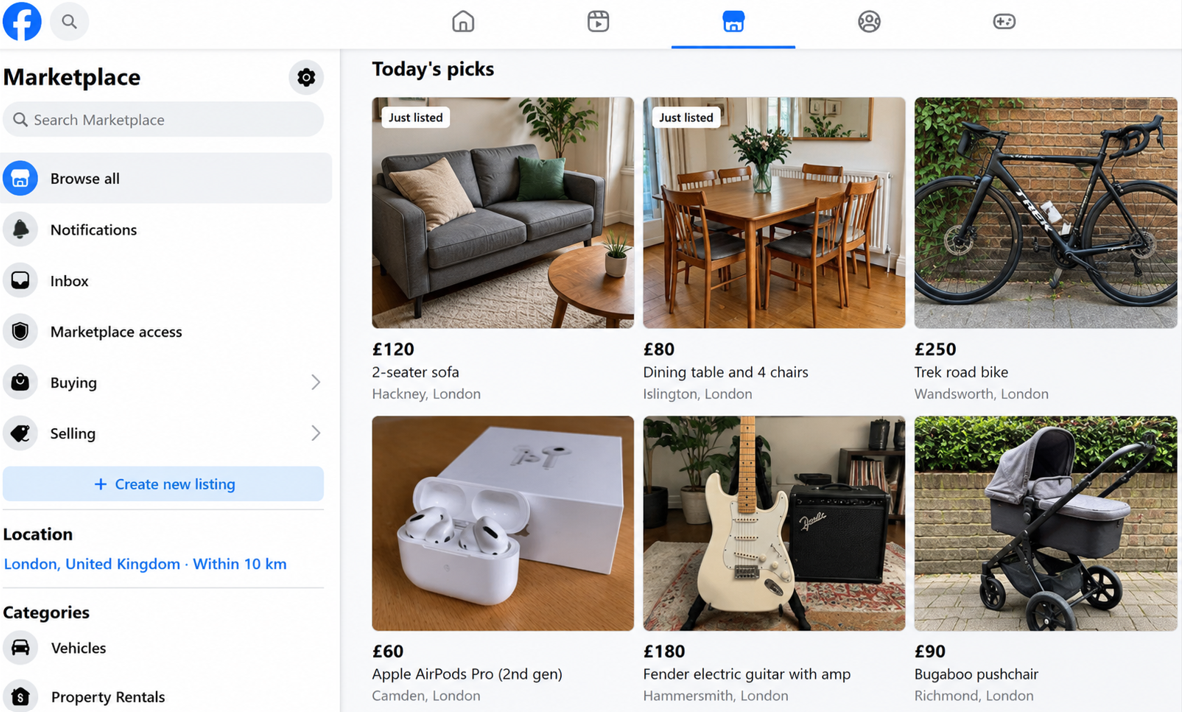
Facebook Marketplace lets you advertise items to buyers in your area and arrange the price, payment, and collection directly with them.
Who it's for: Sellers who want to sell furniture, appliances, and other items locally without packing and posting them.
When I buy new furniture, I use Facebook Marketplace to clear out my old bulky pieces. I listed a solid oak dining table and a chair set for local collection. It sold within two days, and I met the buyer at a local bowling alley at midday to make the exchange.
Key features
- Location-based browsing: Marketplace uses location to help buyers find items available in their area.
- Buyer messaging: Buyers and sellers can communicate through Facebook or Messenger to discuss the item and arrange the transaction.
- Buy-and-sell groups: When you post an item in a Facebook buy-and-sell group, you can also post it to other groups you're a member of and to Marketplace at the same time.
Facebook Marketplace pros
- Useful for collection: Sellers can arrange local pickup for items that would be difficult or expensive to package and ship.
- Free local sales: You keep the full price when a buyer pays you directly and collects the item.
Facebook Marketplace cons
- No built-in checkout in the UK: Facebook's UK Help Centre says checkout with delivery isn't available in the UK at the moment, so buyers and sellers arrange payment themselves. Local transactions aren't covered by Facebook's Purchase Protection.
- No-shows can happen: Collections sometimes end in no-shows, as some buyers either forget or decide they’re not interested.
What real users say
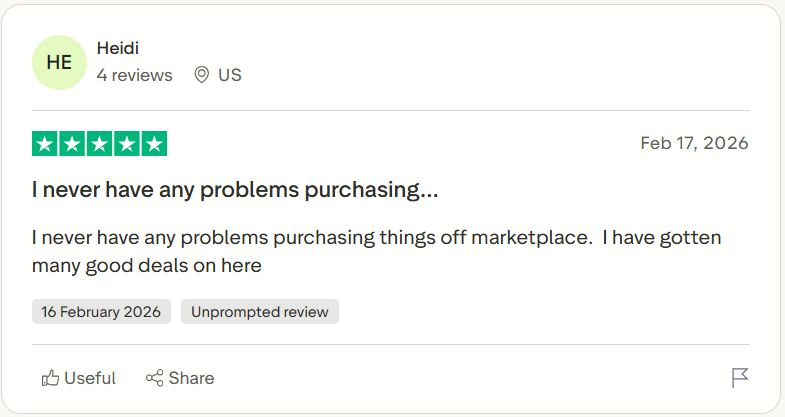
“I never have any problems purchasing things off Marketplace. I have gotten many good deals on here.” (Heidi, Trustpilot; February 17th, 2026)
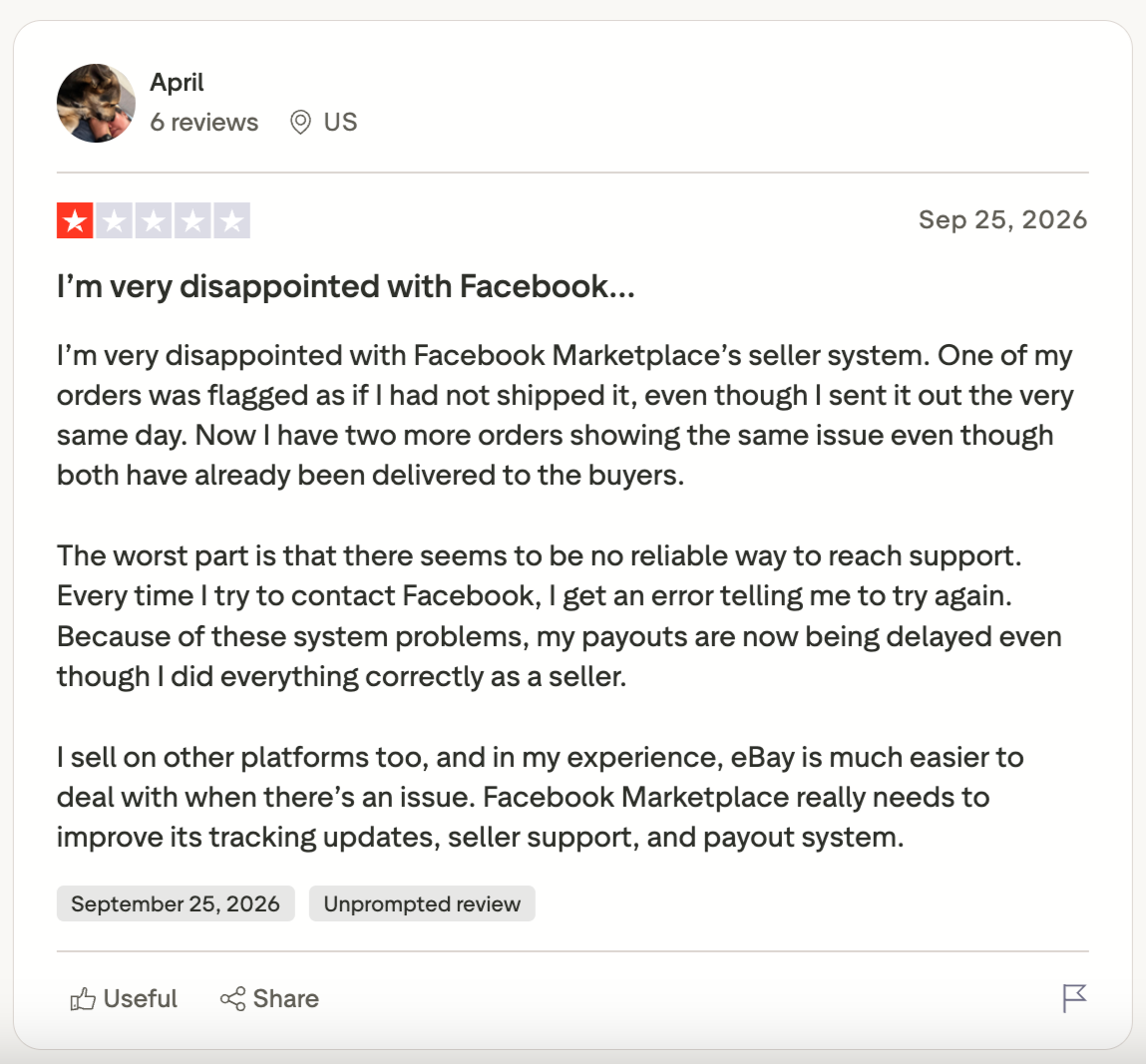
“I’m very disappointed with Facebook Marketplace’s seller system. One of my orders was flagged as if I had not shipped it, even though I sent it out the very same day. Now I have two more orders showing the same issue even though both have already been delivered to the buyers.” (April, Trustpilot; September 25th, 2026)
Facebook Marketplace fees
- Local sales: Facebook does not charge a selling fee when you arrange payment and collection directly with the buyer. Your chosen payment method may have its own fees.
- Delivery and Marketplace checkout: Where Facebook checkout is available in the UK, it deducts a selling fee (on the item price, delivery, and any tax) from your payout. Reported UK rates vary, so check the exact figure shown at checkout before pricing. Most UK sales are arranged locally, where there's no fee at all.
- Boosted listings: You can pay to promote some listings. The cost depends on the advertising budget you choose when setting up the boost.
Bottom line
Facebook Marketplace makes the most sense for furniture, appliances, and anything bulky, because collection removes postage and you arrange payment directly with the buyer. But if you prefer anonymous communication for bulky-item sales, try Gumtree, which masks email addresses in its messaging system.
5. Gumtree: Best for bulky items
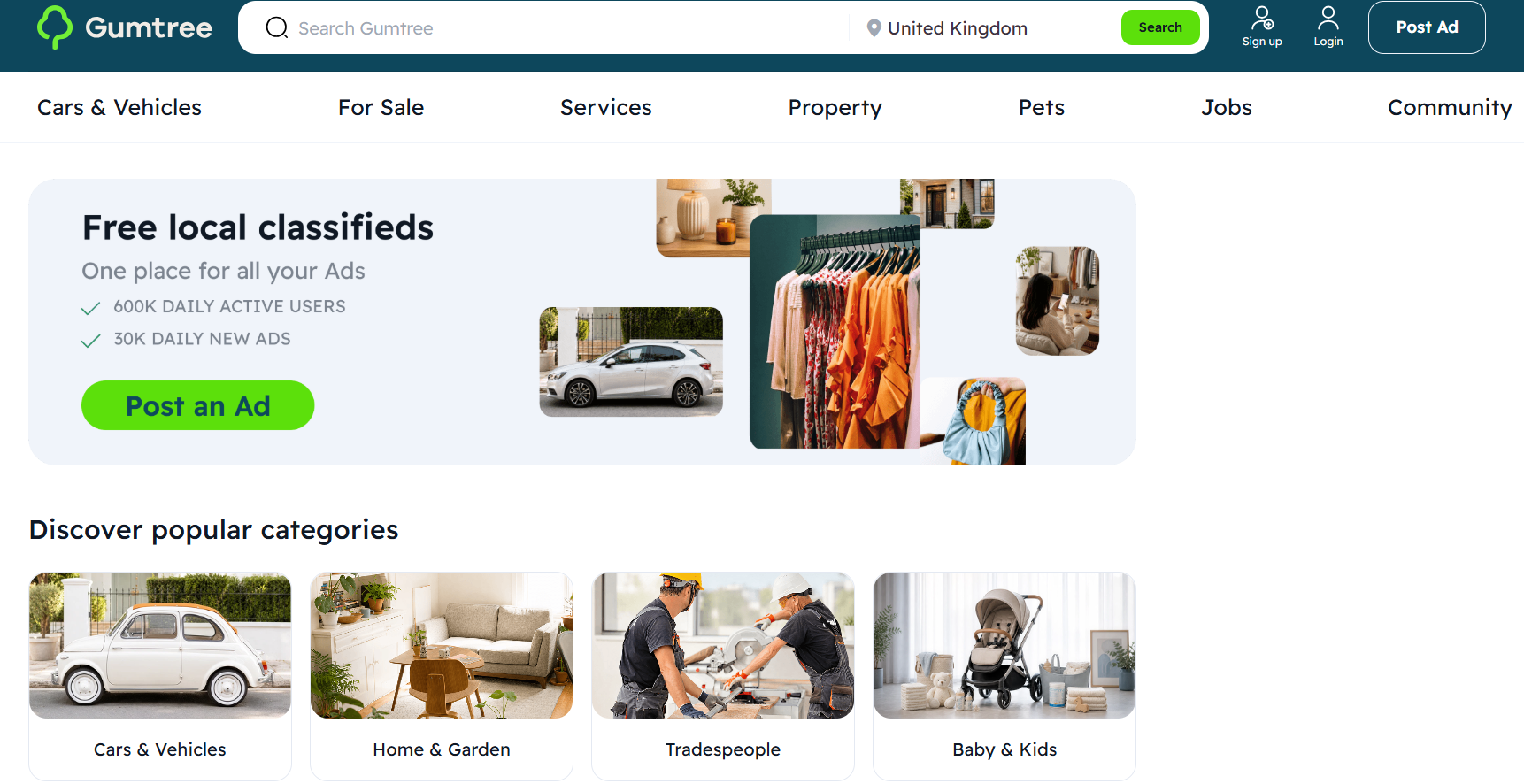
Gumtree is a UK classifieds marketplace where sellers can advertise items like furniture, appliances, tools, vehicles, clothing, and other goods for collection or delivery.
Who it's for: Sellers clearing furniture, garden equipment, tools, and other bulky items who want buyers to find listings by location.
My friend listed a petrol lawnmower for collection only on Gumtree, and it sold within 3 days. Because the item sold for collection, my friend didn’t need to package it or arrange delivery.
Key features
- Urgent ads: Add an Urgent label to an ad for seven days to show buyers you want to sell quickly.
- Featured ads: Pay to have an ad rotate in a position at the top of its category for 3, 7, or 14 days.
- Location search: Buyers can search by postcode or location and select a search radius from local results up to the whole UK.
Gumtree pros
- Free private listings: Many ordinary private ads can be posted without an upfront listing charge.
- Payments through the platform: On eligible listings from private sellers, buyers can pay online with Buy Now, and Gumtree charges the seller no fee for this. Keeping payment within Gumtree also reduces the need to use external payment links or share payment details with buyers.
Gumtree cons
- Scam attempts can occur: Sellers should be cautious about suspicious links, payment requests, and unusual messages.
- Collection requires coordination: You need to arrange suitable collection times and payment when completing transactions in person. With Pay & Collect on eligible listings, the buyer pays online first, and you get paid once you enter their 6-digit collection code.
What real users say
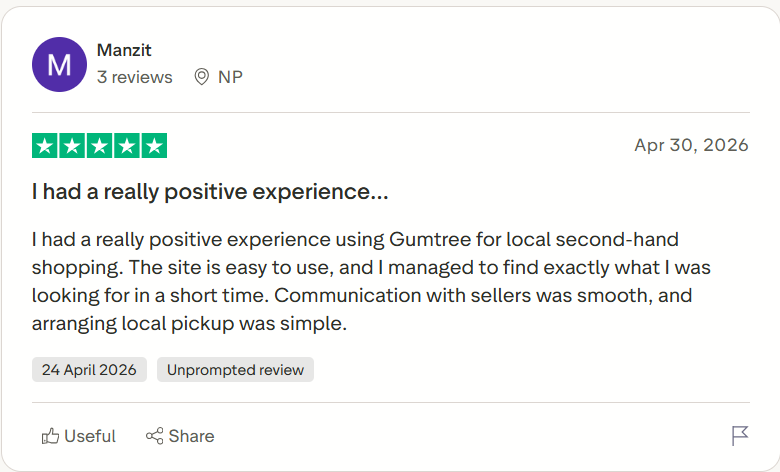
“I had a really positive experience using Gumtree for local second-hand shopping. The site is easy to use, and I managed to find exactly what I was looking for in a short time. Communication with sellers was smooth, and arranging local pickup was simple.” (Manzit, Trustpilot; April 30th, 2026)

“I was scammed this afternoon by a Gumtree buyer! I sold my iPad Pro 2024 and was given 840 in fake money. Reported to the police already, but won't be using Gumtree again! It's the first time I've used it, by the way!” (Seller, Reddit; April 9th, 2026)
Gumtree fees
- Basic listings: Many private ads are free, but Gumtree says charges can depend on whether you're a private or business seller, the category, and your location. Anyone selling as a business or sole trader must choose the Business seller type, and Gumtree charges businesses a small fee to post ads.
- Seller for online payments: £0. Online payments are open to private sellers only, and the buyer pays a Buyer Protection fee.
- Buyer Protection for delivery: Buyers who pay online pay £0.70 plus 5–10% of the item price, depending on the item's value and category. Delivery is also charged to the buyer.
- Urgent and other promotions: Prices vary by promotion, category, and location. Gumtree displays the current price before purchase.
Bottom line
Gumtree works when you need to offload garden machinery and furniture that buyers will actually collect on their own. If you need another option for selling large items, try Facebook Marketplace.
6. Shpock: Best for local second-hand goods
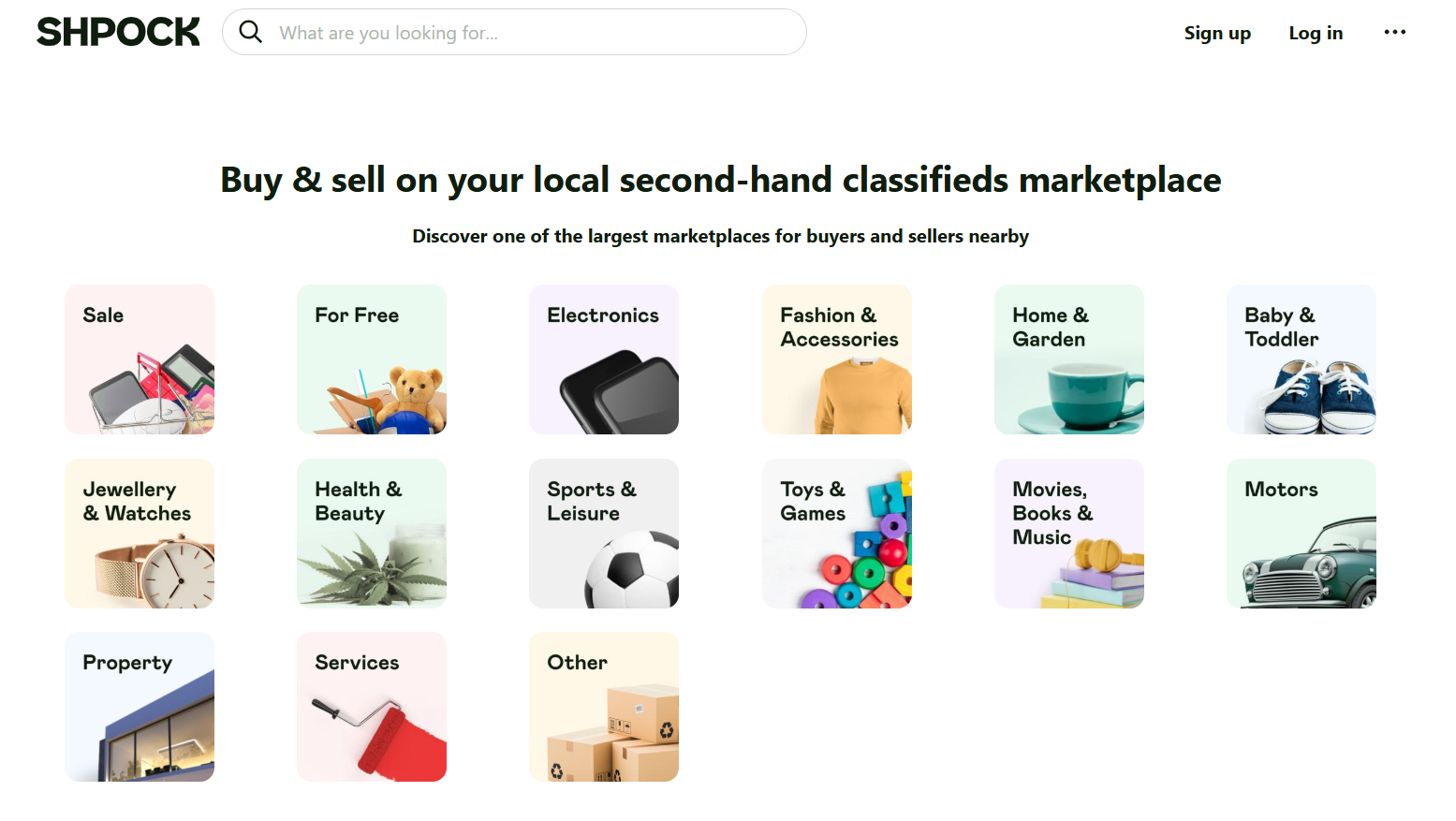
Shpock is a second-hand marketplace where UK sellers can list household goods for local collection or arrange their own postage.
Who it's for: Sellers decluttering their own household items. Shpock's terms forbid commercial use unless Shpock approves it, so resellers should check before listing stock. Registered businesses can apply for Shpock+ Shops instead.
A client I coached listed a coffee machine and a kids' scooter. The scooter sold for collection to a local family, and the coffee machine was posted to a buyer in Leeds. My client completed both sales in less than 7 days.
Key features
- Self-arranged postage: Agree the shipping method and cost with the buyer, then post the item yourself.
- Local collection: Arrange collection directly with nearby buyers when shipping isn't practical.
- In-app offers: Buyers and sellers can negotiate prices before agreeing on a deal.
Shpock pros
- Free promotions with membership: Standard and Premium members can promote two listings a month at no extra cost.
- Unlimited listings: A Standard membership lets you list as many items as you like in Standard categories. Premium categories, such as cars and property, need a Premium membership.
Shpock cons
- Paid membership to list: Shpock charges a monthly membership to create new listings (Standard starts at £0.99), so even a one-off sale has a cost. Memberships are only available in the Shpock app.
- No in-app payments: Shpock discontinued Buy Now payments and Shpock Wallet on 31 March 2026, so you agree on payment with each buyer.
What real users say
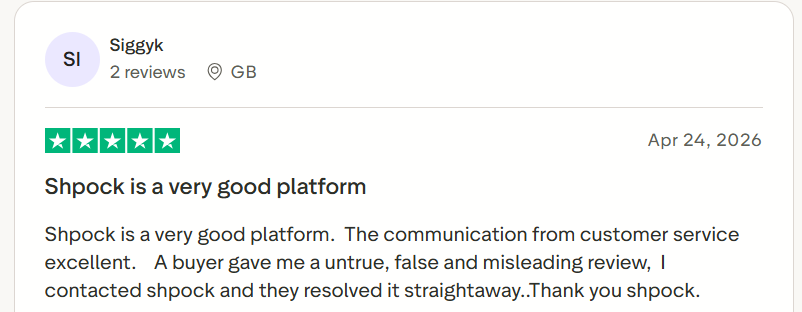
“Shpock is a very good platform. The communication from customer service is excellent. A buyer gave me an untrue, false, and misleading review. I contacted Shpock, and they resolved it straightaway. Thank you, Shpock.” (Siggyk, Trustpilot; April 24th, 2026)
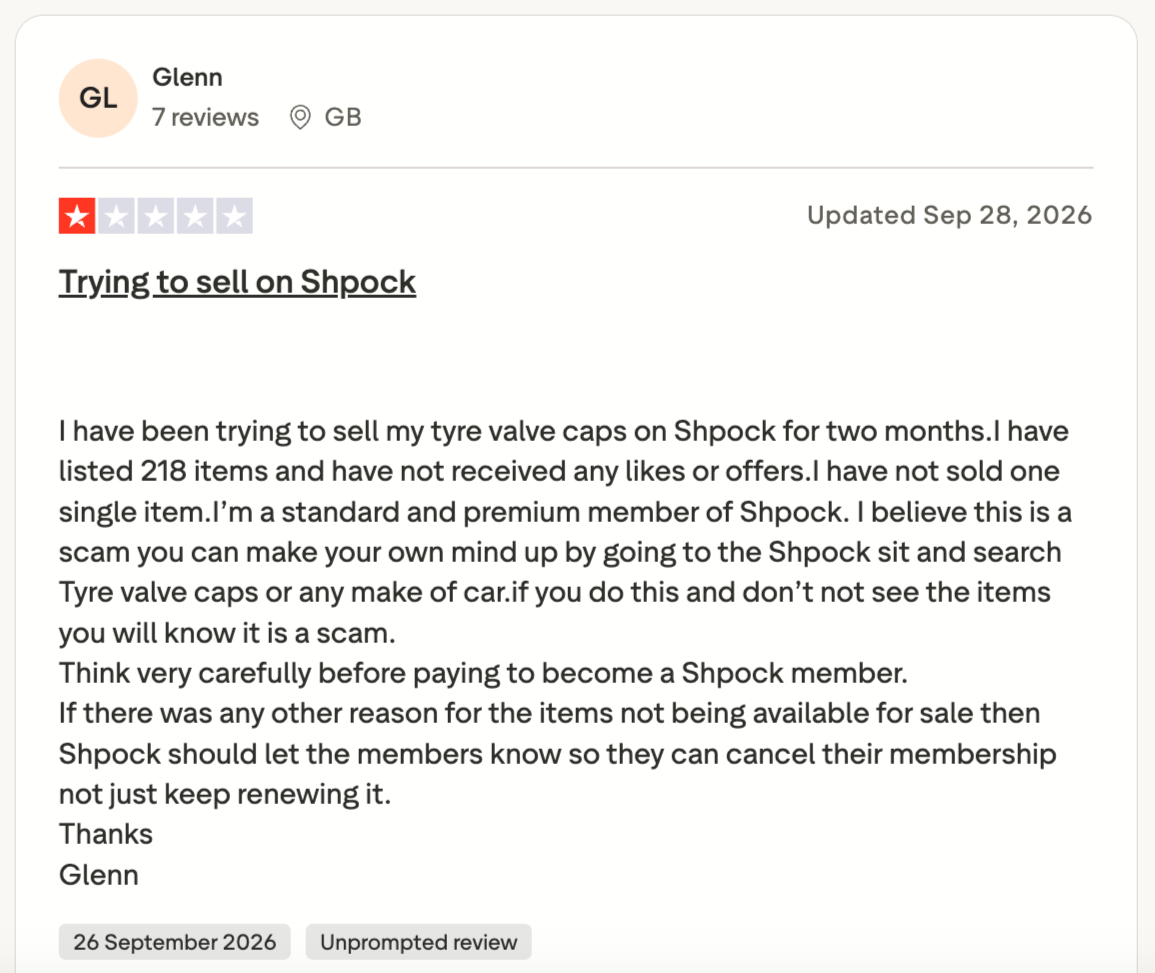
“I have been trying to sell my tyre valve caps on Shpock for two months. I have listed 218 items and have not received any likes or offers. I have not sold one single item.” (Glenn, Trustpilot; September 26th, 2026)
Shpock fees
- Seller membership: Sellers need a paid monthly membership to create new listings. Shpock advertises unlimited listings from £0.99 per month, with Standard and Premium membership options. Prices can vary, so check the current subscription price shown in the app.
- Buyers: Shpock is free for buyers, with no additional Shpock fee simply to buy or make an offer.
- Optional extras: You can pay to promote listings for additional visibility. Memberships also include promotional benefits, with current Standard and Premium memberships providing two listing promotions per month.
- Collection deals: Buyers and sellers agree on the payment and handover details after making a deal. Shpock Buyer Protection doesn’t cover collection transactions.
Bottom line
Shpock makes the most sense for mid-value household goods like gadgets and toys, where you can offer local collection and arrange your own postage for a monthly membership from £0.99. If you’re selling collectables or electronics with unclear values, try eBay or Whatnot, where you can use auction features.
7. Whatnot: Best for live auctions

Whatnot is a live-auction marketplace where you can auction products during livestreams or sell items through marketplace listings outside a show.
Who it's for: Sellers comfortable hosting live shows who want to sell batches of trading cards, collectables, fashion, and other stock.
I’ve sold trading cards on Whatnot for 2 years now, and recently auctioned 40 Pokémon cards from one car-boot binder. 34 sold during a single 50-minute stream, and 5 rarer cards finished above the comparable eBay sales I checked beforehand.
Key features
- Seller Hub: Manage orders, listings, livestreams, payments, and selling activity from Whatnot's seller tools.
- Live auctions: Run timed auctions during livestreams while buyers bid in real time.
- Marketplace listings: Sell Buy It Now listings from your shop outside a live show.
- Item-price commission: Commission is calculated from the item's sale price, excluding buyer-paid shipping and taxes.
Whatnot pros
- Batch selling: Live shows let sellers present and auction multiple items during a single session.
- Lower rates as you grow: Commission drops as your 4-week sales rise, starting from 6.67% for most categories to as low as 4.25% for fashion and 5.25% for tradings cards.
Whatnot cons
- Auction prices aren't guaranteed: Low starting bids can result in low final prices when an auction attracts limited competition.
- Shows require preparation: Sellers need to schedule shows, prepare inventory, run the stream, and fulfil resulting orders.
What real users say
“It is easy, quick, and simple to navigate and use. It's truly fantastic. Great products on offer and amazing deals too.” (Marina, Trustpilot; September 30th, 2026)
“Whatnot silences bad reviews by shutting off the review ability when they issue a refund. So all the problems just get brushed under the rug. Major platform defect. I wrote a post about it recently.” (Whatnot seller, Reddit; June 14th, 2026)
Whatnot fees
For UK sellers, Whatnot determines how much commission you pay by the category of the item you sell and which commission tier you've unlocked. Your tier is set by your total sales across all categories over a 4-week period, so the more you sell, the lower your rate for the next period.
Commission is calculated on the item's sale price, excluding buyer-paid shipping and taxes. VAT applies to Whatnot's commission and payment processing fees.
Whatever the category or tier, all UK sellers pay 2.42% + £0.25 per transaction in payment processing, plus VAT. Unlike commission, the percentage processing fee is calculated on the total order value, including the item price, buyer-paid shipping, and applicable taxes.
If you're VAT-registered and have added your VAT number to your Whatnot account, Whatnot doesn't charge VAT on its fees. You account for it yourself through the reverse charge on your UK VAT return.
The pound amounts below are your total sales over a 4-week period. Each band unlocks the commission rates shown for that tier, and your tier resets every four weeks based on your sales volume.
Source: Whatnot fees & commissions
Bottom line
Whatnot suits outgoing collectables sellers who love hosting live auctions. If you want a lower-energy, silent auction platform, go with eBay.
8. Vestiaire Collective: Best for designer fashion
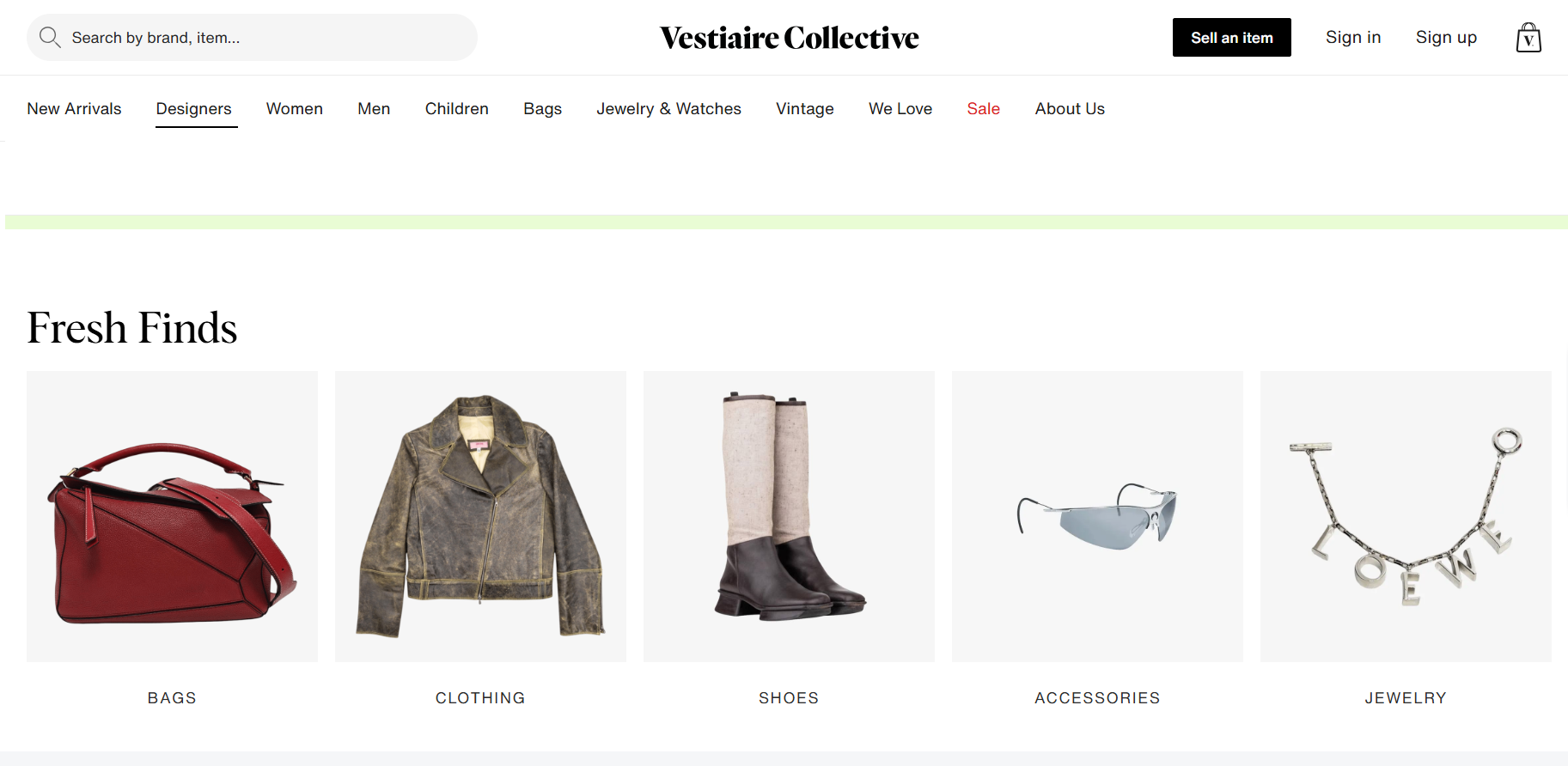
Vestiaire Collective is a resale marketplace focused on pre-owned luxury, designer, premium, and vintage fashion.
Who it's for: Sellers with high-end designer fashion who want access to an international luxury resale marketplace and authentication services.
I listed a pre-owned Celine handbag with its receipt, serial-number photos, and close-ups of the worn corners. Vestiaire approved the listing within 2 days, and it sold to a buyer in Paris about a week later.
Key features
- Consignment service: Eligible designer, luxury, rare, and vintage pieces can qualify for Vestiaire's team to handle preparation and selling.
- Prepaid shipping: Vestiaire provides prepaid shipping labels for eligible sales.
- Authentication services: Eligible orders can undergo physical Authentication & Quality Control before being sent to the buyer.
Vestiaire Collective pros
- Luxury-focused buyers: Your designer pieces reach shoppers who come to Vestiaire for pre-owned premium fashion.
- Digital verification: Every listing is reviewed before publication, with additional digital authenticity checks used for selected brands and models.
Vestiaire Collective cons
- Catalogue restrictions: Listings must meet Vestiaire's brand, category, condition, and other catalogue requirements before publication.
- Additional verification can add time: Review and, where applicable, physical Authentication & Quality Control add steps before an eligible transaction is completed.
What real users say
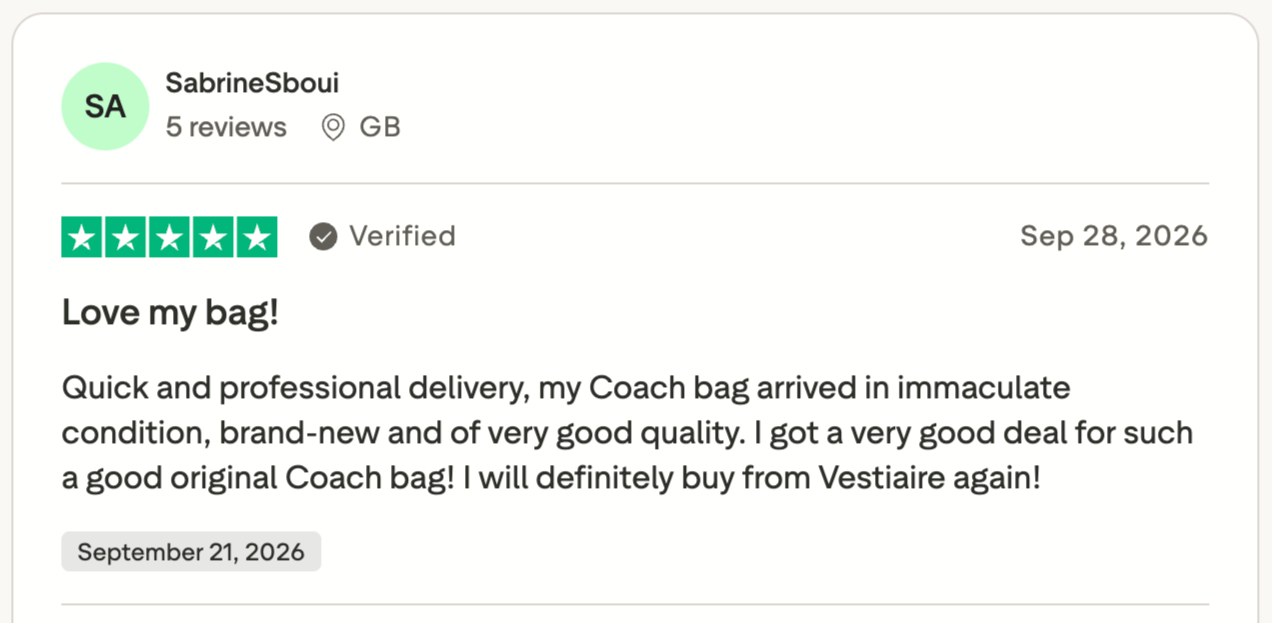
“Quick and professional delivery, my Coach bag arrived in immaculate condition, brand-new and of very good quality. I got a very good deal for such a good original Coach bag! I will definitely buy from Vestiaire again!” (Sabrine S., Trustpilot; September 28th, 2026)
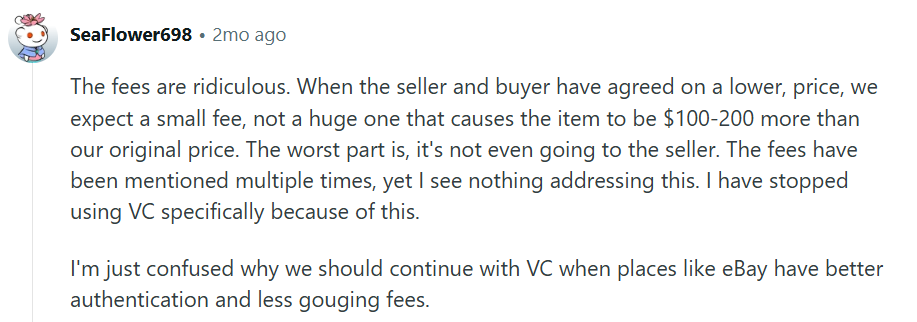
“The fees are ridiculous. When the seller and buyer have agreed on a lower, price, we expect a small fee, not a huge one that causes the item to be $100–200 more than our original price. The worst part is, it's not even going to the seller. The fees have been mentioned multiple times, yet I see nothing addressing this. I have stopped using VC specifically because of this.” (Vestiaire seller, Reddit; July 20th, 2026)
Vestiaire Collective fees
Vestiaire charges a 12% selling fee on items priced between £83 and £16,667, a flat £10 fee on items under £83, and a flat £2,000 fee on items over £16,667. A payment-processing fee of 3% (minimum £3) also applies, and all items must be listed for at least £14. Here’s a look at the fees:
Source: Selling Fees
Bottom line
Vestiaire Collective is ideal for luxury fashion, designer bags, and shoes at £100+. If you need to sell mid-range designer pieces under £100, go with Depop.
9. Etsy UK: Best for vintage goods

Etsy lets you offer qualifying vintage goods, handmade products, and craft supplies to domestic and international buyers.
Who it's for: Sellers building a shop around eligible vintage clothing, homeware, collectables, jewellery, and crafting materials that meet Etsy's marketplace rules.
A client of mine offered international postage on 12 vintage glassware listings to test overseas demand. Half of the sales went to U.S. buyers. Some buyers even paid about as much for postage as they did for the item.
Key features
- Search visibility: Etsy listings can appear in Etsy search based on factors including listing relevance, shop and listing quality, customer service, and buyer behaviour, helping buyers discover products without already following the seller.
- Custom shopfront: Build a branded Etsy shop with a shop name, banner, logo, announcement, About section, and policies giving sellers a storefront similar to a small e-commerce website.
- Custom shop address: Every Etsy shop gets its own Etsy web address, which you can share directly with customers outside the marketplace.
Etsy pros
- International selling: UK sellers can configure international delivery and sell to buyers in supported destinations.
- Shop organisation: Sections let sellers group related vintage inventory by categories such as era, product type, or style.
Etsy cons
- Vintage has an age requirement: Products offered specifically as vintage must be at least 20 years old.
- Several seller fees apply: UK sellers can pay listing, transaction, payment-processing, and regulatory operating fees, plus VAT on applicable seller fees.
What real users say
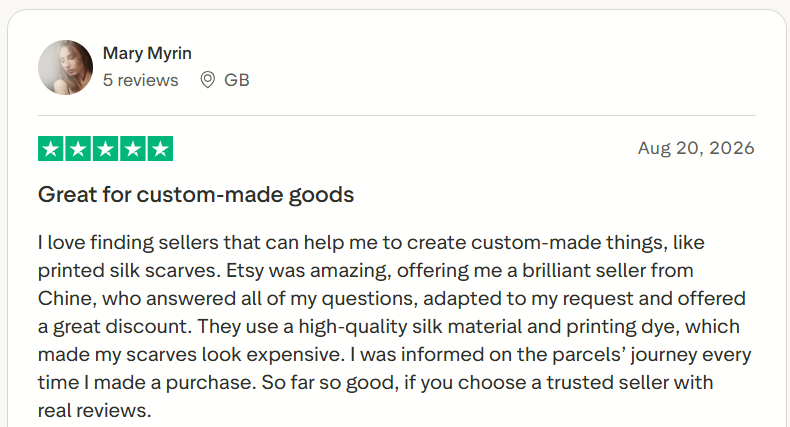
“I love finding sellers that can help me to create custom-made things, like printed silk scarves. Etsy was amazing …” (Mary, Trustpilot; August 20th, 2026)
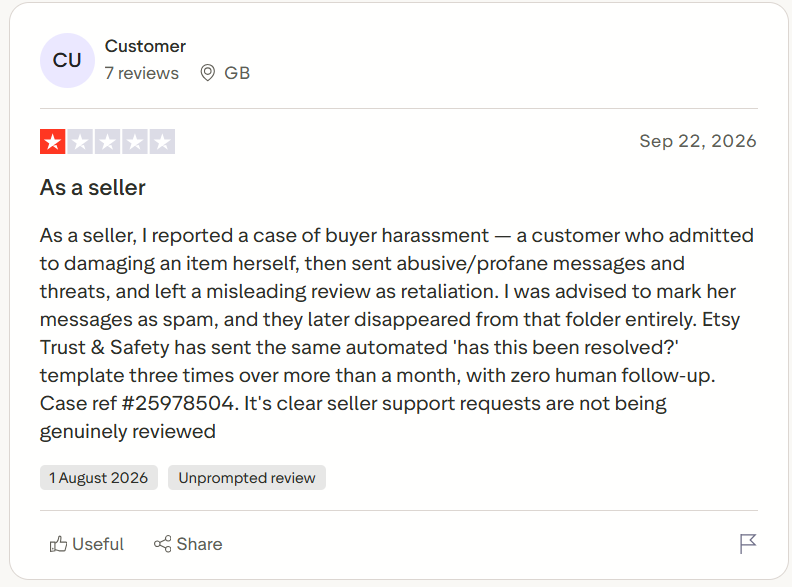
“As a seller, I reported a case of buyer harassment — a customer who admitted to damaging an item herself, then sent abusive/profane messages and threats, and left a misleading review as retaliation.” (Anonymous user, Trustpilot; September 22nd, 2026)
Etsy fees
- Listing fee: Etsy charges $0.20 each time you publish or renew a standard listing. Etsy converts this fee into your Payment account currency, so the amount in pounds can change. You pay the fee even if the item does not sell. Listings expire after four months unless you renew them.
- Transaction fee: Etsy charges 6.5% of the item price, plus any postage and gift wrapping paid by the buyer.
- Payment processing: UK sellers using Etsy Payments pay 4% + £0.20 per order. Etsy calculates this fee using the total sale price, including postage and any sales tax.
- Regulatory operating fee: UK sellers pay 0.48% of the item price, postage, gift wrapping, and any personalisation charge. Etsy increased this fee from 0.32% on 22 June 2026.
- Etsy Ads: Optional pay-per-click ads within Etsy. UK sellers choose a daily advertising budget, with Etsy setting the minimum at $1 per day, converted into your Etsy Payment account currency. The amount charged per click varies, and you never spend more than your chosen daily budget.
- Offsite Ads: Etsy charges a 15% fee when an Offsite Ad leads to a sale if your shop has never made $10,000 in a 365-day period. Once your shop reaches $10,000 in sales over any 365-day period, the fee drops to 12% for the lifetime of the shop, and you can no longer opt out of Offsite Ads. Etsy caps the Offsite Ads fee at $100 per order. For UK shops, Etsy converts your sales into USD to check whether you've reached the $10,000 limit.
- Shop set-up fee: Etsy may charge a one-time fee when you open a shop. You cannot get this fee back. If the fee applies, Etsy shows you the amount during set-up.
Bottom line
Etsy fits vintage sellers and crafters. eBay is a great Etsy alternative if you need access to a large buyer audience with the ability to offer a wide variety of stock.
10. Thrift+: Best for hands-off fashion resale
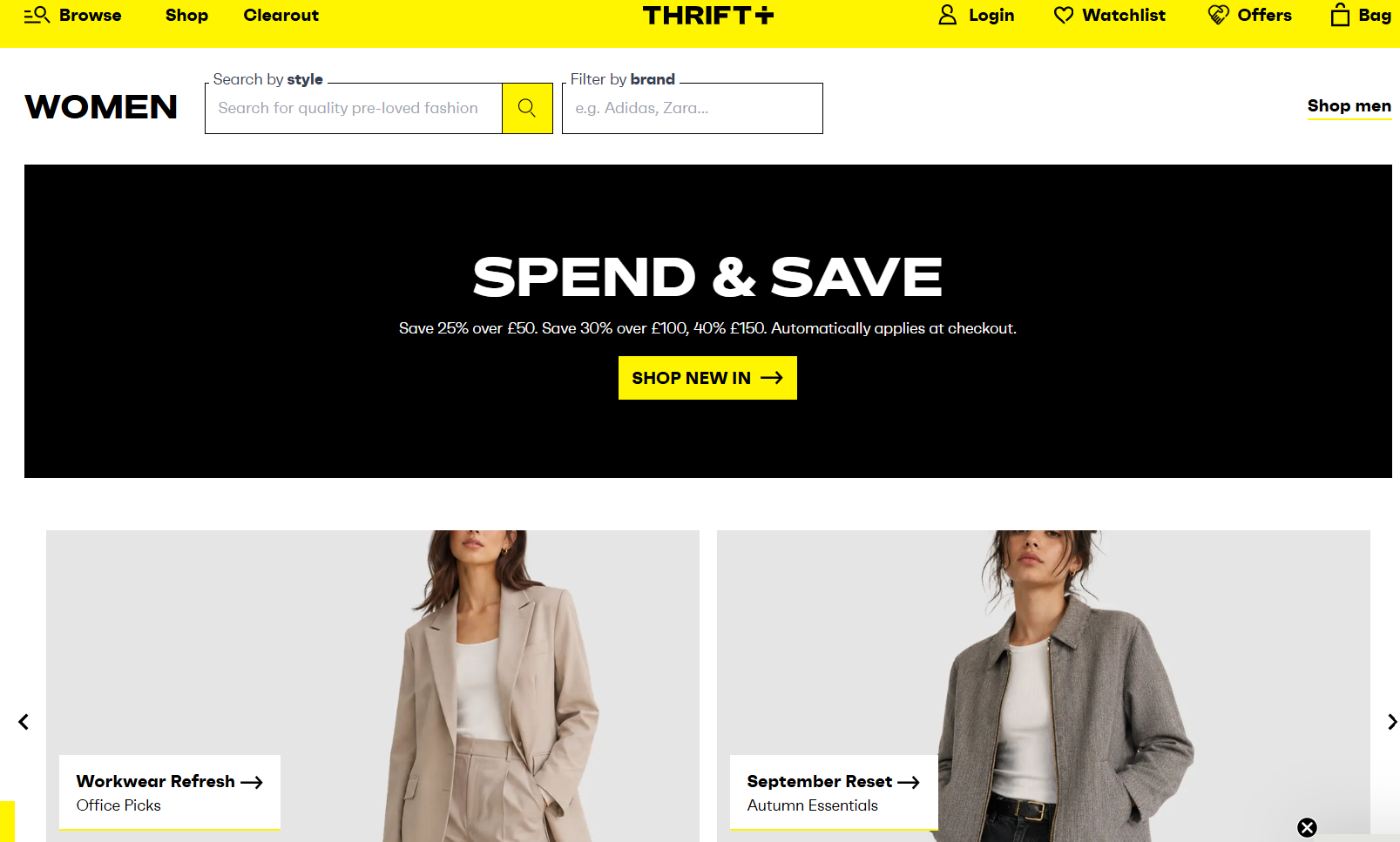
Thrift+ lets you send unwanted clothes, shoes, and accessories in a Thrift+ Bag, then handles the sorting, pricing, photography, listing, storage, customer service, and fulfilment.
Who it's for: People clearing their own eligible branded clothing who don’t want to handle most of the resale process themselves. Thrift+'s terms say the service is for personal, non-commercial use only, so it doesn't suit reselling businesses.
A friend of mine filled one Thrift+ Bag with 14 branded pieces and arranged a home collection. Thrift+ accepted 11 items for resale. Preparing and sending the bag took her less than 20 minutes of hands-on work.
Key features
- Thrift+ Bags: Order a bag, fill it with eligible clothes, shoes, and accessories, and return it using a free return option.
- Brand Checker: Check whether Thrift+ currently accepts a brand before putting an item in your bag.
- Tiered payouts: Current payout rates are 10%, 20%, or 40%, depending on the item's final selling-price band.
Thrift+ pros
- Minimal listing work: Sellers don't need to photograph, write listings, store accepted stock, or fulfil individual orders.
- No direct buyer management: Thrift+ handles the customer-facing sale and subsequent fulfilment.
Thrift+ cons
- You receive less of the sale proceeds than on most other platforms: Current payout tiers range from 10–40%, before accounting for the deductions specified in Thrift+'s terms, like VAT, and third-party transaction costs.
- Limited pricing control: Thrift+ suggests listing prices, and although you can edit them during a short review window, it can set the initial price and discount items. This cuts prices by up to 70% once an item has been online for over 2 weeks.
What real users say
“What a quick, simple, great way to sell on items of clothing, accessories that I no longer need, don't fit. To make some cash back. I ordered the bag, it arrived, a large, sturdy, self seal sack so I filled it.” (Wendy D., Trustpilot; September 24th, 2026)
“Used to be a great way to sell clothes and made a bit of money. Now it’s an absolute scam. They have paid me no more than £0.35 for the last many items sold. Some of these are BRAND NEW with tags items that retailed for £200-300. Absolute crooks.” (Marissa W., Trustpilot; September 30th, 2026)
Thrift+ fees
Thrift+ doesn’t charge a conventional listing fee: You receive a percentage payout when an accepted item sells, but ordering a Thrift+ Bag costs £1.50 and each cash payout carries a 25p fee. Its terms say third-party transaction costs and applicable VAT are deducted before sale proceeds and seller payouts are calculated.
- Less than £5: 10%
- £5 to £49.99: 20%
- £50+: 40%
Bottom line
Thrift+ makes the most sense for branded coats and premium pieces you'd never get round to listing, because 40% payouts above £50 beat leaving them unsold. Sellers willing to photograph and post items themselves will keep far more on Vinted, where buyers pay the Vinted fee and sellers receive the full agreed item price.
Which reselling website should you choose?
Each of these reselling websites in the UK works best for a different kind of stock and selling style. Here's how to pick the one for you:
Choose Vinted if you ...
Want to clear everyday high-street clothing quickly and with no standard selling fees.
Choose eBay UK if you ...
Sell mixed stock across categories and want auctions, sold-listing research, and a huge, international buyer audience.
Choose Depop if you ...
Flip streetwear and vintage clothing and want to sell it on a platform with no standard selling fee.
Choose Facebook Marketplace if you ...
Sell furniture and appliances locally.
Choose Gumtree if you ...
Want collection sales without social media, using postcode search and Gumtree's Pay & Collect online payments on eligible listings.
Choose Shpock if you ...
Want a low-cost membership to list household items for nearby buyers, with the option to arrange your own postage.
Choose Whatnot if you ...
Enjoy hosting live, high-energy auctions for collectables.
Choose Vestiaire Collective if you ...
Sell designer pieces over £100 and need authentication services.
Choose Etsy UK if you ...
Run a genuine vintage shop or sell handmade goods and craft supplies.
Choose Thrift+ if you ...
Want someone else to handle the listing and selling workflows and you don’t mind small payouts.
Avoid reselling websites in the UK entirely if …
- Your items have almost no resale value: Worn basics and unbranded clothing rarely cover the time it takes to photograph and list them, so donating or using a cash-for-clothes service makes more sense.
- You're selling high-value antiques or fine art: A specialist auction house can authenticate, value, and market these pieces to serious collectors better than a general marketplace.
- You want full control of your brand: If you have your own product line, you should probably create your own website and e-commerce store.
Crosslist on 2+ reselling websites if you …
- Sell items that suit more than one audience: A vintage Levi's jacket can attract buyers on Etsy, Depop, and eBay. Listing it on all three increases its chances of selling at a good price.
- Have stock that sits unsold: If an item hasn't moved on one platform after a month, putting it in front of a different buyer pool is often faster than cutting the price.
- Want to find where each item earns the most: Seller fees range from nothing on Vinted to around 15% on Vestiaire and 26% on Etsy (when Offsite Ads apply), so testing several marketplaces shows you where you keep the most after fees.
Move more stock on reselling marketplaces with Nifty
Sometimes, 2, 3, or 4 UK reselling websites fit your stock and workflows. But did you know that you can sell on some websites with reduced busywork? That’s where Nifty, a crosslisting and automation tool, comes in, allowing you to manage your stock across eBay, Etsy, Depop, Whatnot, and other marketplaces from one place.
Here's why Nifty's so helpful:
- Customised AI listings: Upload photos of your item and let Nifty generate search-optimised titles, descriptions, and item details that help buyers find it on each marketplace. Review the draft, then use custom instructions to match your shop's writing style.
- Crosslist now: List eligible items across eBay, Etsy, Depop, and Whatnot (more marketplaces coming soon) from one tool, without re-entering the details on each site. Marketplace access and features depend on your region, connected accounts, and plan.
- Bulk crosslisting: Select multiple existing listings in Nifty, choose your target marketplaces, pricing, and postage, then save the AI-generated results as drafts or publish them in one go.
- Marketplace-specific Pricing Rules: Set your price once on a primary marketplace, and Nifty auto-calculates the rest with percentage or pound adjustments so your take-home stays consistent when you crosslist.
- Built-in auto-delisting: Enable auto-delisting, and Nifty removes any eligible sold items from your other connected marketplaces, helping reduce the risk of selling the same item twice.
- Bulk tools = less busywork: Relist unsold items in batches, schedule ready-to-publish drafts, and use supported automations to handle recurring selling tasks while you source and post orders.
- Analytics and profits, made clear: Track sales, fees, profit, and your top-selling brands and categories, so you can see which marketplace earns you the most. You can also set seller goals and check your progress from Nifty's home screen.
Nifty pays for itself in just a few weeks. Start with a 7-day free trial and see how Nifty can help you sell across the best reselling websites in the UK, without doubling your listing time for every marketplace you add.
FAQs
1. What are the best free reselling websites in the UK?
The best free reselling websites in the UK are Vinted and Facebook Marketplace. Vinted charges no listing or payment fees, and Facebook's direct local sales are fee-free, so you keep more of every sale.
2. Which reselling website is best for clothes in the UK?
The best reselling websites for clothes in the UK are Vinted, Depop, and Vestiaire Collective. Vinted suits everyday high-street pieces, Depop suits vintage and streetwear, and Vestiaire suits high-quality designer items over £100.
3. Can I sell the same item on multiple reselling websites?
Yes, you can sell the same item on multiple reselling websites, as long as you remove the other listings once it sells. Crosslisting on eBay, Depop, and Etsy puts each item in front of three different buyer pools. We recommend a tool like Nifty, which crosslists to all three from one place and, with auto-delisting turned on, removes the other listings when an item sells.